David Bridges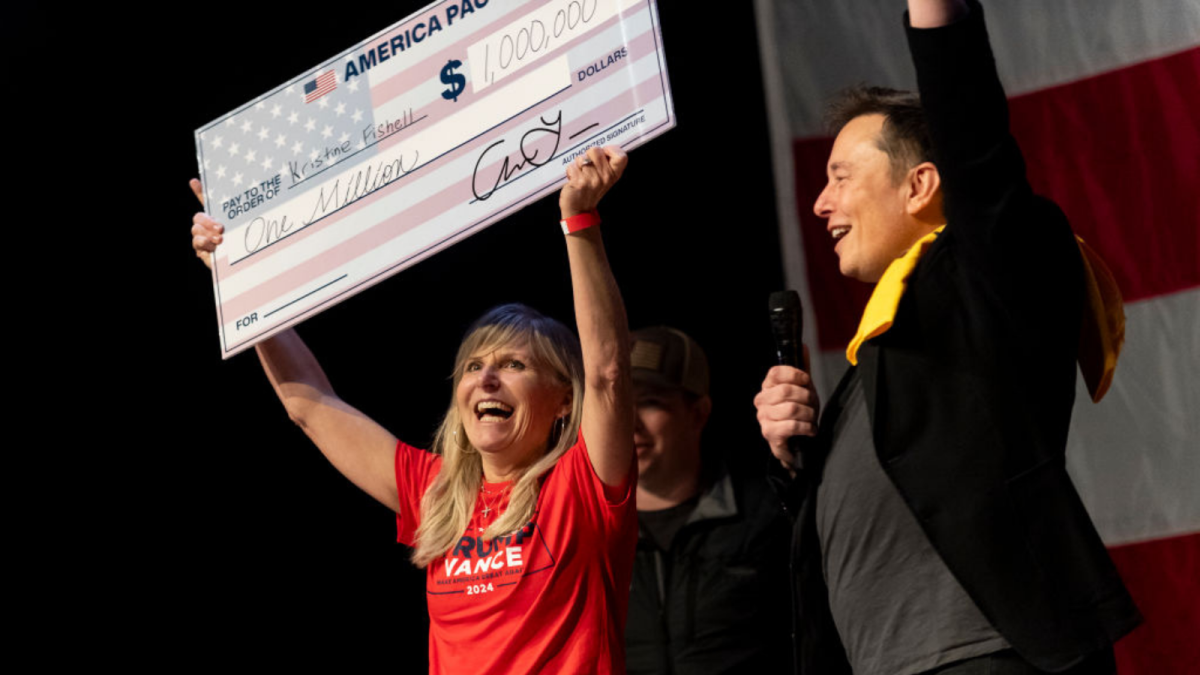
Elon Musk is currently embroiled in yet another legal battle surrounding the controversial $1 million voter lottery orchestrated by his political action committee, America PAC. This latest lawsuit seems to have been fueled by statements Musk made while defending himself against a previous legal challenge. The complex legal landscape continues to evolve, drawing attention to the implications of such high-stakes promotions.

On Tuesday, a new 14-page class action lawsuit was filed in a Texas District Court by an Arizona resident, accusing Musk and America PAC of fraud and breach of contract concerning the $1 million giveaway that was launched last month. This legal action adds to the growing scrutiny of Musk’s promotional activities and raises questions about the legitimacy of his claims.
Judge refuses to stop Elon Musk’s million dollar election ‘sweepstakes’
The $1 million giveaway is open to registered voters from seven key swing states: Pennsylvania, Georgia, Nevada, Arizona, Michigan, Wisconsin, and North Carolina. Participants are required to submit their personal information and sign a petition that supports the First and Second Amendments. As part of the promotion, Musk and America PAC offer $47 to each signatory as a token of appreciation, and those who participate are entered into a daily draw for a chance to win $1 million, with winners announced each day starting from October 19.
The latest class action lawsuit claims that the selection process for the $1 million winners was not random at all. It alleges that Musk and America PAC misrepresented the selection process in order to lure individuals into signing their petition, raising serious questions about consumer trust and the ethical implications of such promotional tactics.
This case references statements made in a previous lawsuit initiated by Philadelphia District Attorney Larry Krasner, who accused Musk and America PAC of conducting an illegal lottery. Krasner’s allegations also included attempts to influence voters and violations of consumer protection laws through what he described as “deceptive, vague or misleading statements.” The unfolding legal saga highlights the increasing scrutiny on political fundraising tactics.
In response to these allegations, Musk has firmly denied any wrongdoing. His legal team claims that the individuals who appeared as lottery winners were actually America PAC spokespeople, and that the purported $1 million prizes were merely paychecks. They further asserted that the selection of these individuals was based on their compelling personal stories and that they had signed contracts with America PAC.
“The $1 million recipients are not chosen by chance,” stated Musk’s attorney, Chris Gober. “We know exactly who will be announced as the $1 million recipient today and tomorrow.” This statement raises further questions about the transparency of the giveaway process and the integrity of the claims being made.
Mashable Light Speed
A judge ruled in favor of Musk on Monday, allowing the $1 million America PAC giveaway to continue. However, this ruling initially seemed to have little effect given that the lottery was planned to conclude on Election Day. The legal landscape remains tense as the implications of Musk’s promotional tactics continue to unfold.
Despite the ruling, the defense’s claims directly contradicted their earlier public assertions that the winners of the $1 million giveaway would be selected randomly. This contradiction has led to the emergence of the new class action lawsuit, which was filed just one day later.
“Defendants’ statements indicating that individuals who signed the petition would be chosen at random to win $1,000,000 were false, and Defendants knew those statements were false at the time they were made,” the class action lawsuit states. This assertion raises critical questions about the legal ramifications of misleading promotional practices.
One plaintiff claims that had she been aware of the lack of genuine opportunities to win $1,000,000, she would not have participated in the America PAC petition or provided her personal identifying information. This emphasizes the importance of transparency in promotional activities, particularly when it comes to the handling of personal data.
The lawsuit is seeking at least $5 million in damages and demands the destruction of all personal identifying information collected from participants in the alleged giveaway. Participants were required to submit their first and last names, email addresses, postal addresses, and phone numbers as a condition of entry, raising further concerns about data privacy and security.
The lawsuit also claims that Musk has profited from this purported giveaway, as it drove traffic to his social media platform X (formerly Twitter). Additionally, it alleges that he could exploit participants’ personal information for profit, as America PAC did not adequately disclose how this data would be utilized or stored. The form only vaguely stated that phone numbers would be used solely to verify the legitimacy of petition signers.
The complaint states, “[The plaintiffs] having now discovered no legitimate lottery existed, and that they provided their personal identifying information to Defendants for nothing in exchange, now demand Defendant be enjoined from using the data or otherwise providing it to third parties.” This highlights the critical need for accountability in political fundraising efforts.
According to an NBC News report released last week, among the first 14 winners of the $1 million lottery, nine were registered Republicans. Of the remaining five, three had publicly expressed support for Republican candidate Donald Trump, while one identified as a former Democrat. Notably, none of the winners were registered Democrats or visible supporters of Democratic candidate Kamala Harris.
Musk, known for his vocal support of Trump, has previously dismissed allegations that he is using financial incentives to register Republicans. He claimed that anyone signing the petition had a “daily chance of winning” $1 million and could belong to any political party or none at all. This raises questions about the fairness and inclusivity of the lottery process.
While it may be technically accurate that supporters of any political party could sign the petition for a chance at the $1 million prize, the statistical outcomes of the actual winners suggest that the odds are significantly better for those whose political views align with Musk’s. This discrepancy adds to the growing concerns about the ethical implications of this high-stakes promotion.
Topics
Elon Musk
Politics
var facebookPixelLoaded = false;
window.addEventListener(‘load’, function(){
document.addEventListener(‘scroll’, facebookPixelScript);
document.addEventListener(‘mousemove’, facebookPixelScript);
})
function facebookPixelScript() {
if (!facebookPixelLoaded) {
facebookPixelLoaded = true;
document.removeEventListener(‘scroll’, facebookPixelScript);
document.removeEventListener(‘mousemove’, facebookPixelScript);
!function(f,b,e,v,n,t,s){if(f.fbq)return;n=f.fbq=function(){n.callMethod?
n.callMethod.apply(n,arguments):n.queue.push(arguments)};if(!f._fbq)f._fbq=n;
n.push=n;n.loaded=!0;n.version=’2.0′;n.queue=[];t=b.createElement(e);t.async=!0;
t.src=v;s=b.getElementsByTagName(e)[0];s.parentNode.insertBefore(t,s)}(window,
document,’script’,’//connect.facebook.net/en_US/fbevents.js’);
fbq(‘init’, ‘1453039084979896’);
fbq(‘track’, “PageView”);
}
}



 Daniel Mercer
 Ethan Carter