David Bridges

Throughout the years, numerous narratives have emerged highlighting Elon Musk’s exceptional risk tolerance and his readiness to embrace significant challenges, regardless of the potential consequences for himself and his companies. This bold approach has become a defining characteristic of his business strategy, reflecting a willingness to venture into the unknown.
We have witnessed this with X as well, where Musk has taken drastic actions such as removing servers and reducing staff without fully understanding the implications of these decisions. Despite the high stakes involved, these moves have generally yielded positive outcomes, which many attribute to Musk’s proactive and decisive approach—an attitude that many consider crucial to his sustained business success.
This mindset was particularly relevant when I learned about the latest announcement regarding X partnering with Kalshi to integrate Grok insights into Kalshi’s market prediction analytics. This innovative collaboration aims to enhance data accessibility for investors, enabling them to make more informed decisions.
As depicted in this example, Kalshi, a market analytics platform, will now showcase contextual insights derived from Grok within its stock overviews. This enhancement provides a wealth of data for investors to consider, ultimately enriching their buying and selling strategies and allowing for a more comprehensive evaluation of market trends.
This initiative is designed to help investors better interpret market dynamics. However, it is crucial to tread carefully; there is a fine line between providing valuable insights and inadvertently influencing investment decisions based on the recommendations of an AI system.
Such a scenario poses significant risks. Should an investor miss an opportunity because Grok advised against a purchase, this could be construed as offering direct financial advice, which would attract scrutiny under FTC regulations. Given the stakes involved, it appears that X is proceeding with this venture with minimal consideration for the potential repercussions.
Last month, X also announced a comparable partnership with Polymarket, allowing Polymarket to incorporate predictions based on X posts along with insights from xAI’s Grok system. This integration aims to enhance their forecast accuracy by providing contextual references, which could significantly impact trading decisions.
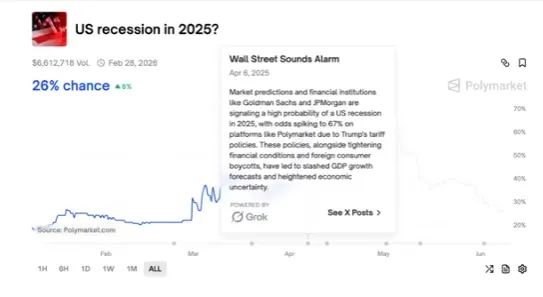
Both of these partnerships present a similar level of risk by potentially offering advice that could influence financial decisions through AI-driven means, which raises ethical and legal questions.
This situation seems ripe for legal challenges, especially when considering Elon Musk’s extensive business connections and the possibility of these insights being linked back to his interests.
The FTC advises that:
“If you endorse a product through social media, your endorsement message should make it obvious when you have a relationship (‘material connection’) with the brand. A ‘material connection’ to the brand includes a personal, family, or employment relationship or a financial relationship – such as the brand paying you or giving you free or discounted products or services.”
While this guideline specifically pertains to influencer endorsements, similar principles should apply to AI tools. Given Elon Musk’s involvement in various market-affecting ventures, and with xAI aiming to align Grok with his perspectives, it appears that these partnerships may soon encounter significant regulatory scrutiny.
Ultimately, Musk’s affinity for high-risk opportunities is well-documented. With X’s ambitious vision of becoming an “everything app,” which focuses heavily on finance and enabling users to manage their entire financial lives through the platform, integrating investment features aligns with this broader strategy.
However, I remain skeptical about whether there are sufficiently clear guidelines regarding the use of AI for stock advice, particularly with X facilitating such integrations.


 Ivy Caldwell