 Tessa Everly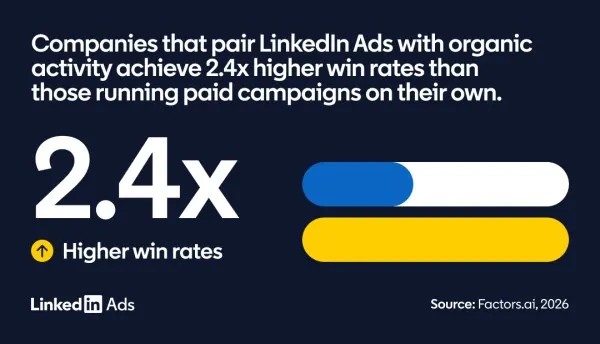

LinkedIn has recently provided valuable strategies for marketers aiming to enhance their LinkedIn advertising efforts, drawing insights from over 50,000 finalized transactions across 850 B2B companies.
This information is derived from a study conducted by Factors.ai, revealing that LinkedIn significantly influences the B2B purchasing process and can effectively boost sales activities.
Initially, the study examined the overall buyer’s journey, indicating that B2B decision-makers explore potential solutions for approximately 124 days before engaging with a sales representative.
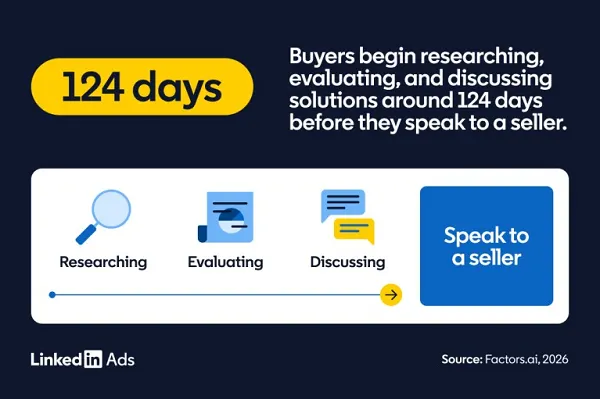
The findings suggest that marketers should initiate promotional activities well ahead of the final decision-making stage, allowing for extended lead-in promotions to capture early interest.
The research also highlighted that larger teams contribute significantly to B2B contract decisions.
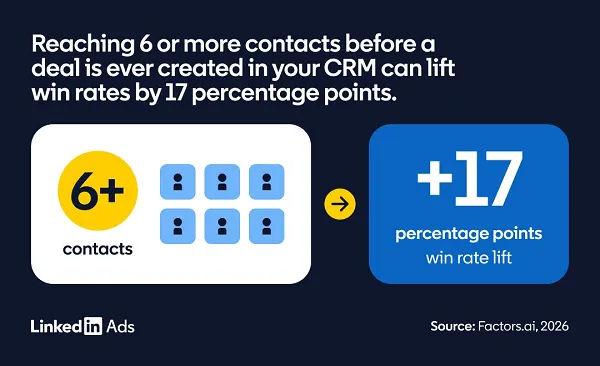
According to LinkedIn: “Factors.ai discovered that engaging with 6 or more contacts before a deal is created in your CRM can increase win rates by 17 percentage points. involving 3 or more contacts during the active sales cycle boosts win rates by 16 points.”
The data further reveals that 76% of LinkedIn advertising budgets target director-level professionals, who are considered the primary decision-makers. This focus may lead to lost opportunities in connecting with a wider array of contacts.
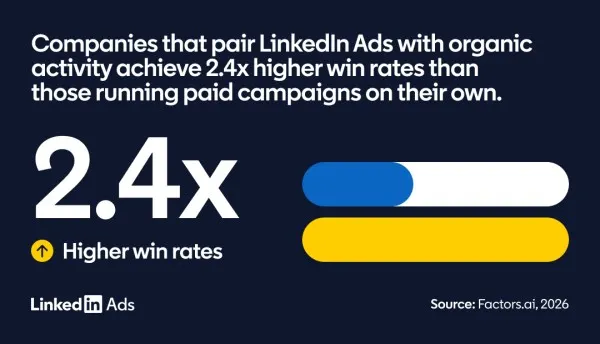
Another crucial insight is that businesses leveraging LinkedIn Ads alongside organic LinkedIn engagement achieve 2.4 times higher win rates compared to those relying solely on paid campaigns.
The ultimate recommendation for B2B marketers is to implement longer advertising campaigns, target a broader range of job roles, and maintain consistent organic activity on LinkedIn to enhance engagement and response rates.
These insights provide practical guidance for improving LinkedIn marketing effectiveness.


 Troy Sanders
 Maya Kensington