Daniel Mercer

Discover how to significantly enhance the charging speed of your devices.
Maximizing your iPhone or iPad’s battery performance involves more than just monitoring app power consumption. The speed at which you charge your device can significantly influence its battery lifespan. While a slower charger may be gentler on an aging battery, it often results in minimal power gain during your busy morning routine. In contrast, using a fast charger can provide enough power for a long commute in just the time it takes to sip your coffee. Charging your iPhone at optimal speeds is crucial, especially when you have limited time before heading out.
To achieve maximum charging efficiency, it’s essential to understand the capabilities of your devices. Apple has been inconsistent in providing detailed battery specifications, making it challenging for users. Since the company no longer includes a charging brick with new purchases, many users may still rely on outdated, slower chargers for their latest iPhones and iPads. How can you determine the fastest charging speed for your device and ensure your charger meets that requirement? In this article, we will explore battery capacity and charging speed measurements, how these factors apply to the latest iPhone and iPad models, and how Apple’s accessories may be limiting your charging experience.
Understanding How iPhone and iPad Charging Speeds Are Determined
ridho try syahpitra/Shutterstock
To grasp the fundamentals, battery capacity in mobile devices is expressed in milliamp-hours (mAh). This measurement indicates how much power a battery can supply over the course of an hour before it needs recharging. For example, a 1,000mAh battery can deliver a current of 1,000 milliamps for one hour. In practical usage, the actual power delivered varies based on the device’s functions and efficiency. Currently, a typical large smartphone battery is around 5,000mAh, while tablets generally feature capacities closer to 10,000mAh.
Taking a closer look at Apple’s offerings, the iPhone 17 Pro Max has a battery capacity of 5,088mAh, whereas the standard iPhone 17 is equipped with a 3,692mAh battery. The base model of the iPad 11th Generation sports a 7,698mAh battery, while the high-end 13-inch M5 iPad Pro packs an impressive 10,290mAh battery into its sleek design.
Charging speeds are quantified in watts. Larger devices typically have multi-cell batteries that can dissipate heat more effectively, allowing for faster charging. This is why your MacBook may come with a substantial 140W charging brick, while an iPhone utilizes a much smaller charger operating at a fraction of that speed, and AirPods charge at lower wattages. advancements in charging technologies like USB Power Delivery (USB-PD) enable even smaller devices, such as smartphones, to support higher charging rates. For instance, the OnePlus 15, a recent Android release, charges at an impressive 120W. With this information, we can now analyze the maximum charging speeds available for your iPhone or iPad.
Charging Capabilities of the Latest iPhones and iPads: 40 to 60 Watts
Apple’s latest iPhone and iPad models have made incremental improvements in charging speeds, though they haven’t drastically changed. The iPhone 17 series, including the 17, 17 Pro, and 17 Pro Max, supports charging speeds of up to 40W. The iPhone Air, designed for a slimmer profile, has a maximum charging capacity of 20W. Importantly, Apple no longer provides a charger in the packaging of new iPhones, meaning users interested in realizing the full potential of these speeds must purchase a compatible charger separately. The last included charger was a 5W unit with the iPhone 11, while the 11 Pro came with an 18W charger. Those still using these older chargers will experience disappointingly slow charging with current iPhone models.
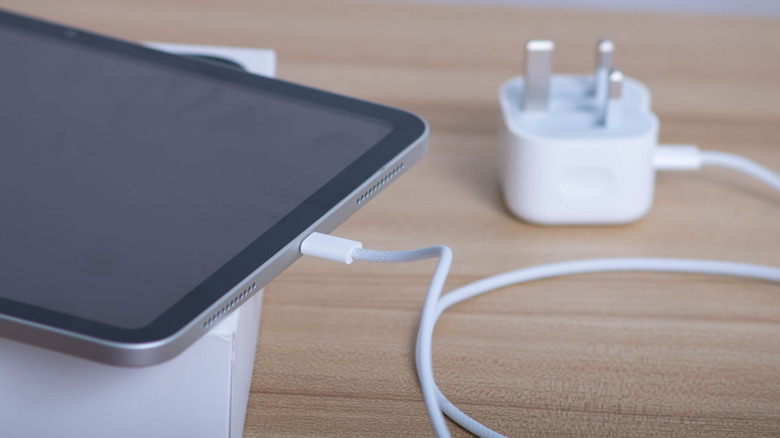
For iPads, the latest base model released in 2025 supports charging speeds of up to 45W, comparable to tablets from competitors like Samsung. The advanced M5 iPad Pro takes it a step further, allowing for charging at up to 60W. Apple continues to include chargers with its iPads, but the provided 20W charger is inadequate, leading many users to waste valuable charging time.
To achieve optimal charging speeds for your iPhone or iPad, it is essential to invest in a charger that can meet these specifications. While Apple offers its own fast chargers, many reputable alternatives exist from brands like Anker, Ugreen, and Satechi. When selecting a charger, ensure that its maximum output matches or exceeds the charging capabilities of your device.



 Brandon Fletcher