David Bridges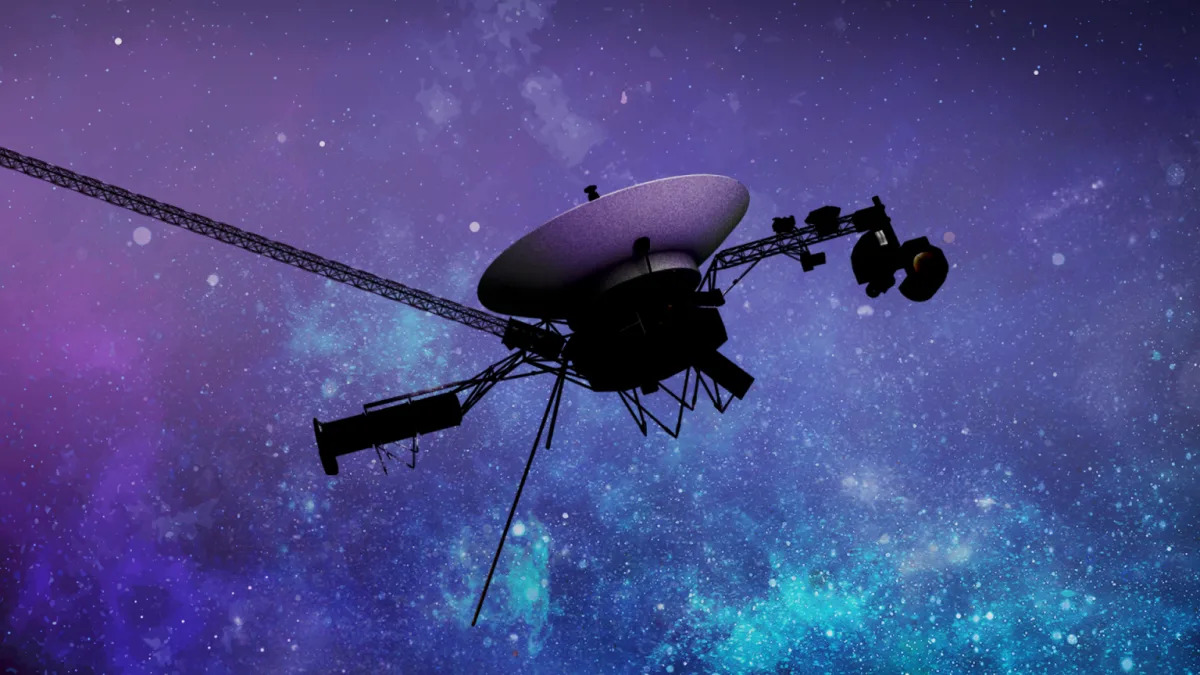
Nearly half a century after their historic launch, the Voyager 1 and 2 spacecraft continue their extraordinary journey through interstellar space. Despite facing numerous challenges over the years, these pioneering probes remain vital to our understanding of the cosmos. Recently, NASA announced that in an effort to prolong their operational lifespan amid a declining power supply, the twin Voyager spacecraft will be deactivating some of their instruments. This strategic decision aims to maximize their functionality and scientific output as they venture further into uncharted territories.

On February 25, NASA’s Jet Propulsion Laboratory (JPL) made the critical move to switch off Voyager 1’s cosmic ray subsystem experiment. Following this, on March 25, Voyager 2 will also see its low-energy charged particle instrument powered down. By taking these steps, NASA is working diligently to ensure that both spacecraft can continue to gather valuable data from the far reaches of our solar system and beyond.
“The Voyagers have been deep space rock stars since their inception, and we want to keep them operational for as long as possible,” stated Suzanne Dodd, the Voyager project manager at JPL. “However, electrical power is becoming increasingly limited. If we do not deactivate an instrument on each Voyager now, we risk running out of power in just a few months, which would force us to declare the end of their mission.” This proactive approach highlights the importance NASA places on these missions and their scientific contributions.
While each Voyager probe will continue to operate three scientific instruments, they have already decommissioned seven others over time. In fact, just last October, NASA turned off Voyager 2’s plasma science instrument. Both spacecraft have encountered technical difficulties recently; for instance, Voyager 1 resumed normal operations last June after a prolonged seven-month period of malfunction, during which it transmitted unreadable data. This was not the first such incident, as Voyager 1 faced similar issues two years prior. Furthermore, in 2023, Voyager 2 experienced a blackout lasting two weeks, requiring technical intervention, which came three years after its previous challenges.
NASA continues to place immense value on the Voyager probes. “Every minute of every day, the Voyagers are exploring a region of space where no spacecraft has ventured before,” remarked Linda Spilker, the Voyager project scientist at JPL. “This also means that every day could potentially be our last opportunity to receive data. However, each day might also yield groundbreaking discoveries about the interstellar environment. Therefore, we are committed to doing everything possible to ensure that Voyagers 1 and 2 can keep paving the way for scientific exploration for as long as we can manage.” The goal is to keep them operational at least until their 50th anniversary in 2027, which would be a remarkable milestone.
However, there is a more skeptical viewpoint regarding NASA’s efforts to maintain these probes. The agency undoubtedly desires for the Voyager spacecraft to remain functional for their 50th anniversary in 2027, but achieving this ambitious goal may prove challenging despite the dedicated efforts of the team.


 Daniel Mercer