David Bridges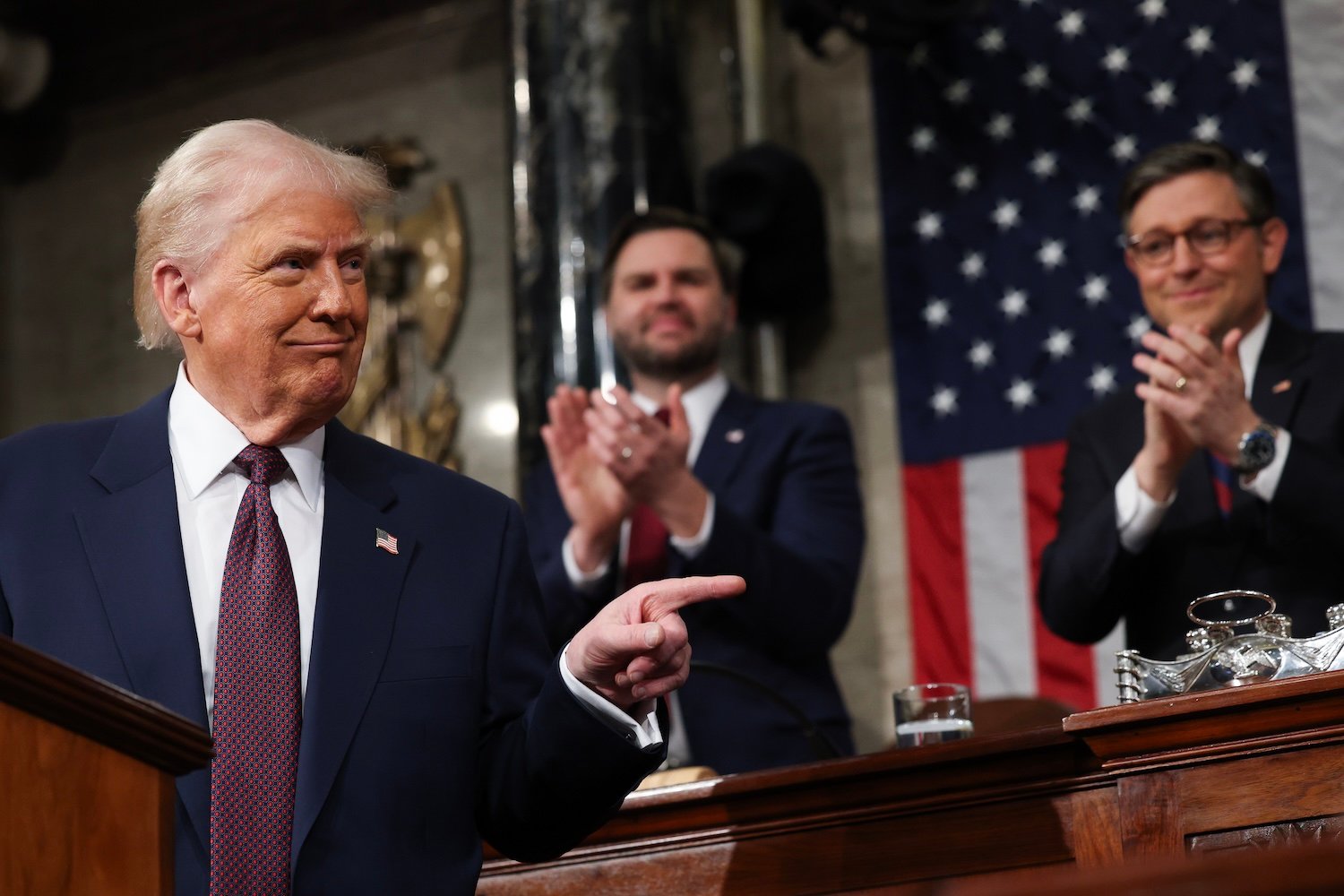
Reviving Reagan’s Vision: Trump’s Ambitious Missile Defense Initiative
President Donald Trump is determined to transform the long-criticized Star Wars missile defense initiative, originally proposed by Ronald Reagan in the 1980s, into a functional reality. He asserts that advancements in technology now make this possible, igniting a debate about the feasibility and necessity of such a program.

Trump’s Vision for the “Golden Dome for America” Missile Defense System
During a recent address to Congress, Trump delivered a speech filled with his signature rhetoric, blending facts with embellishments. As the leader of the nation, his words carry significant weight, and he is advocating for a new missile defense system for the United States, initially dubbed the “Iron Dome for America,” but now rebranded as the “Golden Dome for America.” This shift in terminology reflects not only a desire for originality but also perhaps a nod to Trump’s affinity for gold.
Strengthening National Defense: A Call to Action from the Commander-in-Chief
Trump emphasized his commitment to fortifying the military during his speech, stating, “As Commander-in-Chief, my focus is on building the most powerful military of the future. As a first step, I am asking Congress to fund a state-of-the-art Golden Dome Missile Defense Shield to protect our homeland, all made in the USA.” This bold declaration highlights his intention to prioritize national security through advanced defense mechanisms.
Echoes of Reagan: Trump’s Nostalgic Reference to the Past
In his speech, Trump invoked the legacy of Ronald Reagan, a president he greatly admires, especially as his own policies often seem reminiscent of the 1980s. “Ronald Reagan wanted to do it long ago, but the technology just wasn’t there, not even close,” Trump remarked. He underlined the advancements that have emerged since Reagan’s era, claiming, “But now we have the technology. It’s incredible, actually. And other places that have it, Israel has it. Other places have it. And the United States should have it, too.” This assertion raises questions about the current state of defense technology and its implications for national security.
Launching the Initiative: Executive Orders and Strategic Goals
Trump initiated his pursuit of this ambitious program on January 27, issuing an executive order that called for the development of a “next-generation missile defense shield.” This move signals a significant shift in defense strategy, aiming to create a modernized system that could potentially protect the United States from evolving threats.
Learning from History: The Lessons of Reagan’s Strategic Defense Initiative
The executive order reflects on the efforts of President Ronald Reagan to establish a robust defense against nuclear threats. While Reagan’s Strategic Defense Initiative led to numerous technological innovations, it ultimately fell short of achieving its primary objective before its cancellation. The current executive order acknowledges these historical challenges while seeking to innovate and adapt to the present-day security landscape.
Trademark Challenges: The Naming of the Defense System
Initially, the program was set to be called the Iron Dome for America, mirroring Israel’s ground-based missile defense system. However, due to trademark restrictions by an Israeli company, Trump opted for the new name, reflecting his penchant for gold and branding. This decision highlights the complexities involved in international defense collaborations and the influence of branding on policy initiatives.
The Unfulfilled Promise of Reagan’s Star Wars: A Critical Analysis
Reagan’s Star Wars initiative, officially known as the Strategic Defense Initiative, was unveiled in 1983 as a proposed space-based missile interception program. Critics of the time equated it to the implausible notion of shooting a bullet with another bullet, citing technological limitations and the need for the militarization of space, which was constrained by international treaties. Trump’s January executive order references the Anti-Ballistic Missile Treaty, noting the U.S. withdrawal from this agreement in 2002, indicating a shift in defense policy.
Assessing Threats: The Need for a Comprehensive Defense Strategy
The overarching aim of the Golden Dome initiative is to shield the U.S. from potential missile attacks. However, the question remains: who poses these threats? Are they our traditional allies, or emerging adversaries? The challenge for Trump now lies in devising a defense system that effectively encompasses the entire United States, a task far more complex than Israel’s Iron Dome, which is tailored for a significantly smaller geographic area. The notion of potential missile strikes from neighboring countries like Canada or Mexico raises eyebrows and underscores the uncertainty of current geopolitical relations.
Funding Challenges: Congress and Fiscal Responsibility in Defense Spending
One of the significant hurdles in realizing the Golden Dome initiative is securing adequate funding. Congress is tasked with financing such ambitious projects, and while Trump has urged lawmakers to allocate funds for this defense initiative, it remains uncertain whether they will agree to finance such a substantial expense. Trump has instructed Defense Secretary Pete Hegseth to identify approximately $50 billion in budget cuts to reallocate for projects like the Golden Dome, highlighting the complexities and potential illegality of circumventing traditional funding processes.
Future Uncertainties: Will Trump Successfully Implement the Golden Dome?
The question lingers: will Trump successfully establish this new missile defense shield? The obstacles ahead are daunting, extending far beyond merely adapting Israel’s Iron Dome. The necessity of such a system for the U.S. remains ambiguous, especially given the shifting landscape of international alliances. Trump’s imposition of tariffs on Canada and Mexico, alongside his fluctuating stance towards European nations and Russia, adds layers of unpredictability to the geopolitical environment.
Preparing for an Uncertain Future: The Evolving Landscape of National Security
In this unpredictable world, Americans should brace themselves for potential changes on the horizon. The development of a new missile defense system funded by budget cuts remains a possibility, but so do the risks of escalating tensions with traditional allies like Canada and Mexico. The complexities of international relations, military spending, and defense technology innovations create a landscape filled with uncertainty. As the future unfolds, preparedness becomes crucial for navigating the challenges ahead.


 Daniel Mercer
 Ethan Carter