 David Bridges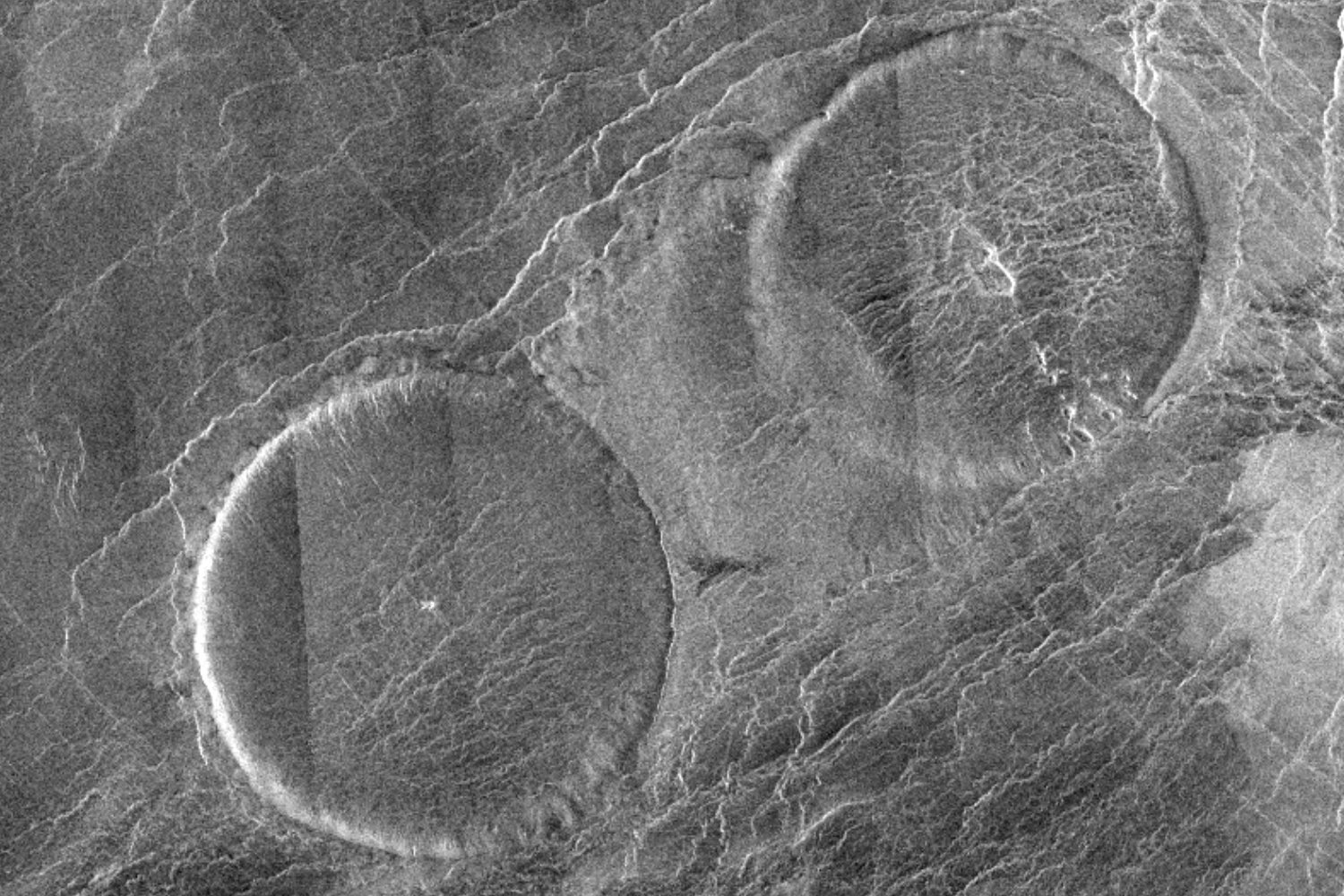
Venus is renowned for hosting some of the most peculiar volcanoes across the solar system—these are massive, flattened structures often described as planetary pancakes that have been left to solidify on the planet’s scorching surface. For years, scientists have theorized that these unique formations, known as pancake domes, originated from thick, sluggish lava flows. However, a groundbreaking new study indicates that the flexible nature of Venus’ crust could play a pivotal role in the development of these circular geological features. Understanding how these domes form is key to unraveling the mysteries of Venusian geology.

This intriguing research, published earlier this month in the Journal of Geophysical Research: Planets, zeroed in on one particularly colossal dome, named Narina Tholus, which spans an impressive 90 miles (145 kilometers) in diameter. This study not only highlights the scale of this geological structure but also emphasizes the importance of in-depth analysis of Venus’s surface features to comprehend its volcanic activity and geological history.
Utilizing historical radar data collected during NASA’s Magellan mission in the 1990s, researchers developed a comprehensive virtual model of the Narina Tholus dome. They meticulously investigated the types of lava and geological conditions that could lead to the formation of such an extraordinary geological pancake. This approach allowed them to simulate various scenarios, enhancing our understanding of how these formations come into existence.
Interestingly, it appears that lava alone cannot account for the unusual shapes of these domes. The researchers noted, “Our models show that flexure influences dome shape,” explaining that with increased flexure, the tops of the domes become flatter while their sides steepen. This finding underscores the complexity of Venusian volcanism and the interplay between various geological forces at work on the planet’s surface.
Much like living organisms, Venus’ crust can exhibit dimpling and deformation when subjected to the weight of thick lava flows. During experiments simulating lava moving across a flexible lithosphere, researchers observed that the molten rock began to accumulate rather than spread out, resulting in flat tops and steep sides that closely resemble the characteristics of Venus’ pancake domes. Significantly, this model also replicated the crustal bulges identified around some domes in previous investigations, providing further evidence of the dynamic processes involved in dome formation.
However, not just any type of lava is sufficient to create these structures. The study found that only ultra-dense lava—more than twice as dense as water and over a trillion times as viscous as ketchup—matched both the unique dome shapes and the surrounding geological deformations. The researchers speculate that such dense lava could take “up to hundreds of thousands of Earth-years” to fully settle into the massive formations that characterize Venus’ landscape, indicating the prolonged geological processes at play on our neighboring planet.
While the team’s model is centered on a single dome, which leaves room for further exploration, future missions like NASA’s VERITAS and DAVINCI are expected to deliver enhanced topographic data. This critical information will allow scientists to test their hypotheses across the numerous volcanic features scattered throughout Venus, paving the way for deeper insights into the planet’s geological history and activity.
Gaining a better understanding of these volcanic features could provide significant insights into the formation and evolution of Venus, a planet often dubbed as Earth’s evil twin due to its harsh conditions and the divergent evolutionary path it has taken from our own planet. By studying these distinct geological characteristics, researchers hope to uncover clues about the environmental conditions that shaped Venus, ultimately enriching our knowledge of planetary formation and evolution in our solar system.



 Daniel Mercer
 Ethan Carter