 Ethan Carter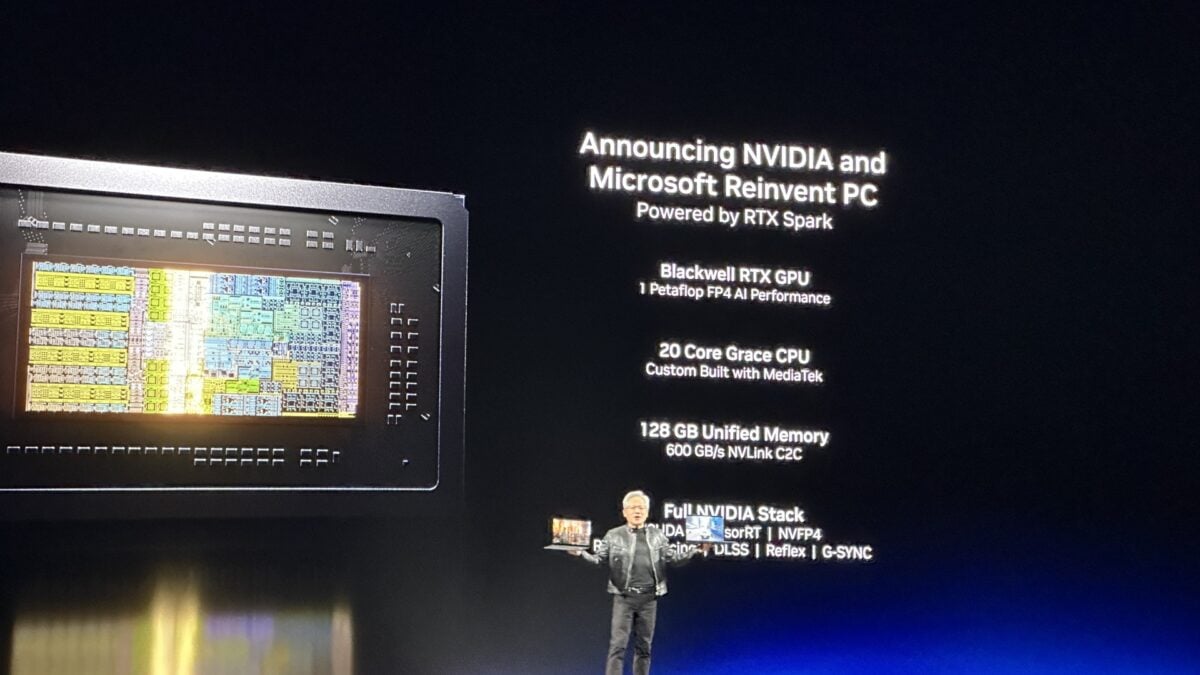

During a highly anticipated presentation in Taipei, Taiwan, Nvidia’s CEO Jensen Huang unveiled the company’s groundbreaking laptop-grade CPUs. These innovations are as exciting and intriguing as the extensive rumors and leaks that preceded them over the past year.
Huang proclaimed that Nvidia is fundamentally transforming the PC landscape with its revolutionary RTX Spark platform. He boldly asserted that this platform will effectively support “every application that Windows has ever run.”
In a striking demonstration, Huang showcased two PCs, one playing 007 First Light and the other Forza Horizon 6. He confidently stated that both games were performing “well.” The specifics of their performance will be revealed through hands-on testing.
The first chip in this lineup is the N1X, which is particularly exciting due to its implications for Nvidia’s GPU architecture. The N1X features a Blackwell-series GPU, the same architecture found in the Nvidia GeForce RTX 50-series discrete graphics cards commonly used in professional and gaming laptops. This chip incorporates a 20-core GPU, developed in collaboration with MediaTek. It supports up to 128GB of unified memory, but further details were not disclosed by Huang.
The primary focus of these chips is to enhance AI capabilities, allowing for some processing to occur on-device while relying on cloud resources for more extensive tasks. Nvidia indicated that laptops featuring these chips will be available from nearly all major PC manufacturers, including Microsoft, Lenovo, Acer, Dell, Gigabyte, and MSI.
The N1X is designed as an ARM-based chip, utilizing a RISC-based microarchitecture similar to Qualcomm’s recent Snapdragon X series. Despite Qualcomm’s efforts since launching its first PC System-on-Chip (SoC), achieving compatibility with older x86 applications and drivers has proven challenging.
While Nvidia may benefit from Qualcomm’s advancements, challenges still exist for Team Green. Compatibility issues with ARM-based chips remain, especially when dealing with legacy drivers.
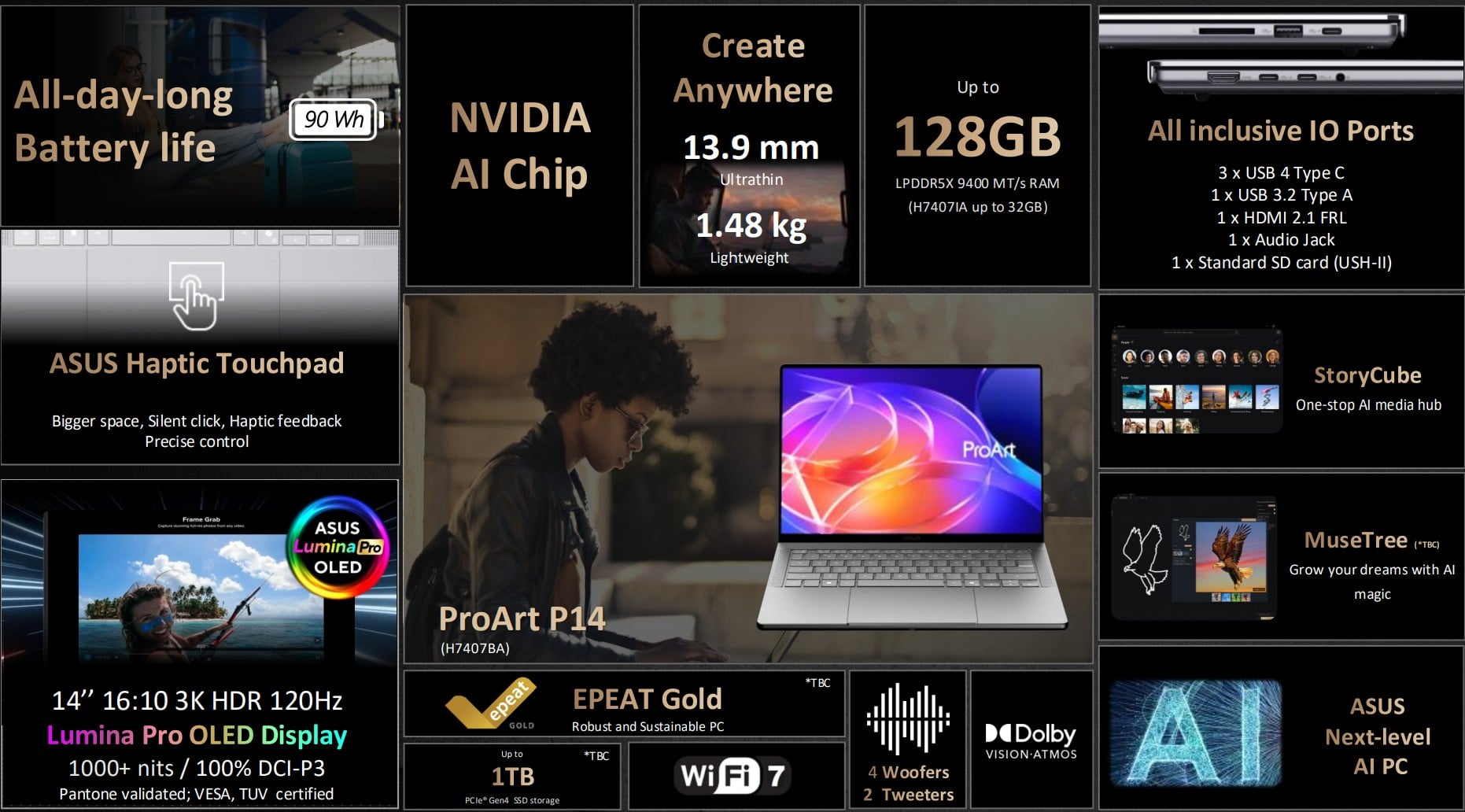
Asus has announced that its ProArt P14 and ProArt P16 models will be among the first to feature the N1X chip. These laptops are designed for professional video and graphics tasks, offering configurations with up to 128GB of RAM (in the larger model) and 14- or 16-inch 120Hz OLED displays with 3K and 4K resolutions, respectively.
A single SoC equipped with a Blackwell GPU could be appealing for creative professionals. whether this chip will meet the expectations of gamers on the move remains uncertain. In a related development, Nvidia is developing a comprehensive ecosystem of Spark-type PCs, including compact devices designed to run demanding software like Nvidia’s NemoClaw. Huang also revealed a desktop built around a custom SoC that he claimed could run Windows. This so-called DGX Station supports up to 748GB of memory and is expected to handle a 1-trillion-parameter model on-device.
It’s fascinating to witness how Nvidia, one of the wealthiest tech companies, is venturing into the laptop processor market after heavily investing in AI technology. This initiative could pave the way for enhanced graphics performance and improved efficiency in PCs, provided that Nvidia’s ambitious claims are validated in real-world applications.


 Daniel Mercer