Daniel Mercer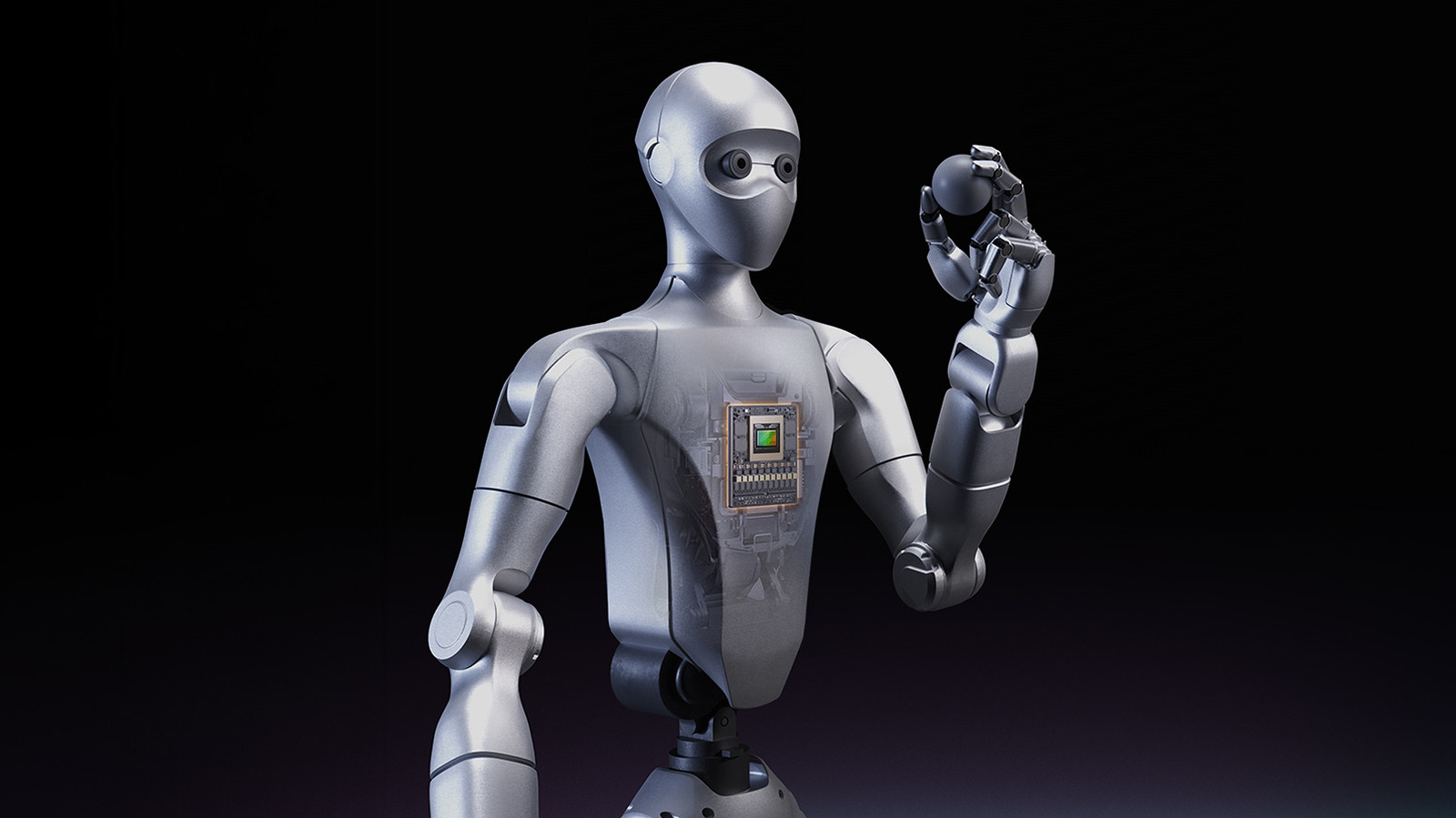

Featuring a nearly 6-foot tall humanoid chassis and advanced tactile five-finger hands.
During his keynote at Computex, NVIDIA’s CEO Jensen Huang presented the most relatable aspect of artificial intelligence: robotics. The company unveiled the Isaac Gr00t reference design humanoid robot platform, which integrates a Unitree H2 Plus humanoid robot with Sharpa tactile five-fingered hands and NVIDIA Jetson Thor onboard computing capabilities. This innovative platform is designed to assist researchers and developers in expediting humanoid robotics development.
The humanoid platform stands nearly 6 feet tall, utilizing a Unitree H2 chassis that weighs 150 pounds and offers 31 degrees of freedom throughout its body. The H2 model is listed on Unitree’s website for $29,900, although the company has only provided visual renders of the product. the Gr00t developer platform will also be compatible with the more affordable Unitree G1 humanoid robot. NVIDIA initially introduced its Gr00t N1 foundational model in March.
This chassis is equipped with dual Sharpa Wave tactile five-finger hands, providing 22 degrees of freedom. It features multi-view sensing capabilities, which include a head-mounted stereo camera, wrist cameras, and inertia measurements. The platform also enables whole-body control with arm torque capabilities reaching up to 120 Newton-meters (or 88 foot-pounds).
Gr00t Isaac operates on NVIDIA’s Jetson AGX Thor T5000 onboard computing unit, featuring an NVIDIA Blackwell GPU along with 128GB of unified memory. It operates within a configurable power range of 40 to 130 watts. The 15Ah battery offers nearly 1 kWh of capacity, allowing for approximately three hours of operational endurance.
As has been the trend in humanoid robotics presentations, no physical robot was showcased during the event. Instead, Huang emphasized that Isaac Gr00t serves as an open foundation for humanoid development. Several institutions, including Ai2, ETH Zurich, Stanford Robotics Center, and UC San Diego, will utilize this reference design. Steve Cousins, executive director of the Stanford Robotics Center, remarked, “Robotics advances most rapidly when researchers can build on open platforms, share code, and test their ideas on real machines.”


 Ethan Carter