David Bridges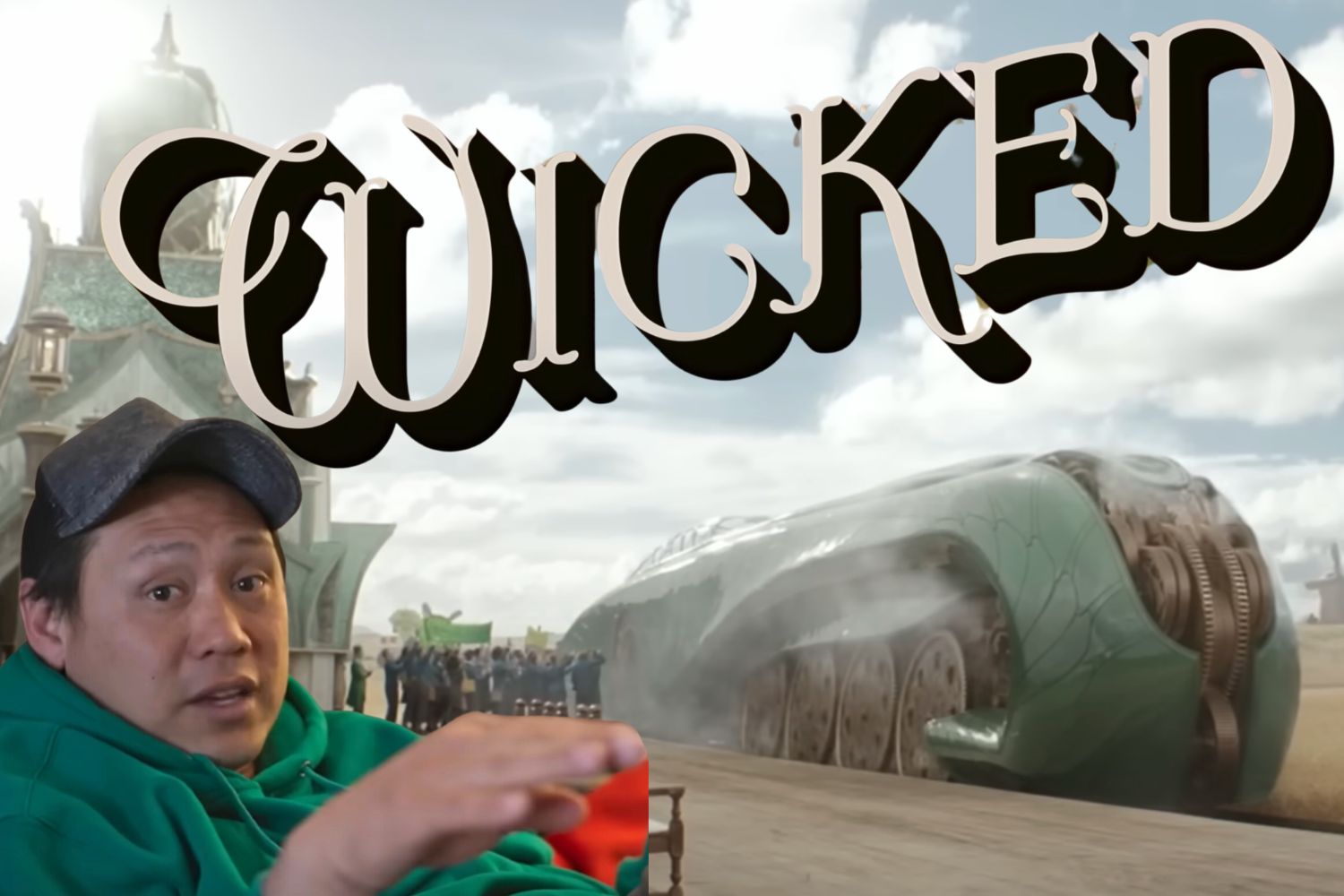

Fans can now explore the enchanting world of Wicked through the insights of director Jon M. Chu, thanks to the digital release of this Universal Pictures musical sensation. This home release not only brings the beloved story to your living room but also includes an array of bonus features that enhance the viewing experience. Viewers can enjoy deleted scenes, behind-the-scenes documentary content, and a captivating commentary track featuring the stars, Ariana Grande and Cynthia Erivo, along with a solo commentary by Chu himself. These extras provide fascinating insights into the creative magic involved in reimagining the iconic land of Oz, which was originally inspired by the acclaimed Broadway musical.
In his commentary, Chu delves into the rich lore that draws from The Wizard of Oz and the historical context in which L. Frank Baum penned the original Oz tales. He also highlights the numerous cinematic homages embedded throughout Wicked. Here are some key takeaways from his insightful discussion about crafting this remarkable film.
Discover the Iconic Legacy of The Wizard of Oz as an American Fairytale
During the captivating “Dancing Through Life” dance sequence, Chu skillfully blends references to classic Hollywood musicals while expressing his love for Baum’s timeless novel and its significance in American cultural history. He remarked, “It’s interesting, Wizard of Oz is such an American fairy tale.” He also acknowledged the iconic 1939 film adaptation. “It was written during a pivotal time in American history, transitioning from the Great Depression to the war. It explores the essence of the American dream, and I cherish the opportunity to reinterpret this dream in Wicked from a contemporary vantage point.” He articulates a journey through various modes of travel that reflect America’s past—from puddles to horseback, boats, roads, trains, and flight—showcasing how these elements shape our historical narrative. If you observe closely, you’ll notice thematic connections between the film’s witch hat opening on the puddle and Elphaba’s flight in the climactic act.
Uncover the Dark Charm of The Flying Monkeys as Universal Monsters
“When we think of the flying monkeys, we often liken them to characters from Universal’s monster universe,” shares Chu in the commentary. “It was crucial for us to depict them in a way that feels tangible and real.”
As he delves deeper into the final act, he describes the creation scene of these iconic creatures: “We embraced the classic Universal Monster moment with the emergence of the flying monkeys. We aimed to convey the pain of their transformation, where their hair morphs into feathers. It’s reminiscent of Frankenstein coming to life. Even the shadow shots are nods to American folklore that we are revisiting. This moment is infused with a sense of victory, as the music swells triumphantly. The question arises: whose perspective are we witnessing? Even in this scene, Elphaba’s actions prompt us to ponder whether her choices are heroic or tragic as chaos unfolds.”
Explore the Almost Connection Between In the Heights and Wicked
The film’s narrative kicks off when Glinda faces a pivotal question that sparks intrigue. Interestingly, this question was nearly posed by Lin-Manuel Miranda, a frequent collaborator of Chu’s. “When that woman asks, ‘Glinda, is it true you were her friend?’— I received numerous calls from Lin, who publicly expressed his desire to voice that line. However, I ultimately decided it would be too distracting,” he admitted, with a chuckle. “So, apologies, Lin.”
Understanding Elphaba’s Complex Motivation in “The Wizard and I”
Elphaba’s desire in Wicked is layered and intricate. Chu clarified that she doesn’t genuinely wish to change her green complexion; rather, it’s the overwhelming societal pressure that instills doubt within her. “The musical number ‘The Wizard and I’ serves as her realization: ‘You know what? I’m proud to be green.’”
The kaleidoscope glass sequence further embodies this internal struggle. “I adore the interplay of light in this scene. It allows her to envision a world where she isn’t confined by her appearance. This theme will resurface later when the Wizard questions her, ‘Is that your heart’s desire? You don’t have to be green.’ Elphaba selflessly sacrifices her own desires, prioritizing the well-being of the animals. This choice reflects her true character and the essential message we aim to convey. Thus, this number holds significant weight.”
Chu continues, “This moment stands in stark contrast to ‘Defying Gravity,’ where Elphaba contemplates the possibility of flight and liberation. Although she has the chance to shed her green skin, she’s not yet ready. We’ve established her visions, and though a celebration throughout Oz revolves around her, she remains unaware of its context. We’ll see how this unfolds in the sequel.”
Delight in the Novelty Song Homage in “What Is this Feeling?”

Chu perceives the dynamic between Elphaba and Glinda as a representation of the complex world of Oz: “Elphaba embodies sharper edges, representing the Z in Oz, while Glinda symbolizes the O. Their contrasting natures visually collide.” He executed this concept through a playful homage. “I love this sequence because it evokes the spirit of ‘Hello Muddah, Hello Faddah,’ a classic number where campers write letters to their parents. The split-screen technique adds a delightful twist to the storytelling.”
Unpacking the Significance of “What Is this Feeling?” and Its Title
The power dynamics between Elphaba and Glinda are vividly illustrated in this scene. Elphaba possesses visible potential, while Glinda wields her influence through popularity, as Chu explains. “Understanding how to communicate effectively and persuade others is a form of power. Glinda’s strength will evolve, but despite her social prowess, the one thing she covets—magic and acceptance by Madame Morrible—is something Elphaba already possesses.”
He elaborates, “The song is titled ‘What is this Feeling?’ and people often mistakenly refer to it as ‘Loathing.’ However, what unfolds between them isn’t pure loathing. We often resist those who are destined to change our lives because transformation is daunting. It’s not merely loathing; it’s a realization that this person could profoundly impact our future.”
Elphaba and Fiyero’s Enchanting Forest Encounter
Chu also hints at a crucial relationship in Wicked: For Good between Elphaba and Fiyero. Interestingly, the pair meets before Glinda crosses paths with Fiyero. “This film doesn’t delve into their full relationship, so we’re strategically leaving breadcrumbs for the audience,” the director shares. “Planning future payoffs can be challenging when they don’t fully materialize in this installment. However, in a unique way, this film revolves around possibilities and choices. By the conclusion, Elphaba faces a significant decision, leading to numerous potential outcomes. The next film will further explore the ramifications of those choices.”
Unraveling the Symbolism of the Wicked Witch of the West’s Hat

One of the pivotal relationships in the film, alongside the bond between Glinda and Elphaba, is the connection Elphaba forms with her iconic black pointy hat. Chu highlights the moment when Glinda humorously considers presenting the hat to Elphaba, encouraged by Pfannee and ShenShen.
“I cherish this scene because it could be interpreted in various ways; however, Glinda’s intentions are not malicious. She is influenced by her friends Pfannee and ShenShen to give the hat, and upon seeing Elphaba’s sorcery book, she feels further compelled. This is a delicate moment as we want to convey that Glinda is not being unkind; she’s simply young and vulnerable to peer pressure.”
When Glinda gifts the hat to Elphaba, Elphaba may very well recognize the jest, yet there’s an allure in it for her. “I love that Elphaba doesn’t react dramatically to the hat, but instead she feels a connection to it. It possesses an intriguing shape; it’s not just circular but has an edge to it. This hat will symbolize a lasting bond between them as they embark on their journey. Unbeknownst to her, this headpiece will become a staple in her identity. The moment she tilts her head, contemplating it, beautifully illustrates her connection to the hat.”
Symbolism in Nessarose’s Shiny Shoes
One delightful Easter egg from the film is Nessarose’s striking shoes, which will become an iconic artifact within the Oz mythology. “The crystal shoes are crafted to resemble two tornadoes, or one tornado on each heel, and they are stunning,” Chu explains. This design was uniquely tailored for this adaptation, harkening back to the original book’s crystal pair, while the famed ruby slippers were specifically created for Judy Garland’s film. “I’m not certain how they fit or if they are even comfortable, as they don’t look very user-friendly. I’ve never tried them on, but they are undeniably beautiful,” he shares, admiring the intricate craftsmanship.
Redefining the Ozdust Duet with Emotional Depth

In the Broadway adaptation, Elphaba’s carefree dancing is portrayed as comedic, but for the film, Chu chose to present the scene with a more profound emotional resonance. He explains, “[It was] crucial for us to convey the pain Elphaba experiences. Even though she is unsure of herself, she is creating space for her identity—even if it’s uncomfortable and challenging. Some may interpret her movements as casting a spell, and perhaps she is, in a sense, empowering herself to assert her presence. It’s a defiant statement, but it’s not overly bold,” he praises Erivo’s nuanced performance. “It’s a defiance that says, ‘I’m present, even if it feels like the most challenging moment of my life.’ If we had portrayed her too assertively, saying ‘I’m here and you have to deal with it,’ it wouldn’t resonate as powerfully.”
Glinda’s Transformation: A Journey of Growth and Change
In this pivotal duet, another significant moment unfolds. “We witness Glinda’s evolution, beautifully brought to life by [Ariana Grande]. Up until this point, she has primarily portrayed a comedic character with fleeting glimpses of intelligence and sensitivity. However, in this scene, she fully sheds her mask, revealing her true self through her eyes. This scene is undoubtedly complex,” Chu comments on the touching connection between Grande and Erivo.
“The moment their hands touch symbolizes a bond that will endure throughout the film. I realized during rehearsals that this was the heart of the movie—this relationship and the journey of understanding one another at their core. Their connection signifies lifelong solidarity against external challenges.” He emphasizes that this expression of unity provides a powerful message of acceptance for a younger generation of Ozians. It also foreshadows the infinite possibilities for Oz’s future, even as they are later influenced by the manipulative agendas of the Wizard and Madame Morrible in the sequel.
Ariana Grande’s Unique Spin on “Popular”
As the emotional depth of the Ozdust dance strengthens their friendship, Chu was careful not to dilute the impact of “Popular” with continued seriousness. This creative choice allowed Ariana Grande to truly make the number her own, complete with extended la-la-la-lahs.
“We debated about extending the ending of ‘Popular,’” the director explains. “When I saw Ari in that hallway, bathed in the pink morning light, I envisioned her performing it all in one continuous shot to showcase her talent as Galinda. This moment felt iconic, and we decided to include it at the last moment. She learned the choreography at the very last minute, and every time she performed it, her infectious energy brought smiles to everyone’s faces. I mean, witnessing Ariana Grande embody Galinda was truly mesmerizing; that silhouette and that iconic moment will forever be etched in my memory. I hope the audience shares in that experience.”


 Brandon Fletcher
 Daniel Mercer