Daniel Mercer

Advancements in wireless technology have transformed gaming controllers into the seamless devices we use today.
For seasoned gamers, the presence of wireless controllers in gaming may seem like a given. their journey began in the 1980s, a time when wired pads were the norm. Those familiar with the PlayStation 2, Xbox, or GameCube eras might envision different designs when recalling early wireless controllers. Over the decades, numerous attempts were made to create effective wireless gamepads, but it wasn’t until recent console generations that they truly became refined.
The evolution of wireless controllers is an intriguing tale. Let’s explore how modern consoles have liberated gamers from the confines of physical connections.
When Did Wireless Controllers First Make Their Debut?
 Mikkelwilliam/Getty Images
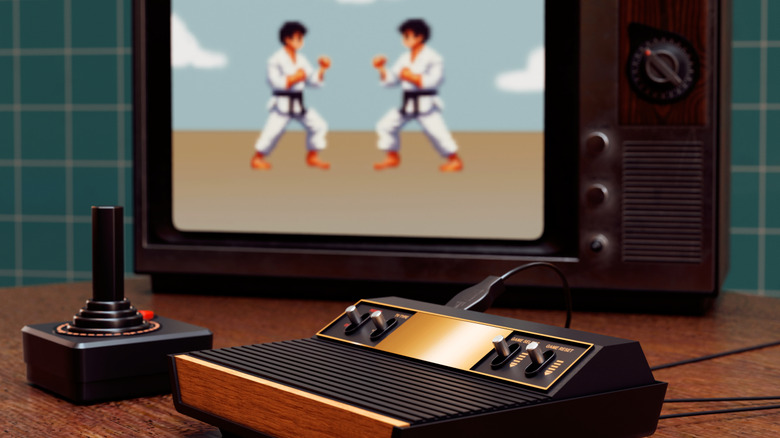
 As someone who has witnessed the evolution of gaming, I find it interesting that the first wireless gaming controller predates me. Introducing the Cynex Game Mate 2, which launched around 1982 as an accessory for the Atari 2600, this device is widely recognized as the first wireless gamepad compatible with a console. It marked the beginning of a technological revolution that took years to mature.
The Game Mate 2 operated on radio frequencies, offering a significant advantage over the infrared options that would later emerge. Unlike the Acclaim Remote Controller for the NES, released in 1989, the Game Mate 2 didn’t require direct line-of-sight to function effectively.
Infrared controllers often struggled with signal loss due to obstructions between the remote and the console, similar to traditional TV remotes. In contrast, the Game Mate 2’s RF technology allowed for greater flexibility and a reported range of up to 20 feet, making it a revolutionary product for its time.
Still, these early controllers had their drawbacks. They were bulky and heavy, essentially a standard 2600 controller mounted on a large base. they consumed the necessary 9V battery quickly. After Atari took over distribution a year post-launch, the product was rebranded as the CX42 Remote Control Wireless Joystick—quite a memorable name!
What Was the First Widely Accepted Wireless Controller?
 Lightspruch/Shutterstock
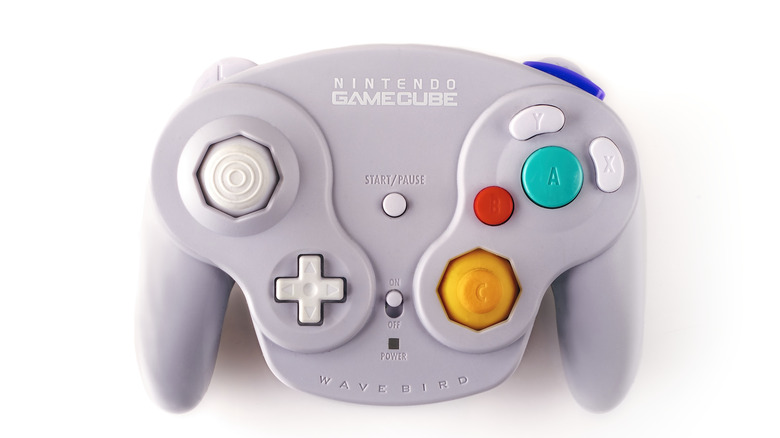
 The Nintendo GameCube’s legacy extended beyond its unique mini discs. In 2002, the WaveBird wireless controller was introduced, becoming the first widely accepted wireless gamepad devoid of significant compromises. I vividly recall standing in line on a mild May evening in Edinburgh, eagerly awaiting the release of Nintendo’s purple console, followed by the purchase of the wireless controller that Christmas.
The WaveBird was a robust, yet somewhat bulky, addition to the GameCube lineup. Its design was notably more substantial than the standard controller, featuring a large receiver that plugged into the console. Gamers were required to adjust matching channels with sliders on both the controller and the receiver. If you cherished the best titles on the GameCube, chances are you experienced them with a WaveBird in hand.
Utilizing 2.4G radio frequency technology for the first time in a gamepad, the WaveBird boasted a minimum range of around 20 feet. The liberation from being tethered to the console was a game-changer. Gamers could now relax and enjoy their experience from a distance, greatly enhancing multiplayer sessions by allowing players to spread out instead of crowding together on a single couch.
To optimize battery life, the WaveBird sacrificed rumble functionality but could operate for up to 100 hours on a pair of AA batteries. This freedom and efficiency paved the way for the development of future gamepads, inspiring a generation of wireless controllers from Sony, Microsoft, and others over the subsequent years.
Which PlayStation Console Featured the First Wireless Controller?
 Dion Chandra/Shutterstock
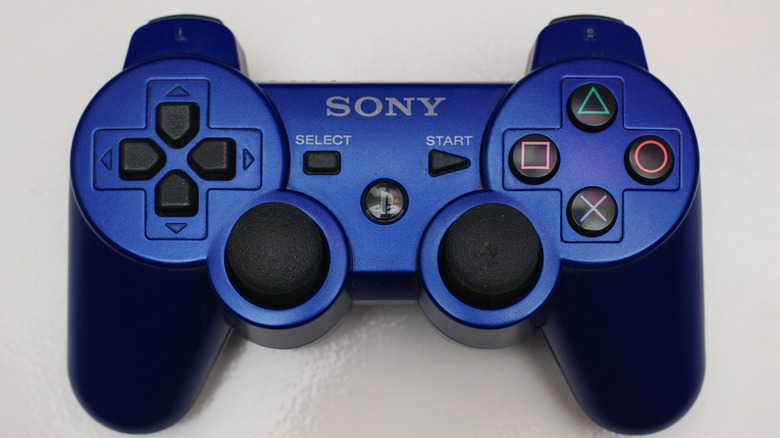
 Many might assume that the PlayStation brand was the pioneer of wireless gaming controllers, given Sony’s dominance in the console industry since the PlayStation 1 launched in 1995. the fact is that Sony’s first wireless controller did not appear until the PlayStation 3 era, and it left much to be desired.
The Sixaxis, introduced as the initial controller for the PS3, is often remembered for its shortcomings. It dropped rumble features in favor of rudimentary, unrefined motion controls, leading to mixed reviews.
Shortly after the Sixaxis launch in 2006, Phil Harrison, then President of Sony Computer Entertainment Worldwide Studios, claimed that the absence of rumble was not due to a patent dispute but rather because it was considered a “last-generation feature.” This controversial statement did not sit well with gamers.
While the PS3 launch title Resistance: Fall of Man was one of the first to utilize the Sixaxis capabilities, it was the dragon-riding game Lair that highlighted the controller’s limitations, particularly its inaccurate motion controls and the lack of rumble feedback. Recognizing the backlash, Sony swiftly introduced the DualShock 3 in 2008, bringing back rumble functionality and enhancing the gaming experience.



 Brandon Fletcher