 Ethan Carter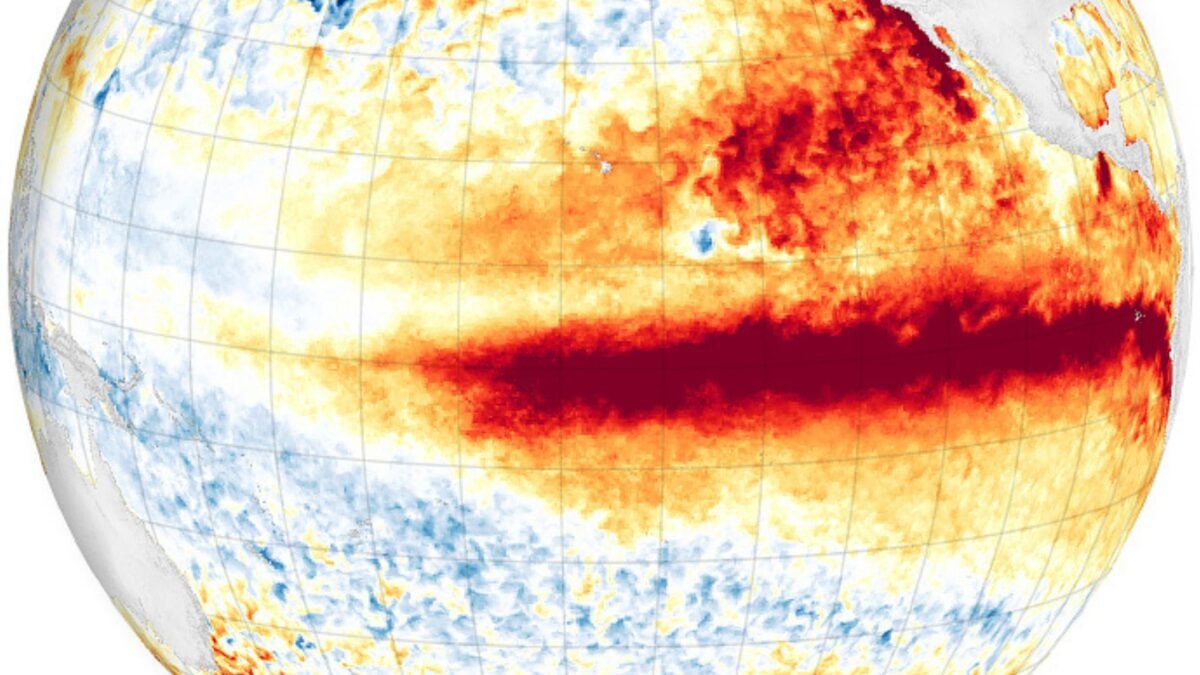

As summer approaches, the likelihood of experiencing one of the most significant El Niño events in recorded history is increasing. Forecasters are increasingly confident that this temporary warming of the tropical Pacific Ocean could lead to a new global temperature record. But what implications does this have for the ongoing climate crisis?
El Niño events now occur in the context of human-induced climate change, creating a complex relationship that researchers are working diligently to unravel. Recent observations indicate that El Niño can intensify the warming effects of rising greenhouse gas levels, pushing global average temperatures into unprecedented ranges.
As humanity continues to release carbon into the atmosphere, the consequences of El Niño are expected to escalate, making it more challenging for the climate to recover from these periodic temperature spikes. Let’s delve into the implications of a potentially extreme El Niño and its impact on our rapidly heating planet.
What Is El Niño and How Does It Work?
The El Niño-Southern Oscillation (ENSO) is a recurring climate phenomenon characterized by fluctuating sea surface temperatures in the central and eastern tropical Pacific, alternating between cool (La Niña) and warm (El Niño) phases. This cycle is irregular, with El Niño and La Niña events typically occurring every two to seven years, as reported by the National Oceanic and Atmospheric Administration (NOAA).
ENSO represents the largest year-to-year climatic variation on Earth. “It’s the 800-pound gorilla in the climate zoo,” stated Michael Mcphaden, a senior scientist at NOAA, in an interview with Gizmodo. This cycle modifies atmospheric circulation, which subsequently affects temperatures and precipitation patterns globally.
During an El Niño event, sea surface temperatures in the central and eastern tropical Pacific exceed average levels, releasing additional heat into the atmosphere and causing the Pacific jet stream to shift southward. global temperatures rise, leading to significant alterations in weather patterns across various regions. In many instances, El Niño intensifies extreme weather events that are already becoming more frequent and severe due to human-induced climate change.
“We observe deadly heat waves, significant public health risks, intensified storms, and worsening drought conditions,” Mcphaden explained. “These phenomena arise from the interplay of El Niño and climate change during specific timeframes.”
How El Niño Contributes to Global Temperature Increases
The strong El Niño that emerged in 2023 significantly contributed to making 2024 the hottest year on record. Although La Niña took hold in 2025, causing a decline in global average temperatures, it did not revert to the levels seen in 2022. In fact, 2025 ranked as the third-warmest year on record, trailing only 2023 and 2024. This phenomenon occurred because the accumulation of greenhouse gases in the atmosphere counteracted the cooling effects typically associated with La Niña, as Mcphaden noted.
This dynamic is evident in unusual regional weather patterns. “Earlier this year, despite the presence of La Niña, we experienced a massive heat wave in Australia, which usually sees cooler conditions during La Niña. The anthropogenic influence significantly mitigated the effects of [La Niña],” explained Friederike Otto, a climate science professor at Imperial College London, in her conversation with Gizmodo.
This trend is also reflected in historical temperature data. “In the 21st century, La Niña years are warmer than El Niño years in the 20th century due to the buildup of greenhouse gases,” Mcphaden observed.
This pattern emphasizes why historical temperature records resemble a rising staircase rather than a smooth incline. In a 2023 article for The Conversation, Kevin Trenberth, a Distinguished Scholar at the National Center for Atmospheric Research, described how global warming follows a stepwise progression heavily influenced by ENSO variability. El Niño years cause spikes in global average temperatures, which are followed by cooling during La Niña. Yet, due to rising greenhouse gas concentrations, the long-term net effect remains one of warming.
According to the most severe model projections, this year’s El Niño may surpass the intensity of the 2023 event. Experts interviewed by Gizmodo expressed confidence that a super El Niño could elevate global temperatures by more than 2.7 degrees Fahrenheit (1.5 degrees Celsius) above pre-industrial levels in 2026 and 2027. This benchmark is critical as outlined by the Paris Climate Agreement, which aims to limit the most severe impacts of climate change.
“A substantial El Niño event occurring now could propel us to a point where we rarely—if ever—return below the 1.5-degree Celsius [2.7-degree Fahrenheit] threshold,” cautioned Daniel Swain, a climate scientist at the University of California Agriculture and Natural Resources, during an interview with Gizmodo.
Furthermore, the extreme weather experiences during a super El Niño could serve as a preview of the permanent conditions we may face in just five to ten years, according to Swain. “As a climate scientist, that’s a profoundly alarming realization,” he remarked.
Are Super El Niños Becoming More Common?
It is evident that El Niño has a significant influence on global temperature increases; however, whether the reverse is true remains uncertain. Nonetheless, there is growing evidence suggesting that human-driven climate change may increase the frequency of strong El Niño events.
“These events are infrequent enough that obtaining a statistically significant sample size from observations is challenging at this point. the data indicates that we may be witnessing more extreme El Niño events in the last four to five decades than previously recorded, which aligns with model-based predictions that we will experience more frequent extreme El Niño events this century,” Swain explained.
Mcphaden concurs and believes this year could yield more data to support that theory. “If this event turns out to be particularly strong, it would be unusual since the last very strong event occurred only ten years ago. Typically, the return interval for exceptionally strong events is 15 to 20 years,” he added.
If super El Niños are indeed becoming more prevalent in a warming world, the underlying reason may relate to their function within the global climate system. This phase of the ENSO cycle acts as a mechanism for releasing stored energy, expelling excess heat from the tropical Pacific. as the global atmosphere continues to warm, the ocean absorbs more heat, resulting in increased heat release during an El Niño year.
This scenario suggests a potential feedback loop. If global warming leads to more frequent strong El Niño events, those events could, in turn, amplify the immediate impacts of global warming.
Climatologists will require considerable time to gather the necessary data to fully explore this relationship. Nonetheless, it is clear that El Niño and human-induced climate change are interconnected forces. Understanding their interactions will be essential for comprehending our warming planet.


 Daniel Mercer