 Brandon Fletcher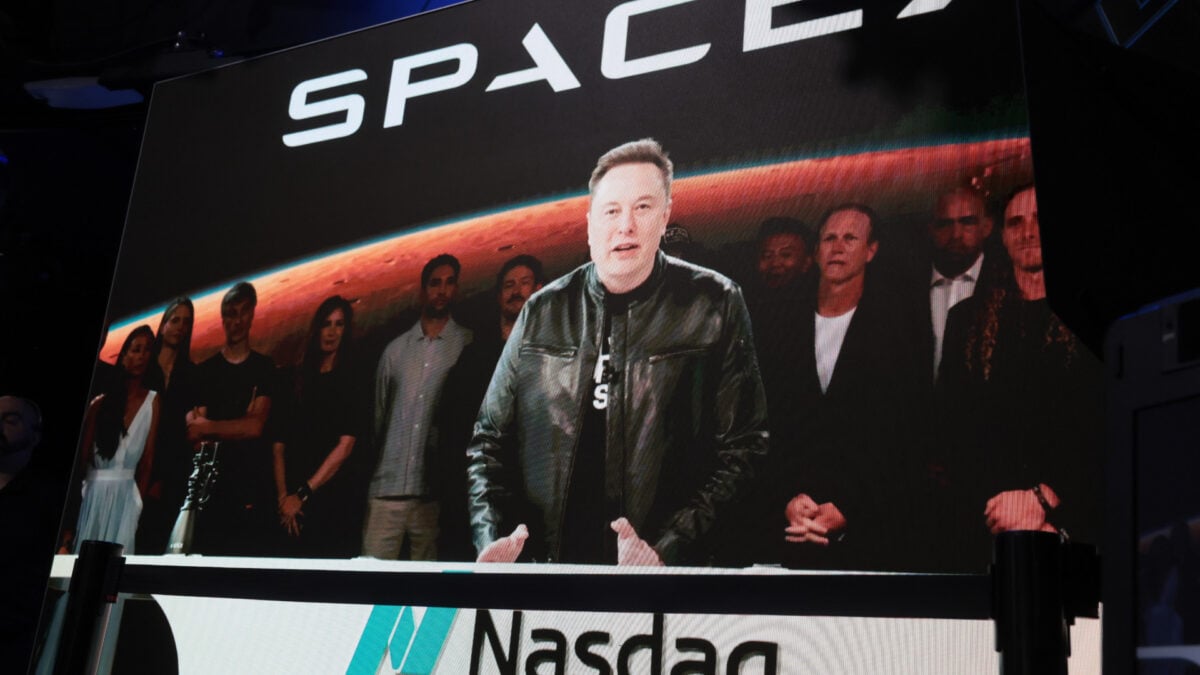

In its initial quarter as a publicly listed entity, Elon Musk’s SpaceX reported an astonishing expenditure of $18.4 billion. The company cautioned investors about maintaining similarly high spending levels over the next two quarters, which resulted in a more than 8% decline in stock price during late trading on Tuesday evening. Of that total expenditure, a staggering $15.8 billion was allocated to bolster its artificial intelligence initiatives, a sector that concluded the quarter with a net operating loss of $1.3 billion.
This financial figure emerges from SpaceX’s first earnings report following its record-setting initial public offering (IPO) in mid-June. While the IPO marked a remarkable milestone for Musk, who briefly achieved the status of the world’s first trillionaire, the aftermath has not been as favorable. Currently, the stock price is significantly lower than its IPO price. As of last week, the decline in value was roughly equivalent to the market capitalization of Musk’s other venture, Tesla. The stock sales on Tuesday are unlikely to improve this situation. the impending end of the company’s first lockup period on Thursday will allow some insiders to sell over $100 billion in stock for the first time since SpaceX’s public debut.
To alleviate investor concerns, Musk assured stakeholders of significant advancements in AI technology.
“Our growth rate is undoubtedly faster than any competitor, and our efficiency in compute deployment is likely the highest,” Musk stated. “We anticipate concluding this year with over two gigawatts of compute capacity, and by the end of next year, our cumulative compute online will be exponentially greater.”
These ambitious compute objectives reflect Musk’s bold stance against skeptics during the earnings call.
“The challenges posed by terrestrial data centers are trivial compared to the complexities of developing massive reusable rockets that are frequently launched,” Musk asserted.
Musk disclosed that SpaceX’s data centers will utilize exclusively Nvidia chips. The two companies are collaborating to design Starmind AI satellites, which are part of SpaceX’s broader vision to establish a vast network of up to a million AI data centers in Earth’s orbit. While some experts express skepticism regarding Musk’s ability to realize this ambitious space-based data center plan, others have raised significant concerns about the environmental, economic, and social repercussions of such an extensive launch initiative, should it materialize as proposed.
During the call, Musk announced that SpaceX plans to start launching the Starmind AI satellites in 2027.
The company intends to introduce Grok 5 before the year’s end. Musk indicated that this chatbot will be trained on “all the data that SpaceX has ever produced,” establishing it as “the best engineer by far.” He has previously claimed that the yet-to-be-released large language model (LLM) will achieve AGI-level capabilities, which refers to a hypothetical form of AI that could match or exceed all human abilities.
“We expect the pace of AI development to accelerate significantly,” Musk remarked. “By the end of next year, I believe it will be unclear whether there is any digital task that AI won’t be able to accomplish, given the current trajectory of progress.”
All of this comes with a glaring caveat: Musk has a history of making ambitious promises. His extensive commitments extended beyond the realm of AI during the call, where he claimed that SpaceX’s space operations would achieve a launch frequency of one rocket per day by next year and that robots would be engaged in manufacturing activities on the Moon.
“I recognize this may sound completely outrageous, but it is feasible to scale operations to a thousand times the economic capacity of Earth in terms of intelligence launched into space, potentially even a million times,” Musk claimed. “We will construct factories on the Moon, and robots will play a crucial role in that process.


 Daniel Mercer