David Bridges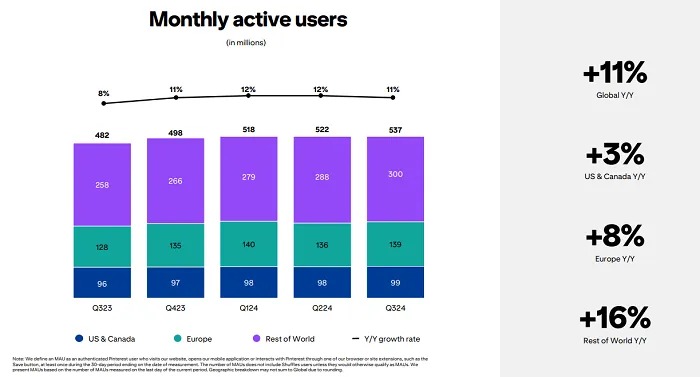

Pinterest has recently unveiled its latest performance metrics, showcasing a remarkable uptick in revenue and achieving a new record high in user engagement.
This positions the platform favorably for the upcoming holiday shopping season, setting the stage for increased consumer activity.
In terms of active users, Pinterest welcomed an impressive addition of 15 million new users in Q3, bringing its total to 537 million monthly active users (MAU).
This marks a significant acceleration in growth compared to Q2, when Pinterest only managed to add 4 million new active users.
While 4 million new users is certainly a noteworthy achievement, in the context of social media growth, it pales in comparison to the more robust addition of 15 million, which reflects a much more favorable trend for the platform.
Achieving a new peak in usage is also critical for Pinterest’s overall growth narrative, especially considering the challenges it has faced in maintaining momentum over recent years.
During the pandemic in 2020, enforced lockdowns led to a surge in online shopping, resulting in a significant increase in Pinterest usage. Many market analysts speculated that this shift would lead to a lasting change in shopping behaviors. However, as physical stores reopened, users gradually returned to their traditional shopping habits, causing a decline in Pinterest’s user engagement.
After a period of recovery, Pinterest has not only regained its footing but has also surpassed those peak pandemic usage levels, building a more resilient and sustainable foundation for continued success moving forward.
However, there remains a concern regarding Pinterest’s user growth, which appears to be stagnating in the U.S. and EU, pivotal markets for the platform’s advertising revenue.
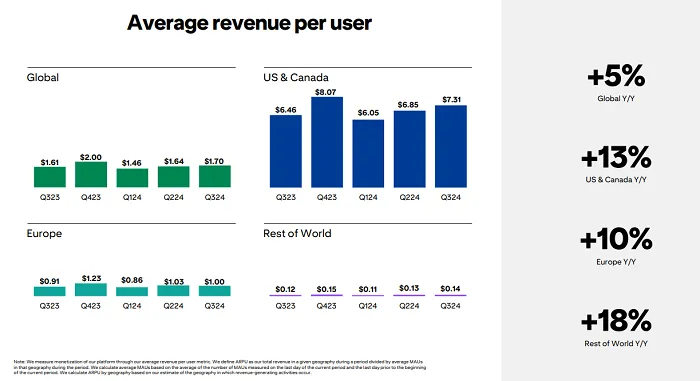
The provided charts illustrate that Pinterest is generating significantly higher revenue from users in these regions. The lack of audience growth in the U.S. and EU could potentially hinder its advertising capabilities. Nevertheless, Pinterest continues to expand its ad business in other markets, which could yield future benefits. Currently, however, the platform is not experiencing substantial growth in its most critical revenue-generating regions.
As many social applications are nearing saturation in Western markets, this outcome is not entirely unexpected. It does, however, increase pressure on Pinterest to innovate and provide alternative advertising options to enhance monetization opportunities. This need for diversification carries the risk of alienating users if not executed thoughtfully. Therefore, the safer strategy may involve enhancing advertising capabilities in emerging markets while acknowledging that building a successful ad business is a challenging endeavor, as evidenced by Pinterest’s lower average revenue per user (ARPU) in the EU compared to the U.S.
In terms of overall financial performance, Pinterest reported a revenue of $898 million for the quarter, reflecting an impressive 18% growth year-over-year.
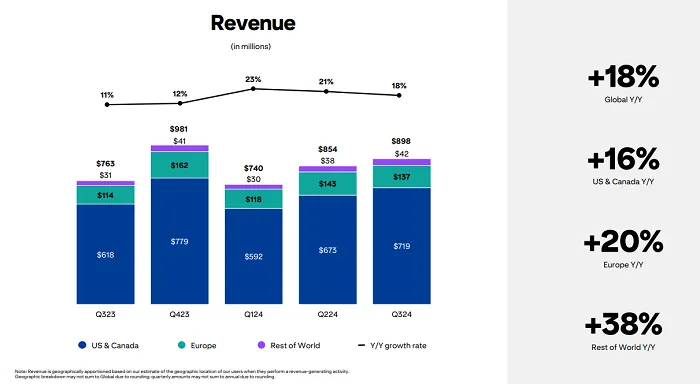
This is a commendable outcome, and with Q4 sales on the horizon, based on last year’s performance, Pinterest is poised for a strong finish to 2024. The platform’s emphasis on enhancing shopping options and improving its digital matching and try-on features is resonating with an expanding user base, which signifies that as Pinterest continues to develop its tools, it will likely enhance its value as a shopping destination.
Moreover, these shopping options are continuously improving. This year, Pinterest has expanded its AI-driven “Body Type Filters”, enabling users to find items that closely align with their unique body types, enhancing personalization in their shopping experience.

Additionally, Pinterest has incorporated more AI functionalities into its ad creation process, assisting marketers in leveraging key usage trends and enhancing the presentation of their advertising content.
While these enhancements are significant, they also come with increased costs.
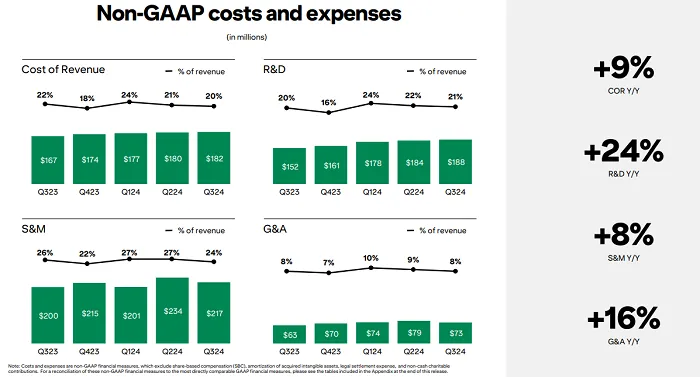
As demonstrated in the accompanying charts, Pinterest’s research and development expenditures have surged by nearly 25% this year, with expectations for this trend to persist as the year progresses.
This increase in spending is logical, as other social media platforms are investing heavily in AI development. Although Pinterest may not have the same financial resources as its competitors, it is essential for the platform to adapt and innovate to enhance the shopping experience within its app.
The core appeal of Pinterest lies in its ability to provide users with a platform to save items and receive personalized recommendations based on their selected styles. For brands, a significant advantage of Pinterest is its capacity to offer a more comprehensive product display and shopping experience than they can provide within their own e-commerce sites. The more effective Pinterest becomes at this, the better positioned it will be as a primary shopping destination, fostering increased user activity and engagement.
Overall, Pinterest’s indicators show promising potential, with improving results and a steady rise in user engagement. By maximizing advertising opportunities in non-U.S. markets, Pinterest can enhance its market appeal. In terms of user experience, the platform is clearly on the right path, remaining committed to its core goals instead of chasing fleeting social media trends.



 Tessa Everly
 Mason Thompson