David Bridges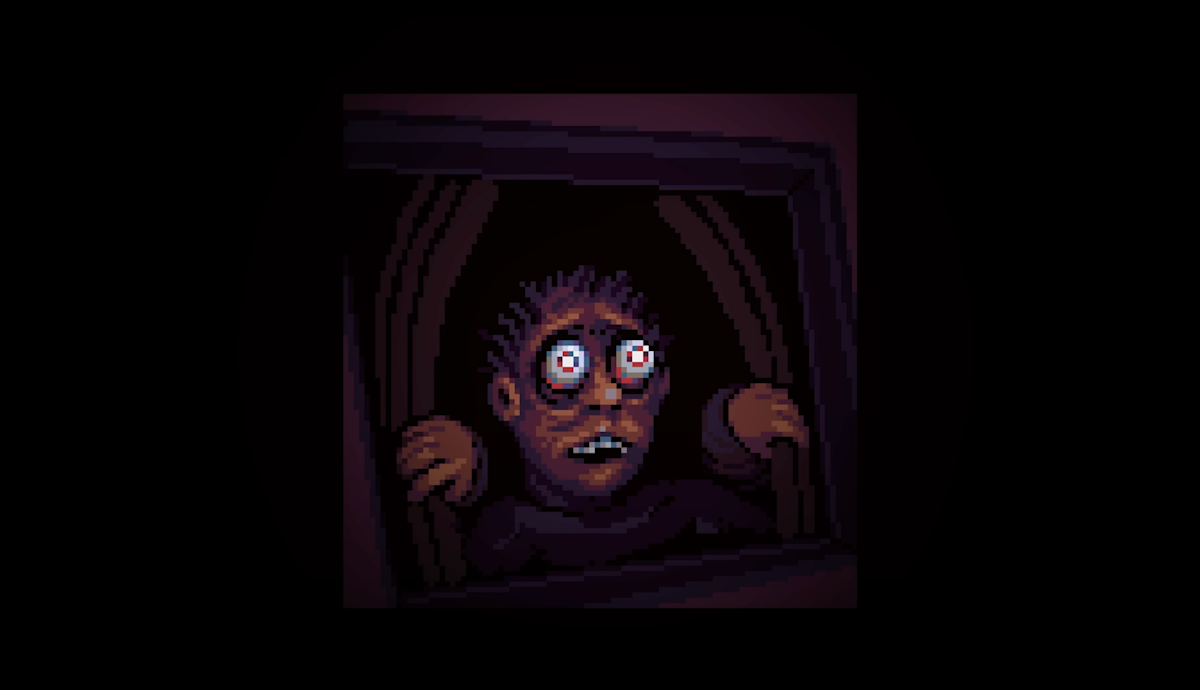

How would you react in a situation where a catastrophic disaster unfolds around you, defying all comprehension? Would you extend a helping hand to your frightened neighbors and even open your doors to unfamiliar faces, believing that there is strength in unity? Or would you choose to face the unknown alone, despite the overwhelming odds against you? Would maintaining daily routines, like brushing your teeth, still hold significance amidst chaos?
The horror encapsulated in Francis Coulombe’s RPG Look Outside is profoundly immersive. It introduces a cosmic horror element that urges players to avoid looking outside their apartments, where something incomprehensible is occurring. Those who dare to venture out or gaze beyond their windows experience unimaginable transformations that result in shocking and exceptionally imaginative body horror. Throughout the game, leading up to its multiple intense climaxes, the unsettling atmosphere compels you to introspect — examining the decisions you’ve made and the individual you’ve evolved into for survival.
While I attempted to embrace an empathetic perspective, I frequently encountered scenarios that left both my character and myself burdened with guilt. A persistent sense of doubt manifested as I questioned the morality of my choices. Did I act hastily by eliminating a neighbor whose head was entirely composed of teeth? Was my hand truly forced into making a heartbreaking sacrifice in a moment of desperation?
Gradually, the most unsettling experience becomes the act of looking into a mirror. This necessity arises frequently in the game, as maintaining personal hygiene directly influences your character’s stats and overall performance.
Your journey begins with Sam, your character (whose name you can modify), awakening after an unusual dream and feeling an intense desire to gaze outside. Immediately, you’re faced with a critical choice: should you satisfy this curiosity or heed your instincts and remain inside? This dilemma recurs throughout the gameplay, forcing you to confront your choices repeatedly.
During this phase, you encounter Sybil, a cryptic neighbor who communicates solely through the wall, her one large eye peeking out from a significant crack. Trusting Sybil is a daunting task; she claims that everything will resolve in 15 days if you can just endure. However, you must scavenge for essential resources to survive that long. As you leave your apartment and interact with other neighbors, you might feel compelled to take a more proactive role in uncovering the truth behind the unfolding catastrophe.
Some of your neighbors, particularly a group of robed amateur astronomers resembling a cult, seem to possess substantial knowledge about the situation. You may find that completing tasks for them provides insights into the phenomena surrounding you. Conversely, others are more focused on their immediate concerns, attempting to enlist your help with various tasks: locating missing individuals, collecting laundry, and cleaning up after the manifestations of eldritch horrors. A full-scale conflict brews somewhere within the building, and you have the option to engage if you choose. Notably, your landlord continues to demand rent, regardless of the chaos.
If you opt for Normal mode, as I did, Sybil becomes your only save point, necessitating regular returns to your apartment. In contrast, Easy mode features an autosave function that simplifies this aspect of gameplay.
Interactions throughout the game are turn-based, allowing you to encounter numerous enemies and potential allies as you explore the apartment building. However, distinguishing between the two can often be challenging. In some cases, you may only have the option to attack or flee, which simplifies your decision-making. Yet, in other instances, you can engage in dialogue and pose questions. This turn-based mechanic provides a moment to assess each new encounter, but there’s always an undercurrent of uncertainty regarding each character’s trustworthiness. Even when you retreat to your apartment, where you can shower, rest, cook, craft, and play video games, unexpected visitors will knock on your door, compelling you to decide whether to admit them.
Survival can prove quite challenging, especially when you’re alone. Enemies frequently outnumber you, making it vital to gather a few trustworthy allies. Forming a party of up to three companions significantly enhances your chances of success. I adopted a trusting approach, which, for better or worse, resulted in a reliable group of fighters by my side. However, two of those very allies eventually ousted me from my own bedroom, criticizing my cooking skills.
The creature designs in the game come to life in a disturbingly beautiful pixel art style. The body horror depicted can be challenging to process, as it often elicits a visceral reaction. When presented realistically, I find myself either shielding my eyes or perceiving the horror as unintentionally absurd. However, Coulombe’s artwork harmoniously balances the grotesque and the ridiculous, creating a powerful emotional impact.
While nothing was so horrifying that I couldn’t bear to look, there were certainly moments that genuinely startled me or made my skin crawl. Even characters who remain unchanged, like the protagonist, exhibit a grotesque quality that contributes to the unsettling atmosphere. Just when the tension reaches a peak, bursts of absurdity surface, as if to remind players, yes, this is the apocalypse, but we are still human, and humor persists.
Much of the enjoyment derived from playing this game lies in uncovering its myriad surprises and intricacies, so I won’t delve into specifics regarding bosses, puzzles, or the layout of the building, except to mention that it bears a striking resemblance to the House of Leaves concept, which can sometimes be maddening but ultimately enhances the brilliance of the experience. Notably, there is no map to assist you. The soundtrack, masterfully composed by Eric Shumaker, perfectly complements the emotional resonance of each environment, warranting a separate review dedicated to its excellence.
This intricate narrative culminates in an overwhelming cosmic gut-punch moment, offering multiple endings that radically alter your perception of the game. Ultimately, it evolves into something far grander than it initially appeared, leaving players with feelings that are nearly overwhelming. I find myself contemplating it long after the final credits roll.
Having invested countless hours into Look Outside, far exceeding a typical playthrough, I diligently examined every detail and sought to uncover all the secrets, pursuing every possible outcome. I have experienced various bizarre deaths and witnessed wildly differing fates unfold.
Initially, I approached this game expecting captivating artwork and a distinctive take on survival horror, but I emerged profoundly affected by what has become one of the finest cosmic horror games I’ve encountered in recent years, possibly ever. Look Outside, published by Devolver Digital, is currently available exclusively on Steam, but I sincerely hope it transitions to other platforms soon to allow a broader audience to experience its brilliance.



 Daniel Mercer
 Brandon Fletcher