 David Bridges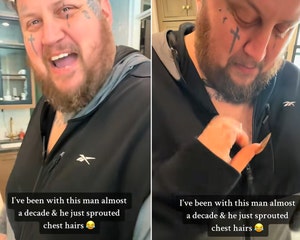

Remi Bader Opens Up About Her Struggles Post-Surgery and Weight Loss Journey
Remi Bader is bravely sharing her personal narrative regarding her significant weight loss for the very first time, shedding light on the emotional and physical challenges she faced.
In an exclusive interview with SELF magazine, the popular TikTok influencer revealed that she underwent bariatric surgery, specifically a single anastomosis duodenal-ileal bypass with sleeve gastrectomy. She candidly described the “brutal” nature of the process and her “horrible” recovery experience, highlighting the emotional toll it took on her well-being.
Bader, who originally gained fame as a plus-size influencer sharing her authentic fashion hauls, recounted the events leading up to her surgery. She reflected on her prolonged struggle with binge eating disorder, the challenges she faced in attempting to lose weight as her health began to decline, and her battle with depression, which significantly impacted her life.
TikTok
Jelly Roll’s Spouse Bunnie XO Reveals Stunning Change In His Physique After Dramatic Weight Loss
View Story
“I have always embraced my curvy figure; it’s been a part of my identity,” the 30-year-old social media star expressed. However, as her health issues escalated, it felt increasingly like a struggle to maintain that identity.
“I will always believe that one can be a larger size and still be healthy and happy. I experienced that for a time, and it wasn’t a lie,” Bader continued. “But eventually, things shifted, and I became genuinely unhappy with myself.”
During her interview, Bader elaborated on the various weight loss treatments she attempted leading up to her surgery, many of which she had previously shared with her audience.
As highlighted in SELF, Bader experimented with several weight loss medications, including Rybelus, an oral semaglutide drug, and Ozempic, which she previously revealed made her feel ill and uncomfortable.
“Everyone’s experience is unique, but for me, I faced daily vomiting as a side effect,” she recounted to SELF.
She also tried other medications, such as Contrave, an oral weight loss drug, Wellbutrin, an NDRI antidepressant, and Mounjaro—also known as tirzepatide—an antidiabetic drug similar to Ozempic, which is often used for its weight loss benefits.

Sofia Alvarez/SELF
Bader shared that she began Mounjaro “very secretly” in September 2022, just a few months after completing a six-week outpatient treatment program for eating disorders, admitting that she fell back into binge eating “almost immediately.”
She mentioned to SELF that during that time, she thought trying Mounjaro was the “worst decision I could make.”
“I just talked about how I went to therapy…. Nobody could ever find out about this,” she recalled.
Similar to Ozempic, the Mounjaro injections caused her to vomit. Despite the negative experiences, Bader mentioned that her doctor encouraged her to try Ozempic once more, this time in conjunction with Metformin, another antidiabetic medication. Unfortunately, she continued to experience nausea and ultimately discontinued all medications, eventually trying Vyvanse—a medication commonly prescribed for ADHD and binge eating disorder—in June 2023, but like the previous treatments, it proved ineffective.
At this point, Bader noted that her battle with binge eating disorder intensified, leading to further health complications. She experienced debilitating back pain that left her bedridden, profuse sweating, sleep apnea, and alarming results in her lab work, including elevated cholesterol, heart issues, and fatty liver disease. She also mentioned her doctor warned her that she was “becoming infertile,” which was more frightening to her than the other health issues she faced, as she told SELF.
Waiting for your permission to load the Instagram Media.
Bader explained that she struggled to decide on a path that would ultimately help her feel better. “I think it’s an ongoing battle: What do I do that’s right? What do I do for others? What do I do for myself? It was driving me insane,” she recalled.
After extensive consultations with bariatric surgeons in New York City, Bader made the life-altering decision to undergo weight loss surgery. Following her doctor’s recommendation, she opted for a single anastomosis duodenal-ileal bypass with sleeve gastrectomy (SADI-S).
She informed her boyfriend and parents about her decision and underwent the surgery in December 2023. Bader initially assumed the surgery would lead to a quick recovery, but the reality turned out to be quite the opposite.
“I must emphasize that it was perhaps the most brutal experience I’ve had,” she told SELF. “I underwent surgery and spent hours in recovery, throwing up repeatedly. It didn’t feel normal at all. I was expected to leave [the hospital] in a day, but I couldn’t stop projectile vomiting and was unable to drink water. They won’t discharge you if you can’t keep fluids down. I genuinely can’t explain how awful it was.”
While a physician stated that recovery from this procedure typically takes two to three weeks, Bader expressed that she was “not f–king okay” until mid-February 2023, long after the surgery.
“I fell into a very deep depression, and it was undeniably the scariest time of my life,” she recalled. “I couldn’t share my feelings with anyone. I truly wanted to die.”
After her doctor adjusted her antidepressant dosage, she began to feel somewhat better, but shortly thereafter, she and her boyfriend ended their relationship.
Looking back now, more than two years later, a healthier and happier Bader reflected on her journey, noting that her progress “happened very subtly.” She continues to take antidepressants, attends therapy regularly, and maintains a consistent exercise routine.
Waiting for your permission to load the Instagram Media.
“My binge eating has improved,” Bader shared. “I’m still facing challenges and have those thoughts, but I can’t physically binge as much because I simply don’t have the capacity for it.”
She also mentioned that another side effect of the surgery is that she feels nauseous and may even vomit if she overeats. Additionally, Bader has experienced hair loss as a consequence of her rapid weight loss.
While she feels “much happier overall” and no longer struggles with some of the health issues she faced previously, such as back pain, she still feels uncomfortable with her weight loss—especially given the speed at which it occurred.
“I never anticipated it would happen this quickly,” Bader admitted. “I never wanted to be this size… I’m probably the only person who went to a doctor for weight loss just to say, ‘Okay, but can I still be curvy?’ It’s incredibly confusing to suddenly find yourself in a different body while having the same mindset.”
“I still feel uneasy. I’ve never looked or felt this way before. I’ve never been this size,” she continued. “So when people comment now, ‘Tiny, skinny. Oh my God, your legs, your arms, this,’ it’s genuinely triggering for me. I believe people think that was all it took to be happy…. It’s simply not true.”
Although Bader may appear different now, she emphasizes that this transformation does not hinder her commitment to being a size-inclusivity advocate.
“I find it fascinating how the world perceives me now,” she shared with SELF. “I still want to advocate for inclusivity and all these important issues, yet I feel like I’m not allowed to. People say, ‘Well, you don’t relate to us anymore.’ And I wonder, why is that fair? I truly feel I’ve inhabited so many different bodies and faced various situations; why can’t I continue to be an advocate?”
If you or someone you know needs support with mental health issues, please text “STRENGTH” to the Crisis Text Line at 741-741 to connect with a certified crisis counselor.
If you or someone you know is struggling with depression or has had thoughts of self-harm or suicide, please seek help. The National Suicide Prevention Lifeline (1-800-273-8255) provides 24/7, free, confidential support for individuals in distress.
If you or someone you know is dealing with an eating disorder, please seek assistance. Contact the National Eating Disorders Association (NEDA) at 1-800-931-2237 or visit NationalEatingDisorders.org.

[ad_2]