 Ethan Carter

Whenever I find myself reflecting on the brilliance of Cyberpunk: Edgerunners, I often revert to one of three activities: rewatching the captivating anime, diving back into the game (which, thanks to the anime, has seen a revival in its reputation after an initially rocky launch), or immersing myself in the pages of NoName, a different series by creator Rafał Jaki featured in Manga Plus Creators. Fortunately, as I eagerly await the release of the anime’s second season, I can now indulge in a fourth option: reading Dark Horse’s prequel manga, Cyberpunk: Edgerunners Madness.
Cyberpunk: Edgerunners Madness, penned by Bartosz Sztybor from CD Projekt Red and illustrated by Asano of Studio Trigger fame (known for BNA: Brand New Animal), does what a good prequel should: it delves deeper into beloved characters before their introduction in the original storyline. This prequel takes us back in time to explore the lives of Rebecca, the mischievous gremlin of Edgerunners, and her brother, Pilar, before they cross paths with David Martinez.
What were Rebecca and Pilar up to before David entered their lives? They were living in a car, crammed into the driver’s and backseats, embodying the harsh reality of aspiring edgerunners. The revelation that their father was a legend in Night City adds a poignant twist to their situation as they struggle to carve out their own identities, feeling the weight of expectations as nepo babies. Drawn by the dark allure of Night City, the siblings find the motivation to ignite their dreams of becoming successful edgerunners.
Their journey unfolds into a series of misadventures reminiscent of Shane Black’s Kiss Kiss Bang Bang. The duo stumbles from one failed job to another, irritating every low-level grunt and mid-tier player in Night City. They cleverly navigate their blunders, transforming their comedic mishaps into a legendary escapade that demands to be taken seriously.
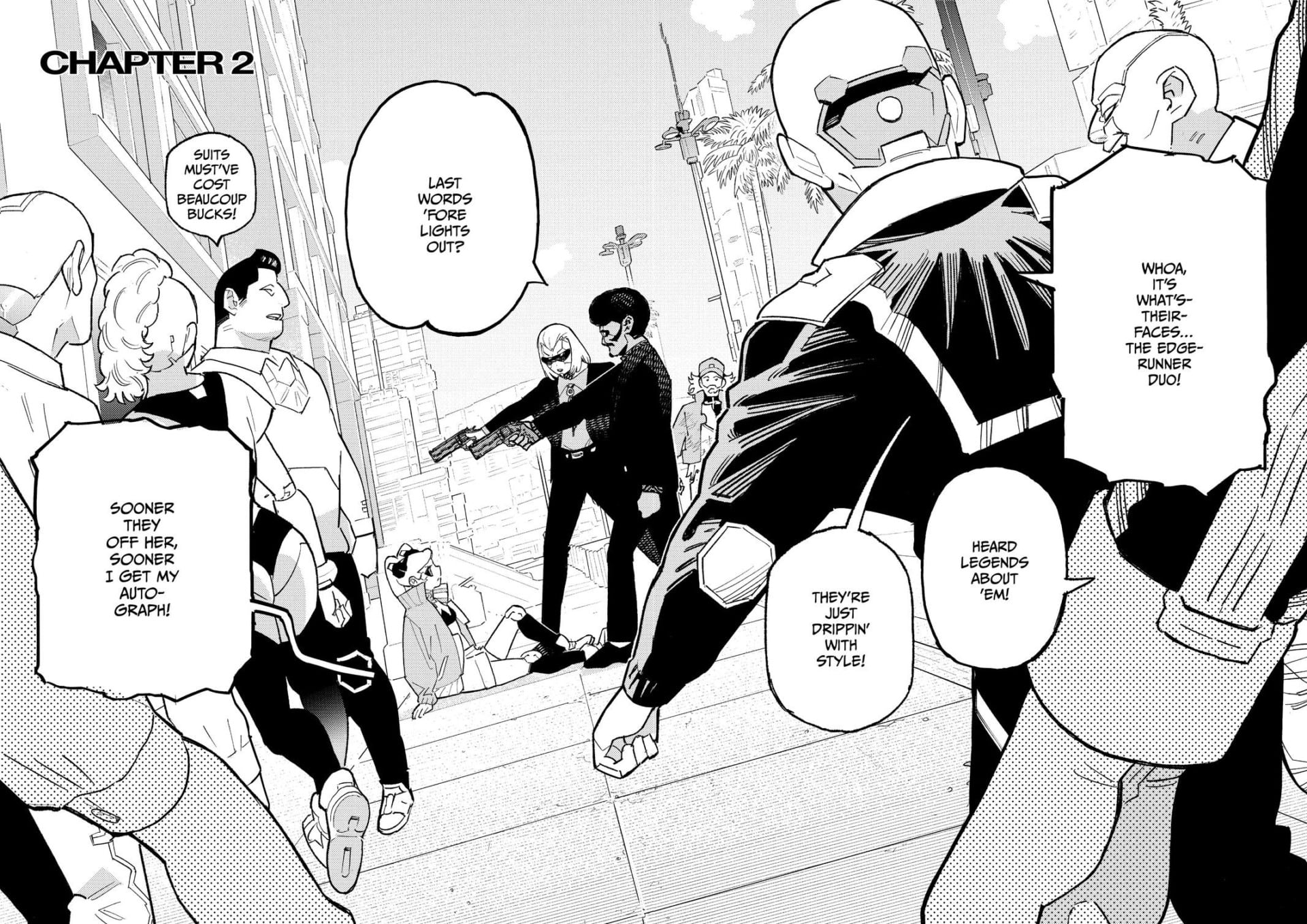
Admittedly, I approached Madness with some hesitation. My primary concern was that it would be a superficial stroll down memory lane, filled with the typical “assembling the outfit” cliches often found in prequels like Solo: A Star Wars Story. the first volume of Madness pleasantly surprised me. It reads like a downloadable content (DLC) expansion for the anime, presenting its own engaging story that unfolds beautifully, leaving me eager for the next volume. Although the manga is rich with nostalgic references, it never feels patronizing or unworthy of my time as a fan of its predecessor. Instead, the references enhance the experience, translating Cyberpunk’s narrative into manga with a touch of elegance.
One standout feature of the manga is its clever adaptation of the game’s NPC-scanning mechanic, where players can access witty flavor text about characters they encounter. While the game presents this as a simple button press, the manga enriches this concept by providing character bios for individuals Pilar and Becca might not meet again, cleverly placed at the end of each chapter. the volume concludes with a comprehensive map showcasing all the locations Pilar and Becca explore, inviting readers to jump back into Cyberpunk 2077 and experience the world firsthand. As a fan of Cyberpunk’s unique slang, it’s refreshing to see 2077’s vibrant language come alive once more.
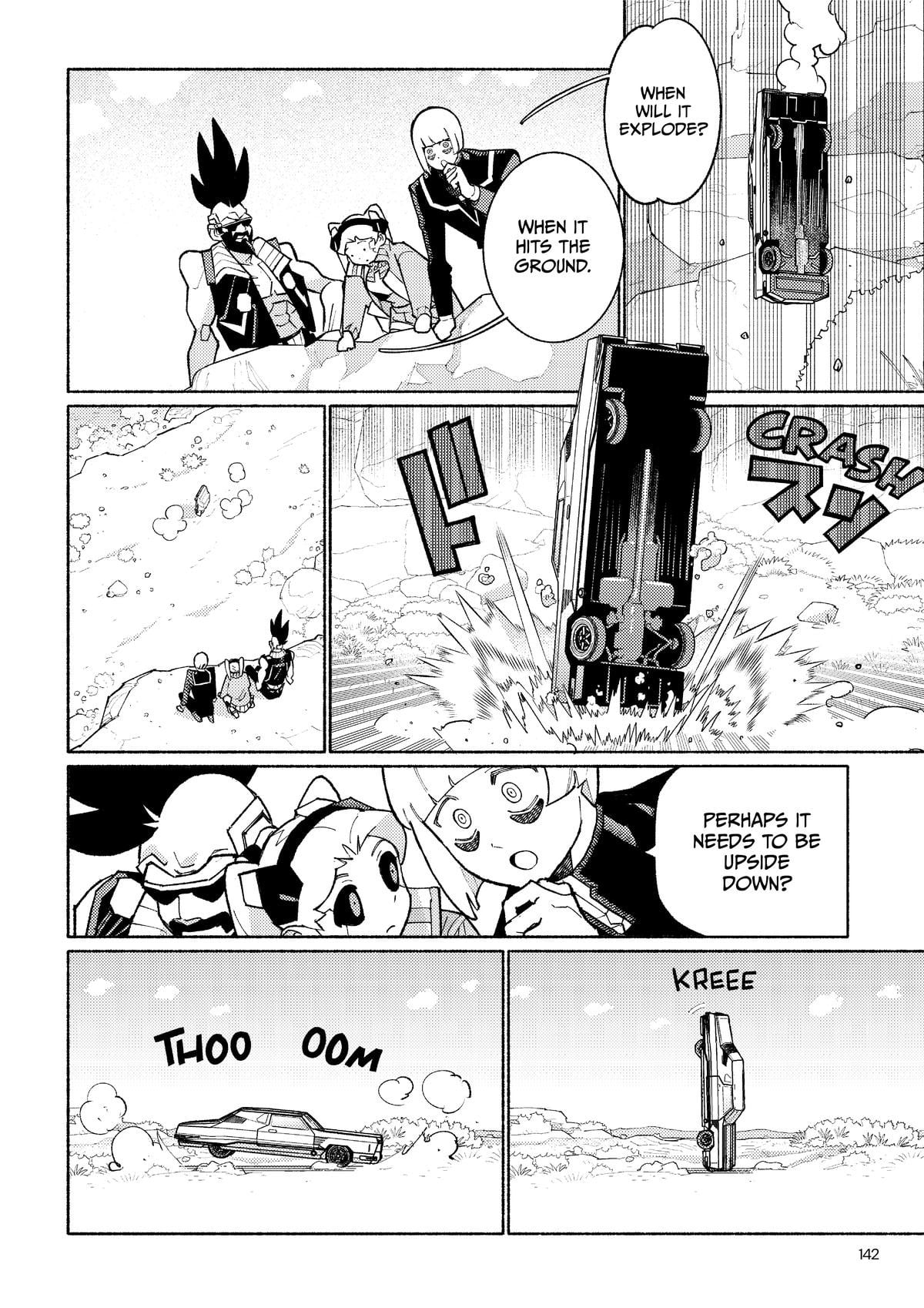
Asano’s artwork captivates the eye. His dynamic and stylish paneling enhances legibility, especially during action scenes, while also delivering hilariously slapstick moments that depict the explosive gore typical of the genre. What truly impressed me about Madness is its ability to introduce fresh narratives within the expansive universe of Night City—a world I had thought was fully explored after Phantom Liberty.
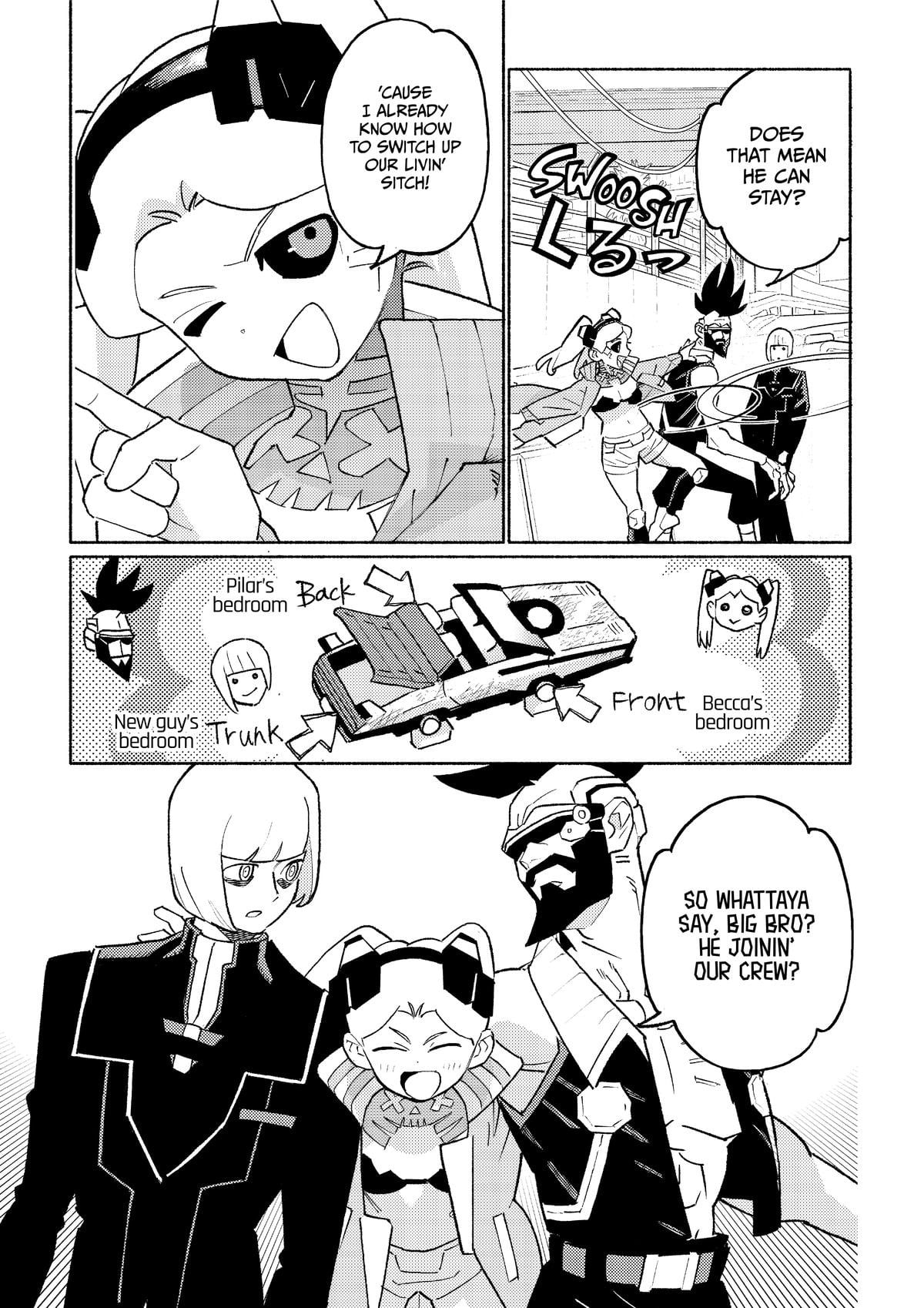
An intriguing twist arises with the introduction of the third member of Pilar and Becca’s crew, a character whose ability to swap personalities through neural chips has left him fragmented. One moment, he’s a lighthearted jokester, and the next, he channels the intensity of John Wick. He embodies a concept similar to Roger from American Dad, yet he lacks any memory of his alternate personas—a true Ricky Spanish scenario. This amnesia complicates matters further, as his connections to Night City’s elites make him a target for rival gangs seeking to eliminate him, as well as edgerunners in need of some quick cash.
Without a doubt, I would go to great lengths for him. He serves not only as a delightful narrative device for Madness but also as one of the most captivating cyberpunk scenarios I’ve encountered recently. Initially drawn in by the prospect of reading a manga that expands on the universe, my interest quickly shifted to witnessing the trio evolve into close friends, navigating through Looney Tunes-style antics and intense shootouts.
While I initially approached Madness expecting a nostalgic journey back to the Crunchyroll Anime Awards’ Anime of the Year winner, the first volume has left me optimistic about the forthcoming second season of Edgerunners as well as the development of the sequel to Cyberpunk 2077, aptly titled Cyberpunk 2. If either project possesses even half the charm and excitement that Madness has shown in its first volume, we are certainly in for an exhilarating ride.
Want more io9 news? Discover when to expect the latest updates on Marvel, Star Wars, and Star Trek releases, find out what’s next for the DC Universe on film and TV, and learn everything you need to know about the future of Doctor Who.


 Daniel Mercer