David Bridges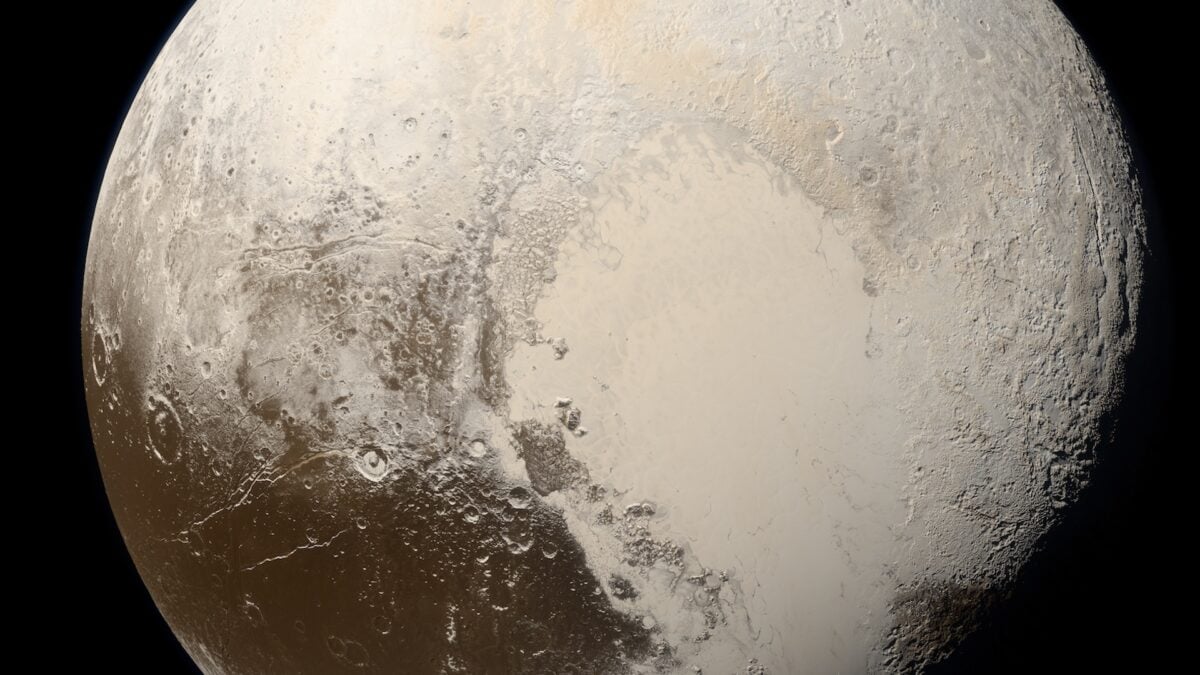
On July 14, 2015, NASA’s New Horizons spacecraft achieved a historic milestone by flying past Pluto and delivering breathtaking, close-up images of this fascinating icy world. This groundbreaking mission continues to provide invaluable data from the distant corners of our solar system, yet the future of this remarkable endeavor hangs in the balance due to impending budget cuts. The ongoing collection of scientific information helps deepen our understanding of planetary science, but insufficient funding could prematurely halt the mission, jeopardizing years of hard-won knowledge.

As NASA commemorates the 10th anniversary of the monumental Pluto flyby, the agency is also preparing for substantial budget reductions that pose a significant threat to the New Horizons probe. The White House’s budget proposal, unveiled in May, suggests a staggering decrease of $6 billion in NASA’s budget for the upcoming year compared to 2025. If approved, this budget reduction would slash NASA’s planetary science funding from $2.7 billion to $1.9 billion, potentially putting dozens of active and planned missions, including New Horizons, at risk of cancellation.
Launched on January 19, 2006, New Horizons embarked on an incredible journey spanning 9 billion miles over nine and a half years, ultimately becoming the first spacecraft to successfully reach Pluto. The mission faced numerous challenges, not only due to the harsh conditions of space but also due to the extensive advocacy efforts from the space community that lasted nearly 20 years before the spacecraft was approved. Initially, NASA had deemed missions to Pluto unworthy of the investment, leading to several budgetary conflicts that nearly resulted in the cancellation of New Horizons. In 2002, amidst its development, the White House attempted to terminate the mission, but an overwhelming backlash from the public compelled Congress to intervene and restore the necessary funding for its continuation.
Despite its tumultuous beginnings, New Horizons is now celebrated as one of the most fruitful planetary missions in NASA’s history. After its close encounter with Pluto, the mission unveiled that the icy planet and its moons are far more intricate than previously understood. Among its many discoveries, New Horizons captured images of a massive, heart-shaped icy plain on Pluto, which may suggest the presence of a subsurface ocean. Additionally, the mission unveiled the existence of cryovolcanoes, indicating that Pluto is a geologically active body rather than a lifeless, frozen world. The probe also examined Pluto’s chaotic moons, which exhibit irregular rotation patterns, further contributing to our understanding of this distant celestial environment.
Extending its reach beyond Pluto, New Horizons is actively exploring the farthest regions of the solar system. The spacecraft is illuminating the mysteries surrounding the Kuiper Belt and its various smaller celestial bodies. In January 2019, New Horizons conducted the most distant flyby of a Kuiper Belt object to date, exploring Arrokoth, a frozen remnant from the early solar system. This double-lobed object serves as a vital link to understanding the formation of our planetary system. Following the success of the Arrokoth flyby, New Horizons received a mission extension, enabling the spacecraft to continue its scientific explorations until it exits the Kuiper Belt in 2029.
“The New Horizons mission occupies a unique position in our solar system, poised to address critical questions regarding our heliosphere and providing exceptional opportunities for multidisciplinary scientific research for both NASA and the wider scientific community,” stated Nicola Fox, associate administrator for NASA’s Science Mission Directorate, during a recent announcement. This mission’s contributions extend beyond planetary exploration, offering insights that could redefine our understanding of cosmic phenomena.
New Horizons still possesses sufficient fuel to conduct another flyby of a Kuiper Belt object, and mission teams are actively searching for a suitable target for this next significant encounter. However, if the proposed budget cuts gain approval, the New Horizons spacecraft may be decommissioned long before reaching its intended expiration date, resulting in a significant loss of valuable data and insights. Following the remarkable journeys of the Voyager 1 and Voyager 2 spacecraft, New Horizons ranks as the third most distant human-engineered object from Earth. Given the vast distances involved, it would take years for another spacecraft to reach this remarkable location. “We’re the only spacecraft out there,” emphasized Alan Stern, principal investigator for New Horizons, in a conversation with The Planetary Society. “There’s nothing else planned to come this way.”



 Daniel Mercer