 David Bridges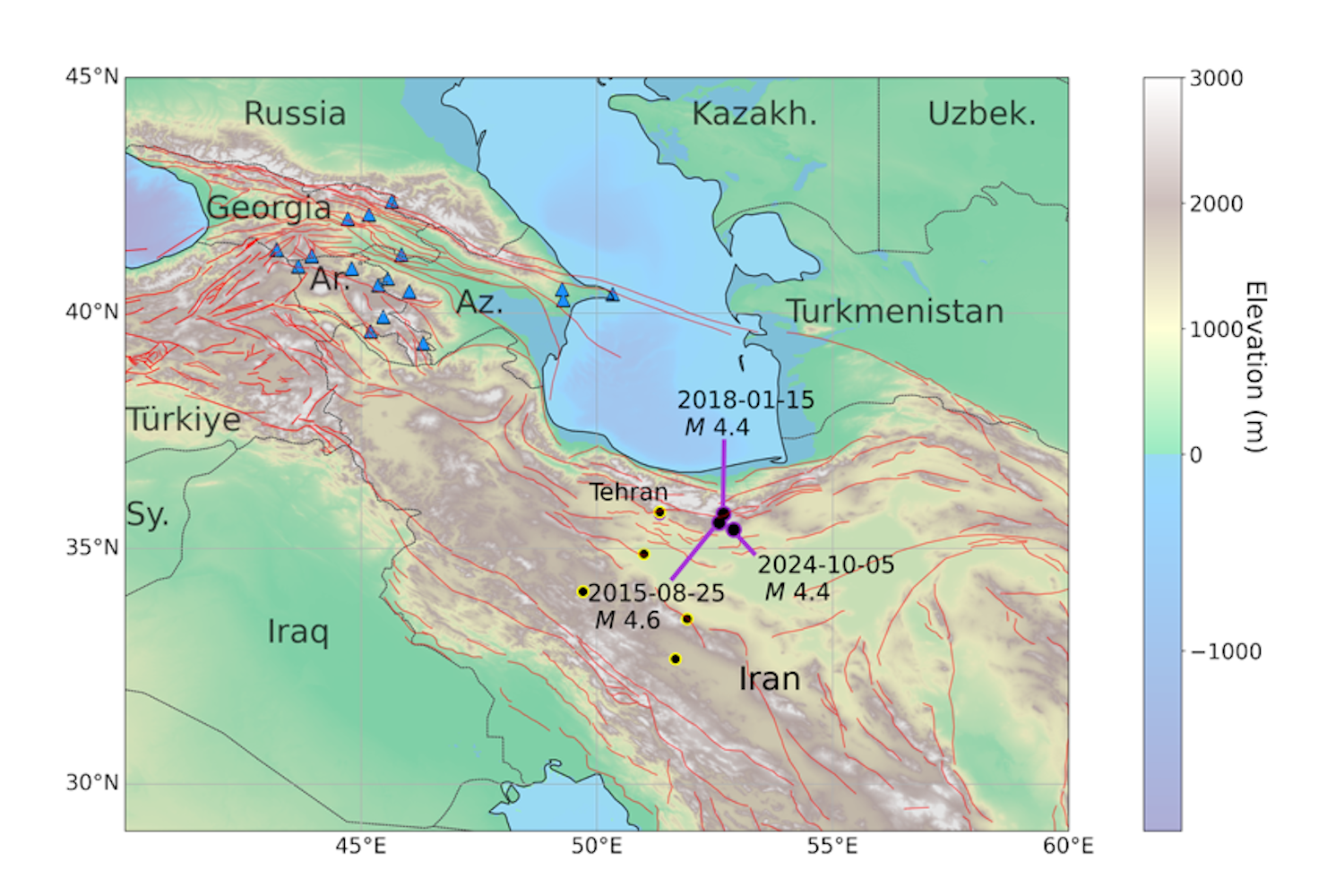
Unraveling the Mystery Behind Iran’s October 2024 Earthquake: A Comprehensive Analysis
On October 5, 2024, a significant earthquake struck Iran, triggering immediate speculation across social media platforms. Just moments after the seismic event, various accounts suggested that the tremor was not a natural phenomenon but rather a covert nuclear weapons test conducted by Iran. This swift dissemination of rumors raised alarms and curiosity about the true nature of the earthquake and its implications for global security.

Groundbreaking Research Debunks Nuclear Test Claims Following the Earthquake
Research spearheaded by experts at Johns Hopkins University has effectively debunked the allegations of a nuclear test linked to the earthquake in a detailed study published on February 3 in the esteemed journal Seismica. The findings of this research not only confirm that the quake was a standard seismic occurrence but also emphasize the dangers posed by weaponized misinformation during heightened geopolitical tensions. This incident serves as a reminder of the importance of credible scientific analysis in the face of rampant rumors and misinformation.
Understanding the Earthquake’s Origin: Insights from Seismology
Benjamin Fernando, the lead researcher from Johns Hopkins University, stated, “There was a concerted misinformation and disinformation campaign surrounding this incident, suggesting it was a nuclear test—a phenomenon not commonly associated with earthquakes.” He emphasized the crucial role that geophysical data played during this geopolitical crisis, shedding light on how seismic science can inform public understanding amidst chaos. The quake, measured at a magnitude of 4.5 by local sources, was confirmed to have occurred roughly 31 miles (50 kilometers) southwest of Semnan and about 135 miles (216 km) east of Tehran.
Seismic Analysis: Distinguishing Between Natural Events and Nuclear Tests
In the months following the earthquake, Fernando and his team meticulously analyzed the event using publicly accessible data from various seismic monitoring stations. Seismologists gather information by capturing seismic waves at multiple locations, enabling them to understand earthquake dynamics. They determined that the quake’s origin was associated with a reverse fault, a geological movement caused by the collision of the Arabian and Eurasian tectonic plates. Furthermore, they decisively ruled out any connection to a clandestine nuclear test, noting that nuclear detonations have distinct signatures that are explosively different from seismic events.
Historical Context: Iran’s Seismic Activity and Previous Earthquakes
Moreover, the Comprehensive Test Ban Treaty Organization (CTBTO) confirmed that this region had experienced similar seismic events in 2015 and 2018. Given its geographical position between the converging Arabian and Eurasian tectonic plates, Iran is recognized as a seismically active area, prone to natural earthquakes. Despite this knowledge, rumors suggesting the seismic activity was unnatural proliferated rapidly on social media platforms. The first post emerged on X within 20 minutes of the tremor, falsely attributing the shaking to an Israeli military action against Iran.
The Viral Spread of Misinformation Post-Earthquake
Within just 27 minutes of the quake, claims that it was caused by a nuclear test began circulating online, leading to an avalanche of misinformation. This incident highlights the challenges posed by incorrect interpretations of seismic data, which often feed into conspiracy theories and coordinated disinformation efforts. The authors of the study noted that this rapid spread of false narratives can have significant ramifications, particularly in politically sensitive regions.
Iran has gone nuclear since last night.
They used the test bombs 10 km below the surface near Semnan to ensure minimum radiation exposure and it resulted in a 4.6 scale earthquake which was recorded by seismographs.#iran #khamenai #nuclear #israel pic.twitter.com/bssDFYwdQ5— akhilesh kumar (@akumar92) October 6, 2024
The Geopolitical Implications of Misunderstanding Iran’s Nuclear Program
Iran’s nuclear program has been a focal point of contention in Middle Eastern politics for decades. While Iran asserts that its intentions are peaceful, the U.S. and its allies remain vigilant in their efforts to prevent the country from acquiring nuclear weapons. The propagation of unfounded claims regarding secretive nuclear tests has the potential to escalate tensions, risking a wider conflict in the region and beyond.
Distinguishing Misinformation from Ignorance: The Role of Social Media
One of the significant challenges in combating misinformation is discerning strategic disinformation from mere ignorance. The researchers noted a “pattern of substantial and sustained engagement” on social media that suggested a deliberate effort to mislead the public, indicating that some individuals possess a certain level of expertise in seismology. This finding underscores the necessity for critical evaluation of information shared online and the potential for manipulation in high-stakes situations.
The Media’s Role in Amplifying Misinformation Following the Earthquake
The researchers observed that news outlets worldwide quickly reported on the earthquake, including major publications in the U.S., France, the U.K., Israel, India, Pakistan, and Zimbabwe. Many mainstream English-language media platforms speculated on the possibility of a nuclear test, which inadvertently gave credibility to these erroneous interpretations of complex seismic data. In contrast, Persian-language media generally provided more accurate reporting, often consulting local experts to ensure factual accuracy.
Strategies for Combating Scientific Misinformation in Future Events
To mitigate the spread of misinformation in the future, researchers offered valuable recommendations on how the scientific community can respond effectively. Saman Karimi, a co-author of the study, suggested that scientific agencies should publish detailed reports promptly to counteract misleading narratives. Establishing partnerships between social media platforms and recognized seismologists or agencies, such as the U.S. Geological Survey, could enhance the visibility of accurate information and help drown out false claims. This proactive approach is crucial for preserving public trust in scientific findings.
Understanding the Global Consequences of Misinformation in Science
The implications of scientific misinformation extend far beyond immediate concerns; they can lead to dire global consequences. The study underscores the critical need for accurate information dissemination, especially during sensitive geopolitical events, to prevent misunderstandings that could escalate into larger conflicts. As we navigate an increasingly complex information landscape, fostering a culture of scientific literacy and critical engagement is essential for the public and policymakers alike.


 Daniel Mercer