David Bridges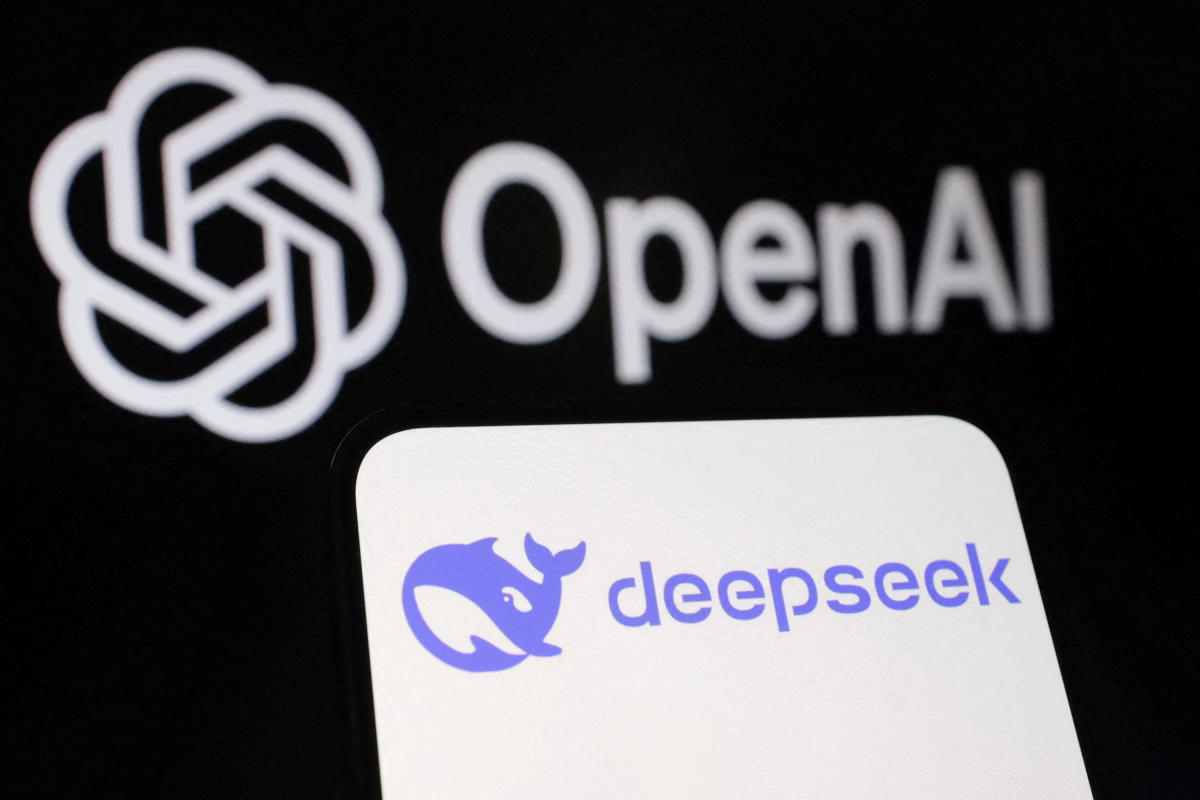
Recent reports highlight the ongoing challenge posed by Chinese startups, which are reportedly striving to replicate the innovative technologies developed by leading American AI firms. In response to this trend, OpenAI, in collaboration with Microsoft, has taken a firm stance by banning accounts suspected of “distilling” its sophisticated models. This proactive approach aims to identify and mitigate the efforts of entities engaging in these practices, with the emerging company DeepSeek currently under scrutiny by OpenAI for potential breaches.

The term distillation describes a process where smaller and more efficient AI models are enhanced by leveraging the responses generated from their more advanced counterparts. This technique aims to replicate the reasoning capabilities of larger models to achieve comparable results in specific contexts. While OpenAI allows business users to distill its models via its platform, it is crucial to note that, as highlighted by the Journal, users are prohibited from training their own models using the outputs generated by OpenAI’s systems. DeepSeek has acknowledged that it utilizes distillation on its most powerful model, R1, to effectively train smaller variants.
An OpenAI spokesperson articulated concerns regarding companies based in China, stating that these entities—and others—are continually attempting to distill the models offered by top-tier US AI companies. They emphasized the critical importance of collaborating with government bodies to safeguard the most advanced models from adversaries and competitors aiming to exploit US technological advancements.
Although OpenAI did not name DeepSeek explicitly in its comments, the rise of the startup’s open-source chatbot has not gone unnoticed. For instance, it surged to the top of the free apps category in Apple’s App Store, showcasing its significant popularity. This remarkable success has led to a staggering $1 trillion reduction in stock market valuation for publicly traded tech firms deeply invested in the AI sector. There are claims suggesting that DeepSeek’s chatbot performs comparably to AI systems developed by industry giants such as OpenAI and Google, but at a substantially lower cost and utilizing less powerful chips. This challenges the prevailing notion that such advanced technology must be prohibitively expensive to create and maintain.
Reports indicate that DeepSeek references OpenAI’s policies within its outputs, raising further questions about its practices. Concurrently, prominent figure David Sacks has stated there is “substantial evidence” suggesting that DeepSeek has successfully distilled knowledge from OpenAI’s models, prompting an ongoing debate regarding intellectual property rights in the AI sector.
Despite these concerns, many observers find OpenAI’s position somewhat ironic, given the backlash it has faced from various creators, including authors and comedians, who have accused the company of using their copyrighted works without obtaining permission for training its models. OpenAI has previously asserted that it would be “impossible to train today’s leading AI models without using copyrighted materials,” seemingly indicating a double standard in its approach to copyright issues within the industry.
If you buy something through a link in this article, we may earn commission.



 Daniel Mercer
 Ethan Carter