 Brandon Fletcher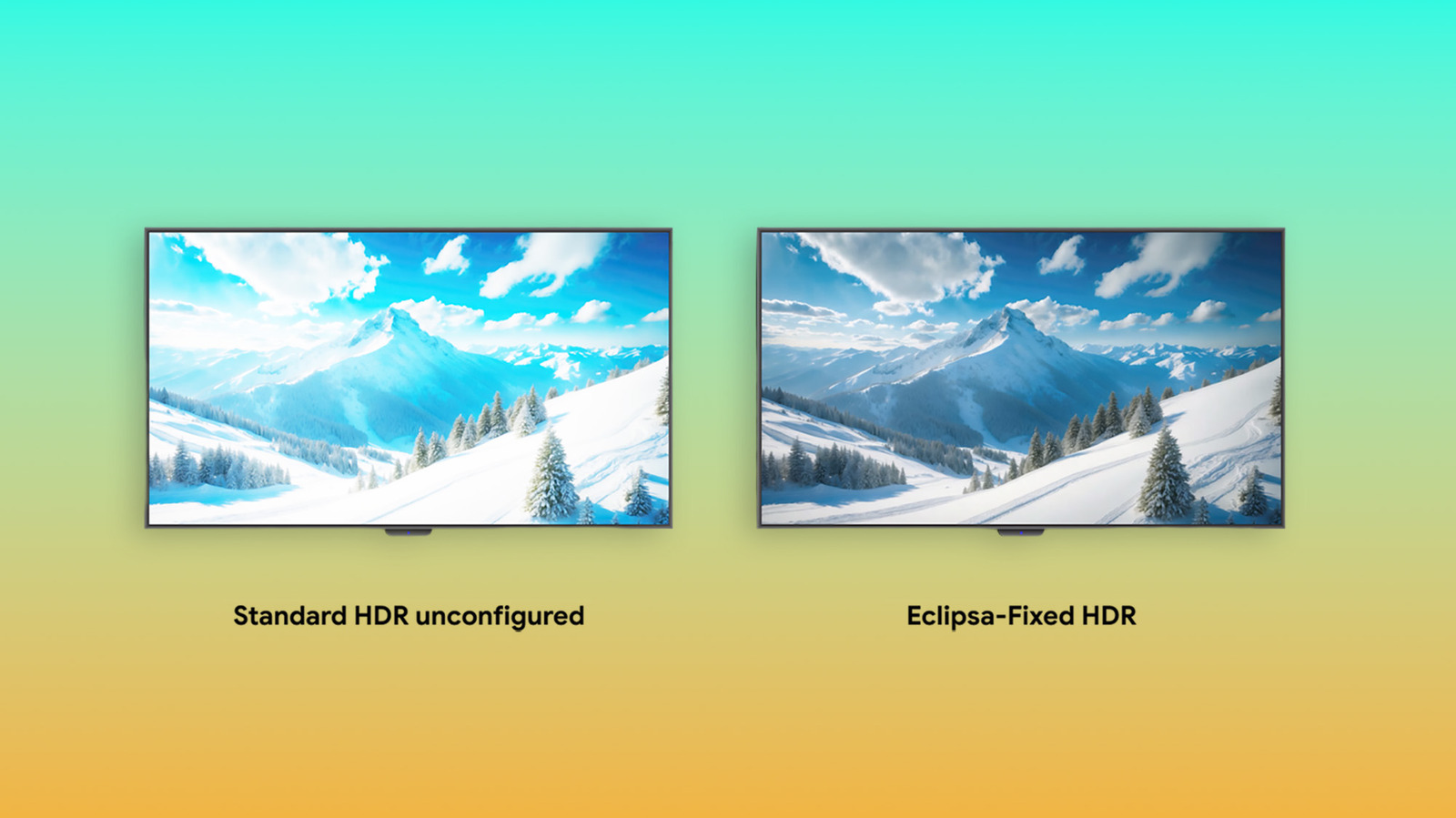

Transform your viewing experience with this groundbreaking technology.
With the right device, HDR technology can create stunning visuals with its extensive range of brightness and color. it often presents challenges as its appearance can vary significantly from one screen to another. For instance, a scene that looks vibrant on a high-end television may appear with muddy shadows on a less capable smartphone or suffer from bright highlights in dim environments. Eclipsa Video, a newly developed open HDR standard, aims to tackle this issue. It is crafted to ensure HDR content displays consistently across various devices, applications, and lighting conditions.
According to Google, Eclipsa Video is designed to deliver HDR that is “consistent, balanced, and comfortable on every screen.” This innovative format is Google’s branded iteration of the SMPTE ST 2094-50 standard, which was collaboratively developed with Apple and NBCUniversal.
Understanding the Functionality of Eclipsa Video
The Eclipsa Video format seeks to enhance HDR by providing a more adaptable set of guidelines for display technologies. This includes precise instructions on handling brightness, contrast, and highlight adjustments as video content changes. It takes into account each screen’s unique capabilities and, on compatible devices, can adjust based on the surrounding light conditions in your environment. The goal is to minimize common HDR issues such as crushed shadows, clipped highlights, washed-out colors, and unexpected brightness spikes. Ideally, it allows HDR and SDR content to coexist seamlessly on the same display.
How does Eclipsa achieve this? Google explains that it utilizes “two intelligent pieces of metadata.” The first is a white reference anchor, which serves as a foundational point for mapping the brightest elements of SDR content. The second component involves headroom-adaptive gain curves, allowing content creators to embed custom instructions directly within the video file. If a display’s brightness capabilities fall short of the video’s requirements, this metadata guides the display on how to adjust for optimal visual fidelity.
Comparing Eclipsa Video to Dolby Vision and HDR10
Eclipsa Video shares similarities with Dolby Vision in that both formats employ dynamic metadata to adapt visuals as the video progresses. the specific implementations differ. In contrast, HDR10 is more rigid, relying on a static set of instructions that apply uniformly to the entire video. Notably, the newer HDR10+ variant introduces dynamic metadata capabilities.
An essential distinction lies in the openness of the formats. Both Eclipsa and HDR10 are built on open standards, while Dolby Vision remains a proprietary format.
Comprehensive support for Eclipsa Video, including playback and capture capabilities, is set to launch with Android 17. This support will be extended to a variety of devices, including smartphones, tablets, and televisions. the widespread adoption of this format will ultimately depend on the backing of device manufacturers, streaming services, and content creators.


 Ethan Carter
 Daniel Mercer