 Ethan Carter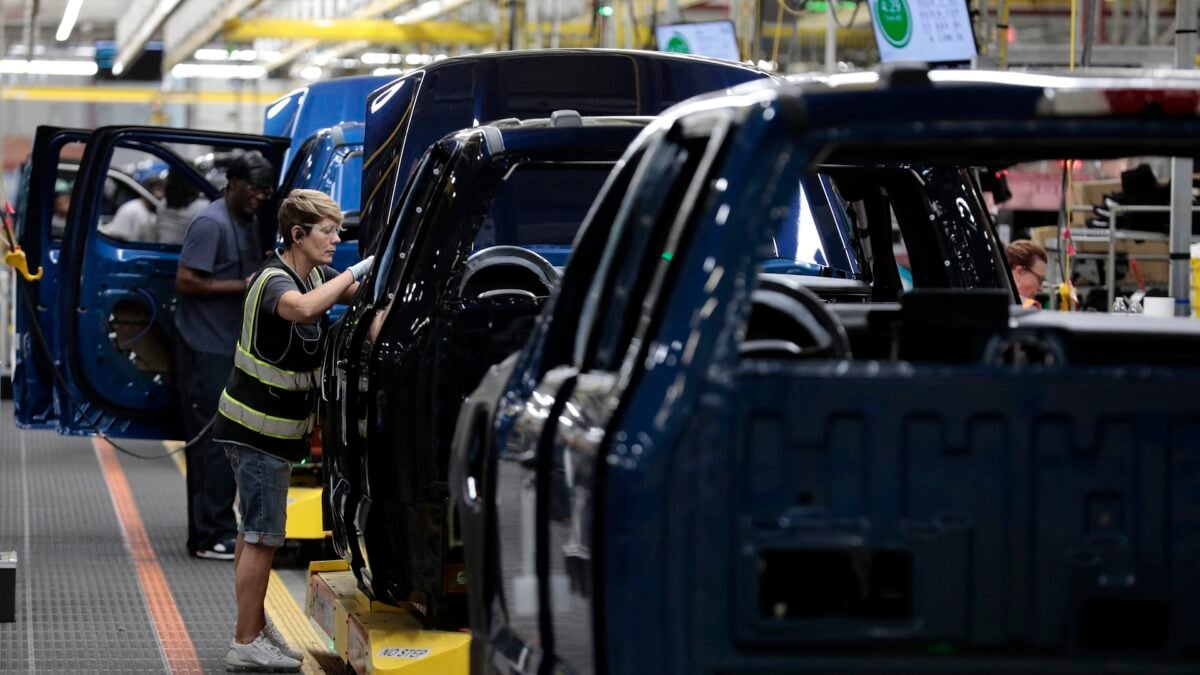

The Wall Street Journal has reported, citing “people familiar with the discussions,” that the Trump Pentagon has called upon leaders within the U.S. automotive industry to enhance their contributions towards the current war effort. America’s national stockpile of weapons appears to have diminished due to the extensive arms supplied to foreign nations, particularly in regions like Ukraine and Iran, where military resources have been heavily utilized.
High-profile CEOs, including Mary Barra of General Motors and Jim Farley of Ford, have engaged in discussions with top defense officials to explore increasing the production of military equipment within existing automotive manufacturing facilities. This initiative would leverage the skills of current automotive workers to support this critical transition.
It is worth noting that General Motors has already ventured into military production with its Infantry Squad Vehicle, also known as ISV, showcasing its capability to adapt its manufacturing processes for defense needs.
During a speech in November of the previous year, Secretary of Defense Pete Hegseth articulated the ambitious industrial strategy he envisions, which sounded remarkably like a call to arms:
“We’re not just buying something. We are solving life and death problems for our war fighters. We’re not building for peacetime. We are pivoting the Pentagon and our industrial base to a wartime footing.”
The Pentagon’s official statement to the Journal emphasized that the Department of Defense is “committed to rapidly expanding the defense industrial base by leveraging all available commercial solutions and technologies to ensure our warfighters maintain a decisive advantage.” This proactive approach aims to bolster military readiness in the face of ongoing global challenges.
Earlier this month, President Trump put forth a proposal for a $1.5 trillion military budget, distinctly advocating for a strengthened industrial base to support defense initiatives. This request underscores the administration’s commitment to enhancing national security and military capabilities.
In a nod to historical context, let us recall Franklin Delano Roosevelt’s iconic 1940 “Arsenal of Democracy” speech, a hallmark of U.S. war propaganda that resonates powerfully even today.
In this pivotal address, FDR articulated the existential threat posed by the Nazis to the American way of life, emphasizing the necessity for our allies to receive substantial support in their fight against tyranny. He reassured Americans that their participation did not require sacrifices of life, but rather a united effort among government, industry, and workers to mobilize resources effectively.
“We must have more ships, more guns, more planes—more of everything. And this can only be accomplished if we discard the notion of ‘business as usual.’ This job cannot be done merely by superimposing on the existing productive facilities the added requirements of the nation for defense.”
FDR’s message remains compelling, evoking a sense of determination and patriotism that may resonate deeply within us. Listening to it in the current context could inspire a reflective comparison of past and present challenges, sparking a renewed sense of commitment to national values and responsibilities.

 Daniel Mercer