Daniel Mercer

The MSI Claw 8 EX AI+ is the handheld gaming device I’ve been eager to experience. This Intel-powered gaming PC combines the ergonomic design reminiscent of the now-$790 Steam Deck with superior performance and efficiency that outshines AMD’s alternatives. Unfortunately, it may come with a hefty price tag.
This gaming handheld has significant expectations to meet given the plethora of similar devices currently on the market. even in its preproduction stage, where hardware and software are not fully finalized, this device designed for handheld use impresses with its performance and comfort. Weighing just 1.7 pounds, it is light enough to hold effortlessly. The display is sufficiently large, ensuring that players won’t have to squint at on-screen characters. It achieves targeted frame rates and performance metrics, indicating that handheld gaming is evolving positively.
This remarkable device may come at a staggering price of nearly $1,500. While MSI has yet to disclose exact pricing details, the company, along with Intel, has indicated that this gaming handheld could be quite costly. I have not had sufficient time to determine if the MSI Claw 8 EX AI+ justifies this price, and I question whether any handheld gaming device truly warrants such a significant investment.
During my hands-on experience, I spent several hours testing all four newly unveiled handhelds equipped with Intel’s Arc G3 Extreme chip. This includes the OneXPlayer 3 and OneXPlayer X2, the latter of which features an optional keyboard attachment and removable controls akin to the now-$2,000 Lenovo Legion Go 2 (do you notice a recurring theme?). I explored the Acer Predator Atlas 8, which boasts an 8-inch display similar to that of MSI’s Claw 8 EX AI. Based on my experiences with the controls of these preproduction units, my preference still leans toward the Claw.
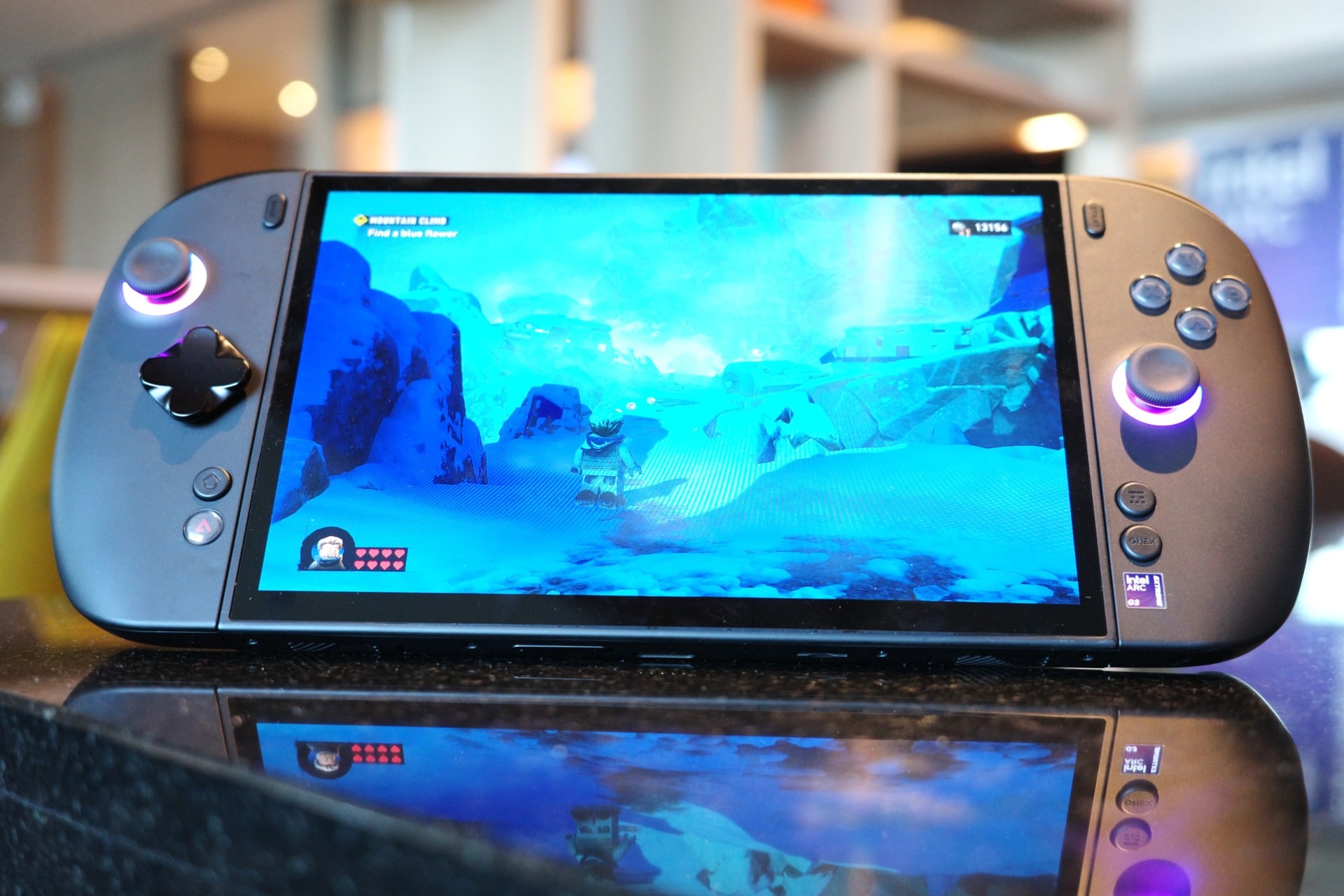
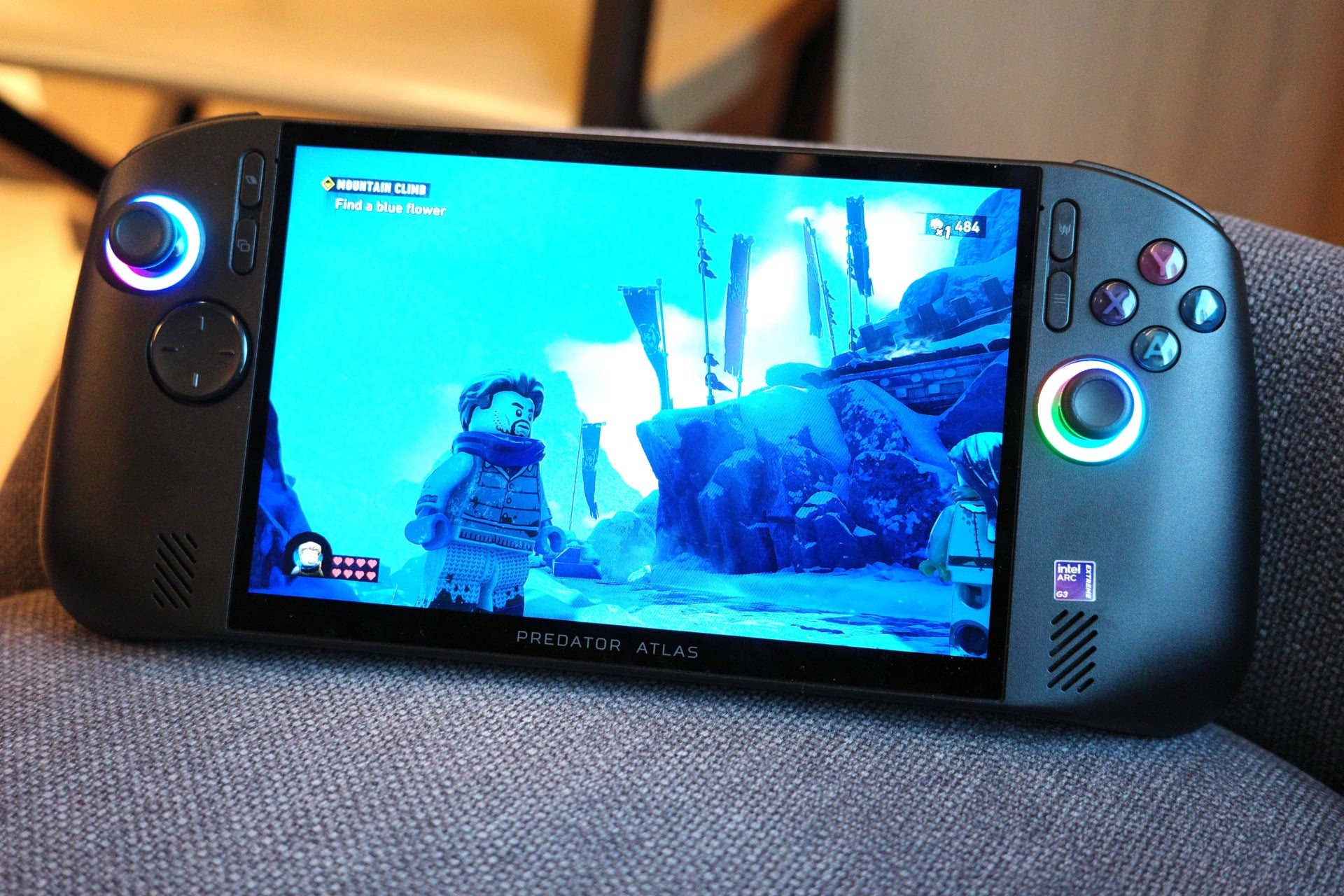
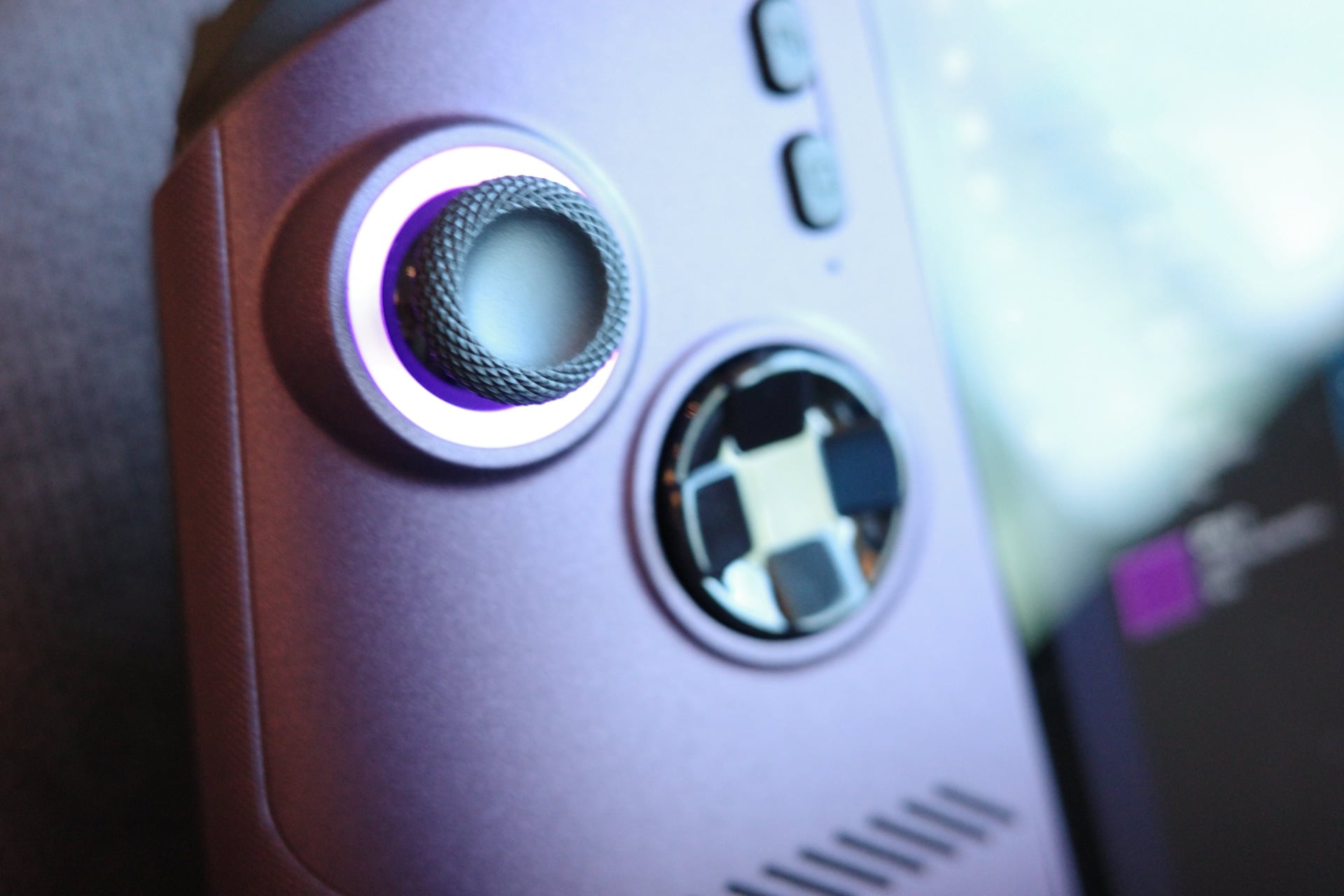
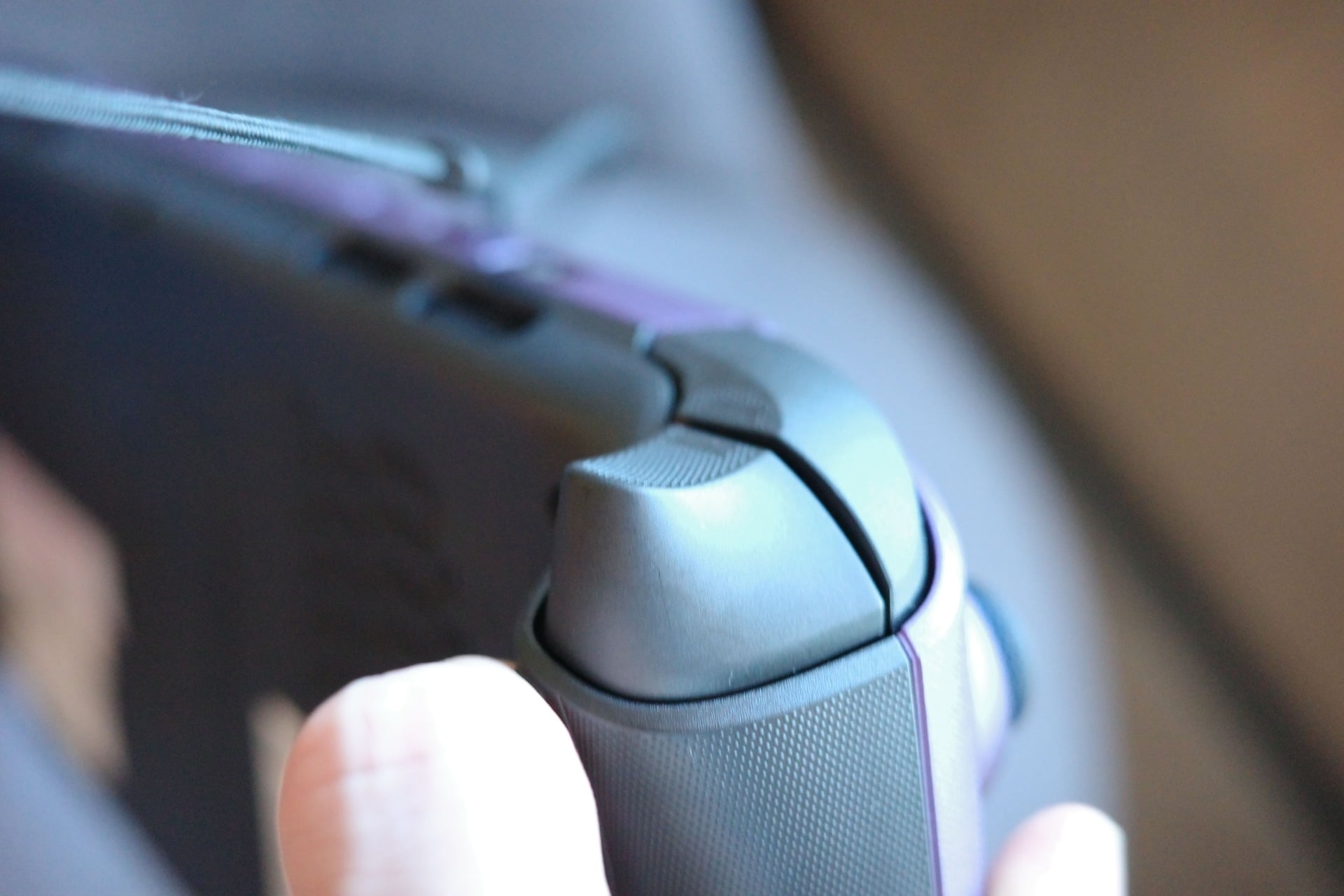
During my visit to Computex 2026, I carried the Asus ROG Xbox Ally X tucked away in my bag, protected by a DBrand Killswitch case that adds bulk and weight. Despite the Claw 8 EX being about 0.2 pounds heavier, its slimmer profile—thanks to the absence of full Xbox-style grips—makes it feel more comfortable. MSI seems to have perfected the ergonomic design this time around. My hands fit perfectly into the grips, which are enhanced by the textured plastic on both sides.
Although the control sticks felt narrower than my usual preference, they offered complete range of movement. They utilize Hall effect technology, a magnetic sensing method that significantly reduces stick drift and input inaccuracies. In contrast, the Acer Predator Atlas relies on traditional potentiometer joysticks, which are more susceptible to wear and tear. the ergonomics of MSI’s face buttons and triggers were spot on for my hand size.
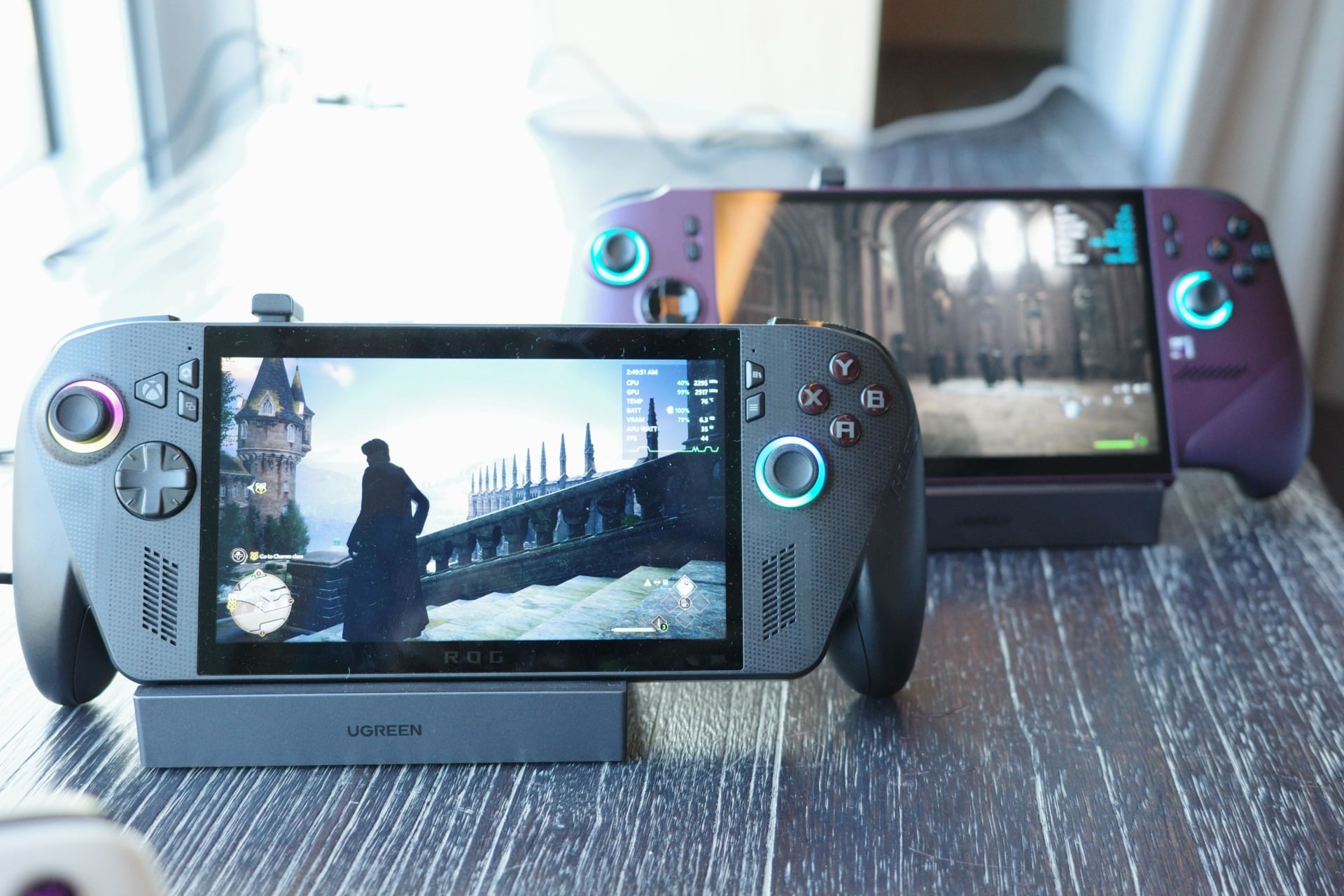
The MSI Claw 8 EX AI+ appears to be designed for gaming beyond a dock or a power outlet. Its performance is what truly elevates this device. I tested several games, including Forza Horizon 6, Hogwarts Legacy, and Clair Obscur: Expedition 33, all running at a high thermal design power (TDP) of 35W. Each game maintained over 60 fps on high graphics settings, aided by Intel’s XeSS upscaling technology.
Intel asserts that new handhelds featuring the Arc G3 Extreme chip will outperform AMD’s Ryzen Z2 Extreme in several critical aspects. According to Intel’s own benchmarking, the Claw 8 will surpass an Asus ROG Xbox Ally X operating at 1080p with 2X upscaling enabled, utilizing AMD’s FSR software when XeSS compatibility is lacking. Some titles, such as Diablo IV, showcase nearly 85% improved performance—recording 122 fps compared to the Ally’s 66 fps. There were games where the Claw achieved over 60 fps, while the Ally struggled at around 30 fps.
This enhanced performance cannot be solely attributed to AI upscaling. During my flight to Taipei, Taiwan, I spent hours playing 007 First Light on the Xbox Ally X at lower graphics settings, a 25W TDP, and FSR upscaling enabled, achieving between 30 and 40 fps. Conversely, on the MSI Claw 8 EX AI+, with higher graphics settings and FSR activated, I experienced smooth gameplay at 80 fps. This performance was achieved without a power cable, demonstrating the Claw’s superior capability over the Ally.
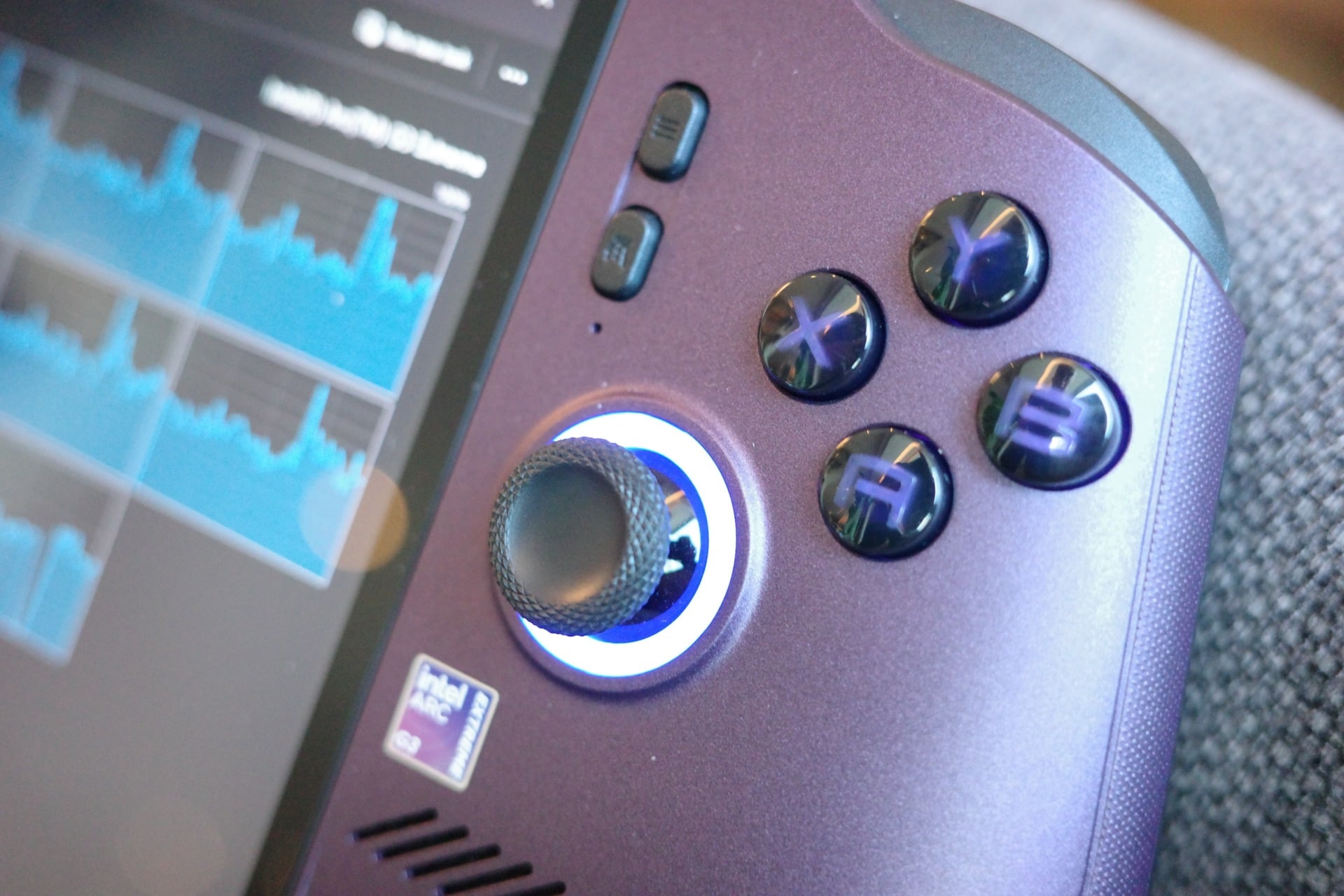
Even at 17W, the Claw 8 demonstrates better performance than the Xbox Ally X in certain games, such as Cyberpunk 2077. In other titles, including Crimson Desert and Battlefield 6, the Claw’s performance could drop by up to 18% at those wattages. Intel attributes these disparities to driver and compatibility challenges rather than hardware limitations. This indicates that the gaming experience can vary significantly based on the titles being played.
The Intel Arc G3 Extreme chip is essentially a scaled-down version of the Panther Lake laptop processor, featuring two performance (P) cores and twelve efficiency (E) and low-power efficiency (LP-E) cores. This design prioritizes the GPU component of the chip. At power levels below 12W, the P cores are disabled, underscoring the GPU’s critical role in this handheld system. the reliance on efficiency cores offers a notable advantage: enhanced battery life. In “endurance” mode, limiting the power envelope to 17W allows for more than five hours of battery life while gaming, such as in Forza Horizon 6.
Intel is leveraging its multi-frame generation technology to enhance performance. This technology involves frame interpolation that inserts AI-generated frames between rendered ones, artificially boosting the frame rate. Intel emphasizes that this feature should be perceived more as frame “smoothing” than a true performance increase.
My previous comments on frame generation remain relevant; it is more effective on smaller screens with less powerful systems. The visual artifacts produced can be more conspicuous when games initially run at lower frame rates before interpolation is enabled. Smaller displays make these artifacts less noticeable. Intel encourages users to activate frame generation to optimize battery life, although accessing this feature requires navigating Intel’s graphics software, which necessitates the use of the touchscreen for operation.
I look forward to spending more time with the Claw 8 EX AI+. Fortunately, it is set to launch on June 25, allowing me to delve deeper into its capabilities soon. A $1,500 price tag is quite substantial, especially considering the rising costs of RAM. To truly justify the investment, the Claw must establish itself as the ultimate handheld gaming solution. I remain hopeful that it will live up to that promise.


 Ethan Carter