 Brandon Fletcher


Throughout human history, funerary practices have undergone significant transformations, yet the fundamental desire to honor the deceased remains constant. some historical practices stand out as particularly unsettling.
During the Iron and Viking Age, the inhabitants of what is now Scandinavia were notorious for their “warrior ideology,” as highlighted in a recent study published in the Journal of Archaeological Method and Theory. Interestingly, archaeological findings from this era do not consistently correlate with the expected levels of physical trauma, prompting researchers to investigate this discrepancy. Their study focused on a “neglected” dataset comprising bones discovered in domestic contexts.
In comparison to their contemporaries, the individuals in this study exhibited unusually high levels of trauma around the time of death. This suggests a backdrop of structural, slow violence that affected marginalized groups. Among the alarming findings was the case of a young boy who displayed multiple sharp-force injuries, likely inflicted by a sword or another sharp weapon. Disturbingly, his remains were found placed between two layers of flooring in a house, indicating that the living inhabitants “walked over the child’s partial cranium daily,” according to the research.
“This indicates that someone walked over a child’s skull repeatedly,” stated Marianne Hem Eriksen, the study’s lead author and an archaeologist at the National Museum of Denmark, in a translated statement (via Google). “These insights into past lives reveal how profoundly different perspectives on life and death were.”
Understanding the Gaps in Historical Narratives
The study highlights that archaeological investigations of past interpersonal violence often depend on samples from large cemeteries for “statistical safety.” In examining Viking practices, most archaeological work has centered on elite burials and grand burial mounds. While this approach is understandable, it inevitably creates gaps in our comprehension of Viking existence.
The data reveals significant insights. While historical and contemporary studies predominantly depict Vikings as embodying a “hegemony of violence,” only about 0.7 to 6% of Viking Age cemetery populations exhibit signs of physical trauma. Mortuary records have shaped a long-standing narrative regarding violent Viking practices; however, cemetery data presents only a fraction of the broader context, the researchers argue.
Uncovering the Reality of Death Practices
The primary aim of this new research was to shift focus from the well-known figures of the past to those only preserved in fragments, as stated by the research team. The study analyzed 192 remains found within and around longhouses, pits, wells, postholes, and hearths from Iron and Viking Age Scandinavia. For context, the Iron Age in Scandinavia spanned from 500 BCE to 800 CE, followed by the Viking Age lasting until 1050 CE. Among these remains, the researchers identified 12 individuals with significant trauma and assessed eight of them directly, as the other four had been previously analyzed independently.
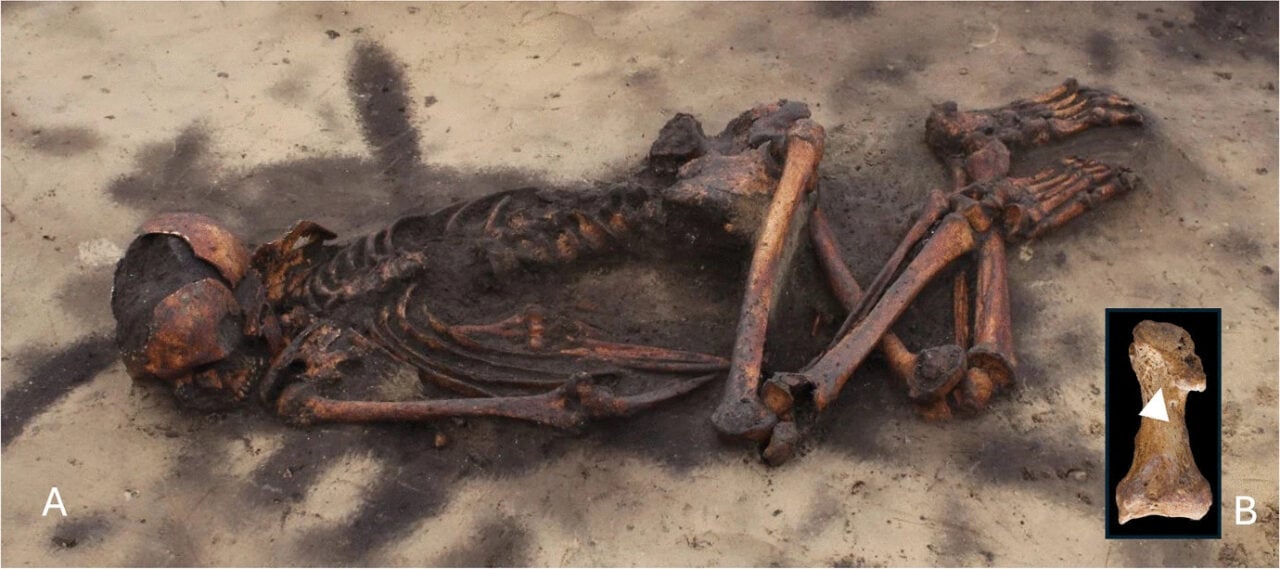
The researchers documented 19 injuries that occurred either before or after death. With one exception, all individuals were adults, and the team successfully determined the sex of half of the samples (four males, two females, with the possibility of three additional males). Six individuals exhibited head trauma, while four suffered multiple sharp and blunt force impacts to the head, in addition to skeletal fractures.
In several instances, the bones appeared to have been integrated into homes or other structures. These remains might have originated from sacrificial practices or executions, or perhaps more disturbingly, they might have been left to decay for extended periods before becoming part of the household.
Revealing the Hidden Stories of Violence
The overall trauma rate identified was 6.25%, aligning with the upper estimates of Viking-era violence from previous research. the narrative shifts significantly when examining these samples by community. The 12 individuals represent about 23% of the sites known to have contained human remains in settlements, suggesting that the “total frequency of trauma” was “likely greater than what the available evidence suggests,” according to the researchers.
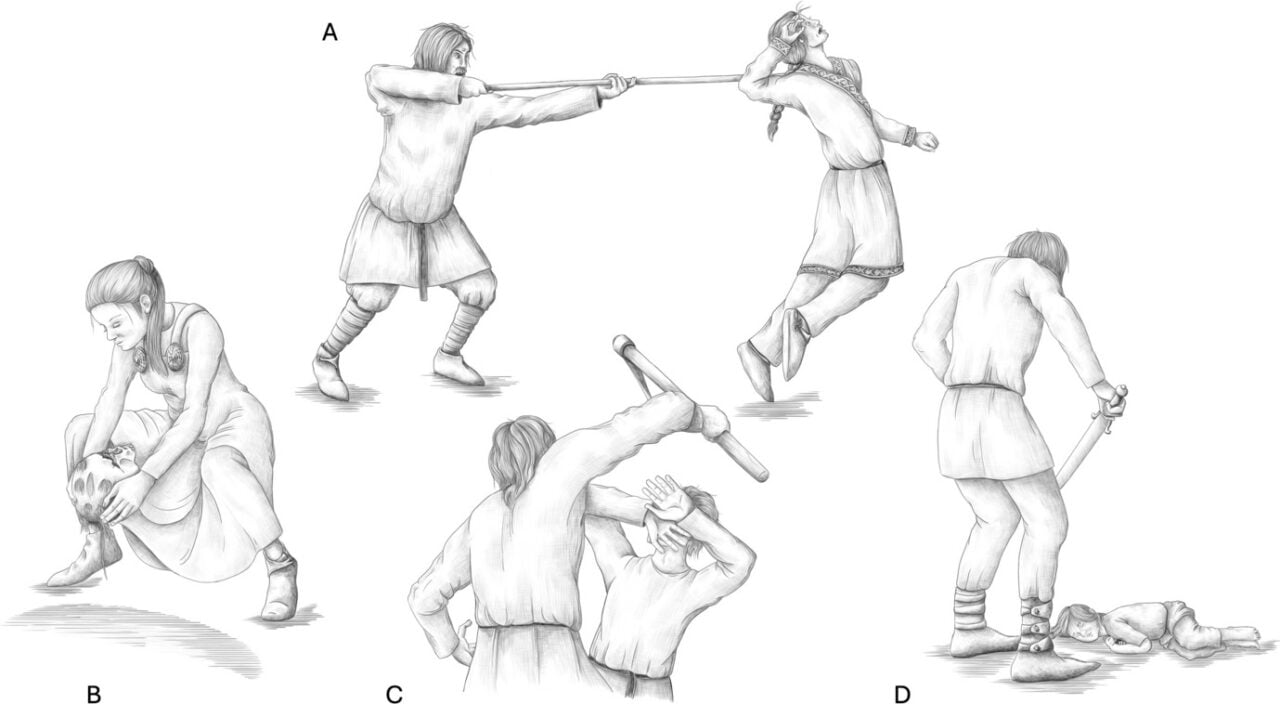
Nonetheless, the researchers acknowledged that some fractures could have resulted from accidents. factors such as malnutrition and violent encounters increase the risk of fractures, along with repetitive and intense physical activities. This leads to the plausible hypothesis that these individuals faced significant hardships.
“This research opens up a completely new perspective on Iron Age society, revealing the prevalence of violence and the treatment of the deceased,” Eriksen remarked. “The findings indicate a much more complex reality in the daily lives and beliefs of Iron Age people than is often credited.”


 Daniel Mercer