 Brandon Fletcher
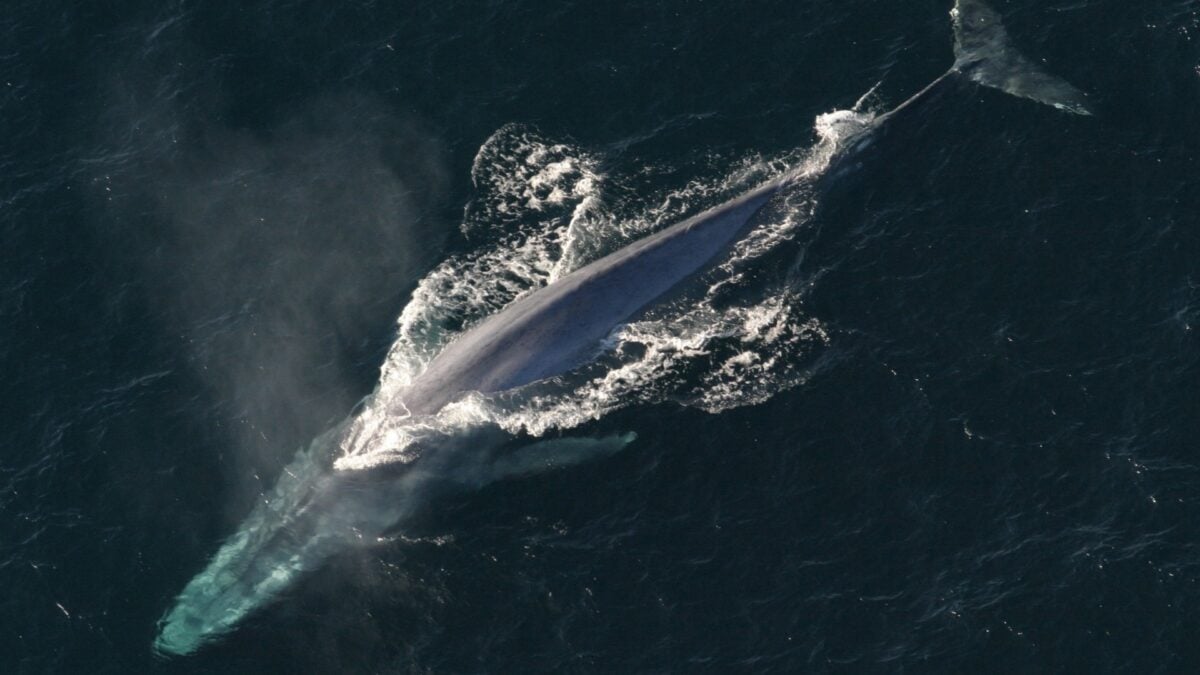

As El Niño rapidly intensifies, the Pacific Ocean is experiencing record-high temperatures that are prompting marine species to shift their habitats. This phenomenon may significantly account for the observed decline in blue whale sightings around the Galápagos Islands.
Between October 2025 and July 2026, researchers from the Galápagos National Park Directorate embarked on a mission to locate these magnificent marine mammals in areas where they had previously been sighted. Their goal was to tag individual whales with satellite transmitters to monitor their migratory patterns. despite nine months of diligent searching, the team failed to spot even a single blue whale.
The water temperatures recorded during the expedition highlighted the impact of El Niño. Sea surface temperatures ranged from 77.9 to 81.6 degrees Fahrenheit (25.5 to 27.6 degrees Celsius), while temperatures measured at a depth of 328 feet (100 meters) varied between 66.4 and 67.4 degrees F (19.11 to 19.67 degrees C). These temperatures exceed the seasonal averages, as noted by the Galapagos Science Center (GSC).
An important oceanic layer known as the isotherm, typically found at approximately 68 degrees F (20 degrees C) and at depths of 66 to 148 feet (20 to 45 meters) in the Galápagos, was discovered much deeper than usual—between 256 and 315 feet (78 and 96 meters) during the study. This shift indicates that the temperature range suitable for blue whale feeding may not have coincided with the depths where their primary food source, krill, was located.
Lead scientist Daniela Alarcón, a professor and researcher at Universidad San Francisco de Quito and the Galápagos Science Center, suggested the possibility that the whales may be migrating further south to cooler waters where food sources are more plentiful. She emphasized, however, that “not finding whales during an extensive search does not imply they have completely abandoned the Galápagos,” as she stated in a GSC announcement.
Unraveling the Mystery of Blue Whale Sightings
In September, following the expedition’s conclusion, the Cetácea Galápagos citizen science network reported a sighting of an adult blue whale accompanied by its calf near Punta Pitt, San Cristóbal. This sighting confirms that blue whales have not disappeared from the Galápagos, but the nine-month absence of sightings warrants further investigation.
“By integrating these observations with oceanographic data, we can formulate more precise questions regarding the conditions influencing their presence and the variability of their movements,” Alarcón explained in her statement.
Reports submitted to the Cetácea Galápagos citizen science network indicate that blue whale sightings had already been on the decline prior to the expedition. The downward trend began between August and September 2025. During the expedition, there were two isolated reports of blue whales in May and June 2026, but Alarcón and her team were unable to verify these sightings.
The Galápagos Islands, located along the equator in the eastern Pacific, are particularly susceptible to the impacts of El Niño. In late August, Ecuador issued a nationwide Red Alert due to the potential consequences of this climatic phenomenon. Coastal and island monitoring stations recorded sea levels rising by as much as 16 inches (40 centimeters) above normal, indicative of significantly warmer waters, according to the GSC.
Krill, the primary food source for blue whales, are sensitive to fluctuations in ocean temperatures, which can disrupt their availability. A study conducted in 2024, tracking 16 blue whales in the Galápagos from 2021 to 2023, found that the intense El Niño of 2023 altered ocean temperatures and diminished primary productivity, which could have disrupted the whales’ food supply.
These findings provide a potential explanation for the scarcity of sightings this year. Nonetheless, the expedition team cautions that it is premature to definitively attribute this situation to El Niño. This exceptionally strong climatic event is already causing significant changes in marine conditions within the Galápagos, prompting scientists to closely monitor how the entire ecosystem responds, rather than focusing solely on one species.


 Daniel Mercer

 Ethan Carter