 David Bridges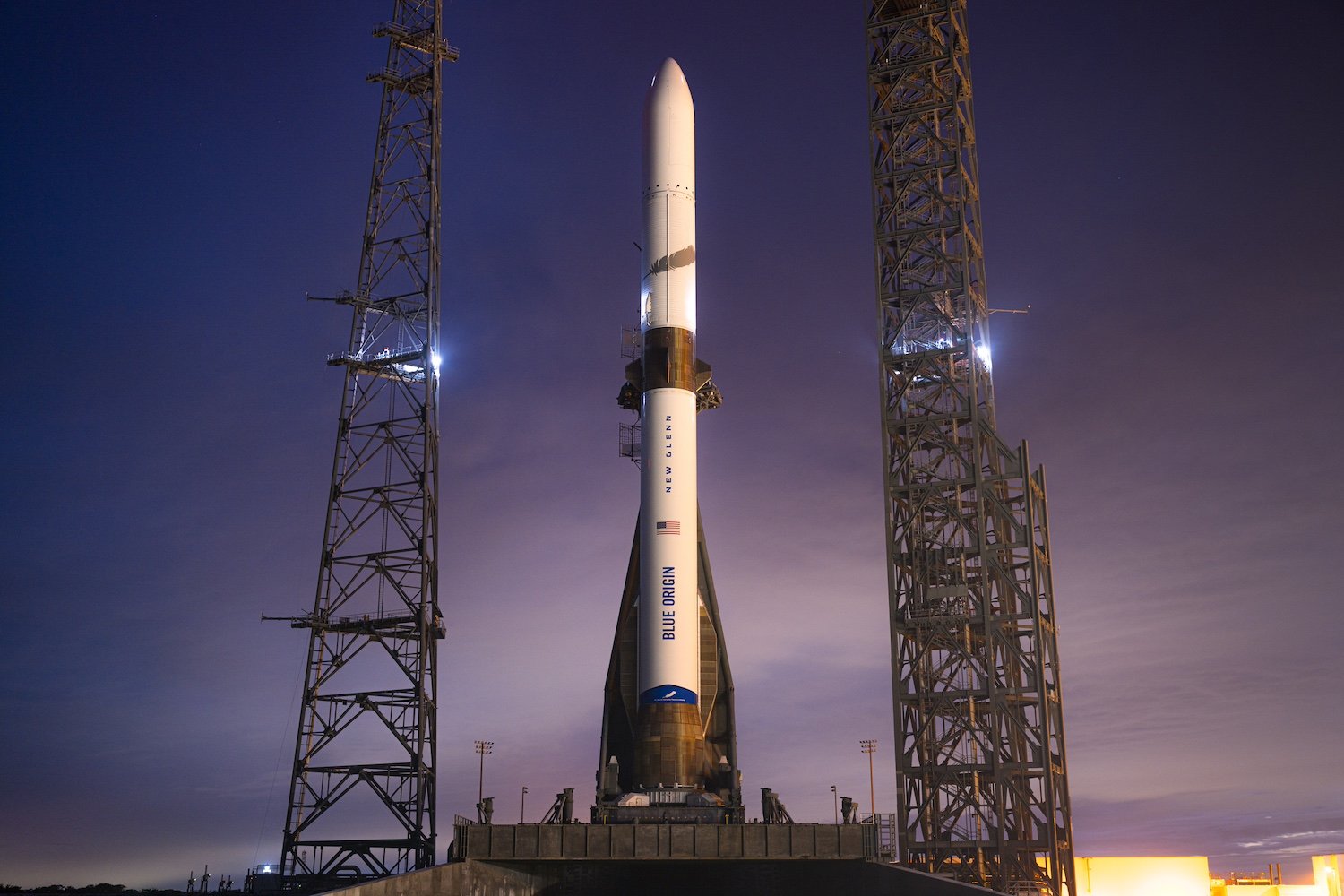
Exciting Launch of Blue Origin’s New Glenn Rocket Marks a Milestone in Space Exploration
After years of significant delays, the highly anticipated launch of Blue Origin’s New Glenn rocket is finally taking place this week, ushering in a new age of competitive space exploration between two billionaire entrepreneurs. This launch promises to alter the dynamics of the space industry as Blue Origin steps into the spotlight alongside its rival, SpaceX.

Key Launch Information: New Glenn’s Inaugural Liftoff Scheduled for January 10
Blue Origin has officially announced that the New Glenn rocket is slated for liftoff no earlier than Friday, January 10, during a three-hour launch window that begins at 1 a.m. ET. The rocket will ascend from Launch Complex 36 at Cape Canaveral Space Force Station in Florida, carrying the Blue Ring Pathfinder for its crucial first test flight. This inaugural mission will serve as both a launch and a certification flight, setting the stage for New Glenn to transport critical national security payloads in future missions.
Leadership Insights: Preparing for New Glenn’s First Flight
“This is our first flight, and we’ve prepared rigorously for it,” stated Jarrett Jones, the senior vice president of New Glenn, emphasizing the extensive preparation undertaken for this significant event. He added, “No amount of ground testing or mission simulations can replace the experience of flying this rocket. It’s time to fly. Regardless of the outcome, we will learn, refine, and apply that knowledge to our upcoming launches.” This reflects the innovative spirit and commitment to progress that drives Blue Origin’s mission.
The Journey of New Glenn: Overcoming Challenges and Delays
Founded by Jeff Bezos, the second richest individual globally, Blue Origin has dedicated nearly a decade to the development of the $2.5 billion New Glenn rocket. Although initially set for its debut launch in 2020, the project faced numerous delays attributed primarily to extensive engine development. The New Glenn rocket is powered by seven BE-4 engines, engineered by Blue Origin, which have undergone rigorous testing and redesign to ensure reliability and performance.
New Glenn vs. SpaceX: The Growing Rivalry in the Space Industry
The upcoming launch of New Glenn positions Blue Origin as a formidable competitor to the industry leader SpaceX, intensifying the rivalry between Bezos and his counterpart, Elon Musk. While Blue Origin’s New Shepard rocket, a reusable suborbital vehicle, has successfully transported space tourists on short trips above the Karman Line since July 2021, New Glenn is designed as a partially reusable, heavy-lift rocket. It boasts the capability to transport up to 45 metric tons to low Earth orbit and 13 metric tons to geostationary transfer orbit. Standing at an impressive 313 feet (95 meters), New Glenn’s reusable first stage is powered by the innovative BE-4 engines. In contrast, SpaceX’s Falcon Heavy can carry 63 metric tons to low Earth orbit and 26 metric tons to geostationary orbit, highlighting the competition’s intensity.
Innovative Payload: Blue Ring’s Advanced Spacecraft Platform
New Glenn’s first payload, the Blue Ring, represents a groundbreaking spacecraft platform that aims to provide comprehensive “end-to-end services” including hosting, transportation, refueling, data relay, and logistics. This platform incorporates an advanced “in-space” cloud computing capability, positioning it as a versatile “space truck.” Blue Ring is designed to serve a diverse range of clients, from commercial enterprises to government agencies, and can accommodate payloads weighing up to 6,600 pounds (3,000 kilograms), showcasing Blue Origin’s commitment to innovation in space logistics.
Adapting to Challenges: New Glenn’s Timeline Adjustments for NASA Missions
The New Glenn rocket was initially scheduled for launch in November 2024, with plans to carry two NASA probes to Mars during its debut flight. However, in September, NASA halted preparations for the Escape and Plasma Acceleration and Dynamics Explorers mission over concerns that New Glenn would not meet the launch timeline. In a strategic move, Blue Origin has agreed to accelerate New Glenn’s second flight to align with the Mars mission’s launch window later this year, demonstrating adaptability in response to evolving mission requirements.
Leadership Changes and Future Goals: Blue Origin’s Road Ahead
After overcoming previous setbacks, Blue Origin made significant strides last year in preparing for New Glenn’s debut. The company appointed former Amazon executive David Limp as the new CEO, succeeding Bob Smith. Additionally, Blue Origin announced ambitious plans to execute an uncrewed lunar landing in 2025 using a prototype of its Blue Moon Mark 1 (MK1) cargo lander, which could potentially place it ahead of SpaceX in the race to the lunar surface—although this remains contingent on successful development and testing.



 Daniel Mercer
 Ethan Carter