Daniel Mercer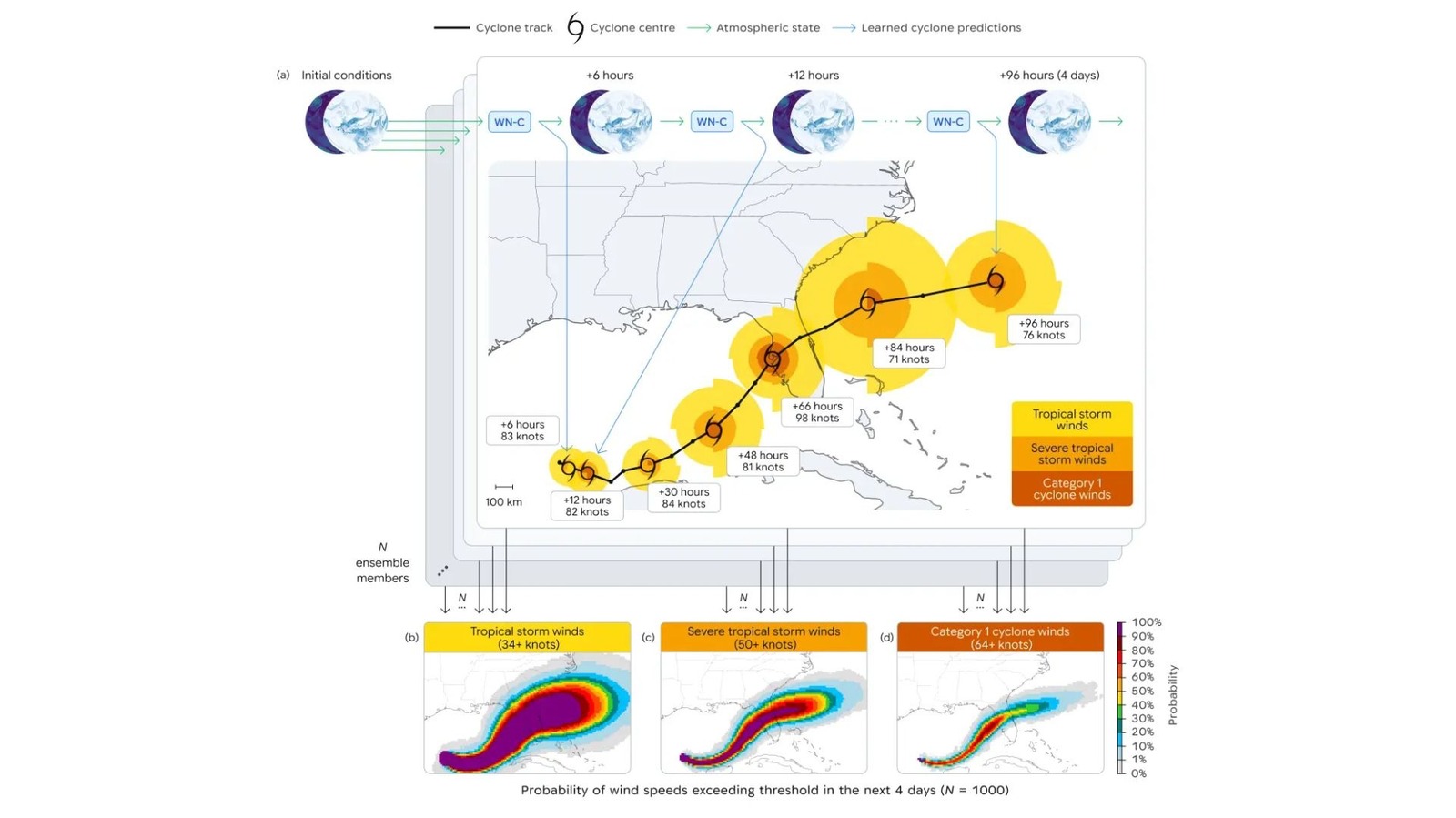

WeatherNext offers a cutting-edge 15-day forecast that accurately predicts storm paths and intensity.
The WeatherNext AI weather prediction model has been enhanced by researchers from Google DeepMind and Google Research to provide more accurate cyclone warnings. Collaborators in this groundbreaking project include the National Hurricane Center, the Cooperative Institute for Research in the Atmosphere, the UK Met Office, and various weather agencies globally. The entire codebase and model weights are being made available as open source on GitHub, allowing scientists worldwide to utilize this innovative tool.
A comprehensive study on WeatherNext appeared in the journal Nature, complemented by a more accessible version presented in a Google blog post. Tropical cyclones—known as hurricanes or typhoons depending on regional terminology—present significant forecasting challenges. Traditional global atmospheric models analyze storm paths effectively, but assessing a cyclone’s intensity has relied on specialized local models that evaluate the thermodynamic processes at the storm’s core. WeatherNext utilizes nearly 20 terabytes of global atmospheric data and historical records from the International Best Track Archive for Climate Stewardship, enabling it to predict both the track and intensity of cyclones through a unified model.
The WeatherNext researchers noted, “We can now generate a single 15-day forecast in under a minute on a TPU, empowering forecasters to rapidly assess the probability distribution of potentially catastrophic tail risks.”
Last year, Google unveiled the second generation of WeatherNext. the research teams have been focusing on leveraging AI technologies to predict flash floods more effectively.