 David Bridges

It’s hard to fathom why anyone would find this appealing, or why Meta believes there is a demand for it. I also struggle to see how this development could positively influence social media interactions overall.
Nonetheless…
Instagram is reportedly carrying out experiments with AI-generated comments on user posts. This means you may no longer need to formulate your own opinions or thoughts when responding to a friend’s update or a trending post.
As illustrated in this sequence shared by app researcher Jonah Manzano, some Instagram users are now encountering a “pencil with a star” icon beside the comments field. Tapping this icon generates a list of potential comments that users can select to respond to a video or image.
This indicates that the need for originality and personal expression in communication is diminishing. Instead, users can rely on Meta’s AI technology to simulate a personality for them, should they choose to do so.
Moreover, Meta is taking this initiative a step further by allowing users to create personalized AI bot versions of themselves. These bots can engage with other users, reflecting the personality traits and responses that the user selects, thereby adding another layer of interaction.
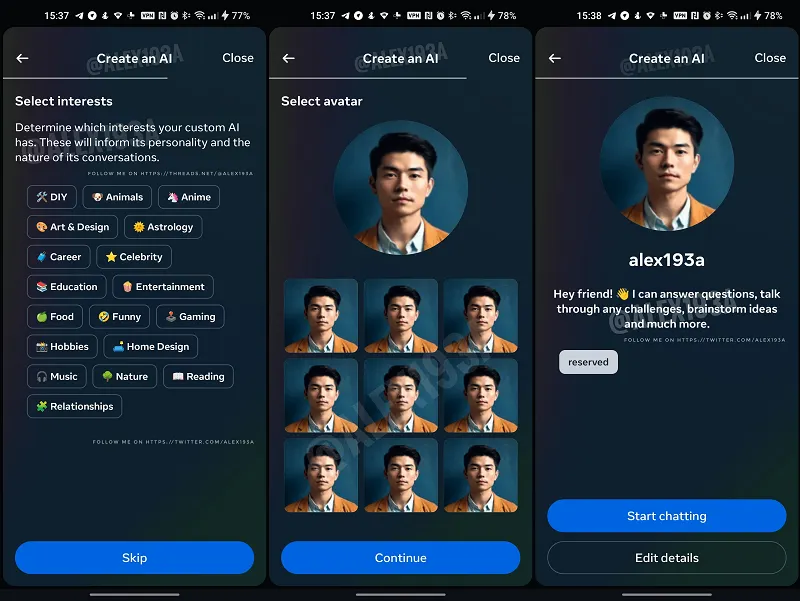
It feels like we are witnessing the emergence of more AI bots designed to mimic human activity, which raises the question: is this truly what social media platforms need to thrive?
There is an ongoing debate about the effectiveness of reducing human interaction to enhance user experiences. While platforms like LinkedIn have already integrated AI-generated comments, and Gmail offers suggested replies, Instagram’s approach is slightly different. Their AI-generated responses are tailored to the specific content of the post, potentially making them more relevant.
However, these responses still lack the genuine, personal touch that one would expect from real human interaction. They fail to embody the essence of being “social” in the traditional sense.
The question remains: why is Meta so eager to saturate its apps with AI-generated content?
The underlying goal seems to be to foster increased human engagement and usage across its platforms.
For instance, Meta is reportedly exploring the creation of AI-generated bot profiles that will interact with users as if they were real people. The potential benefit is that when actual users post content, they may receive numerous responses from these bots, leading to hundreds of comments on their posts. This might encourage more users to engage in discussions, post their own content, and allow AI bots to integrate seamlessly into the broader social interaction landscape.
This strategy might prove effective. If Meta utilizes only authentic, human replies as a metric for engagement, it could still assess reply volume as an indicator of user interest. This would ensure that the most engaging posts gain greater visibility, while also allowing average posts to receive random comments, giving creators that rewarding sense of interaction.
In this way, it becomes clear how AI bot profiles and replies could drive increased user engagement, ultimately benefiting Meta.
But is this truly what users desire? Do you genuinely want to sift through a list of AI-generated responses to your posts? Would that interaction feel as engaging and personal, knowing that those comments come from bots rather than real individuals?
My assumption is that people will likely practice selective disassociation, focusing on the positive emotional feedback they receive from these engagements, despite knowing they are AI-generated.
Thus, this may represent a logical progression for Meta. Yet, I remain skeptical about how users can feel comfortable posting generic comments that lack any substantive thought.
On the other hand, many users may very well embrace this approach. Coupled with bot replies, this could signify a new era of social interaction, blending genuine human engagement with AI to keep users feeling connected, interesting, and engaged with the wider digital landscape.
While this may seem like an influx of meaningless comments that require little to no thought, the logic behind it may eventually make sense, and my initial resistance might merely stem from a reluctance to accept what appears to be the future of social interactions.


 Troy Sanders
 Ivy Caldwell