 Brandon Fletcher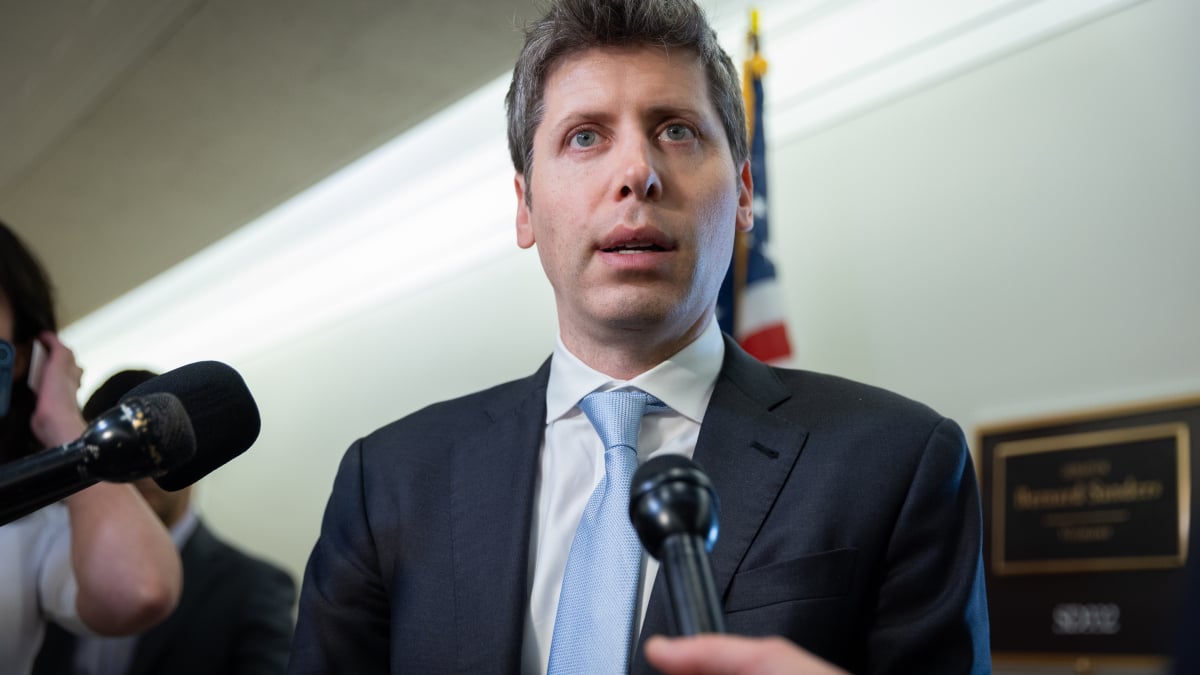

Apple and OpenAI are set to clash in court.
On Friday, July 10, Apple initiated a lawsuit against OpenAI, the artificial intelligence firm led by CEO Sam Altman, along with two former Apple employees. The accusation centers around OpenAI allegedly acquiring confidential information from Apple to develop its own consumer hardware.
The lawsuit identifies OpenAI’s commercial and nonprofit divisions, its hardware subsidiary io Products, OpenAI Chief Hardware Officer Tang Yew Tan, and former Apple engineer Chang Liu. It was lodged in the U.S. District Court for the Northern District of California.
“This case revolves around Apple’s former employees misappropriating Apple’s trade secrets for OpenAI’s advantage,” Apple stated in the complaint.
The legal filing includes claims concerning secret project names, confidential presentations, Apple-issued laptops, physical hardware components, supplier relationships, and even protocols for navigating an Apple exit interview. This legal action coincides with OpenAI’s plans to unveil its first consumer device, designed in collaboration with former Apple design chief Jony Ive.
This Tweet is currently unavailable. It might be loading or has been removed.
There are numerous facets to this case. Here are the eight key points to grasp about the lawsuit, the specific allegations Apple is making, and potential outcomes.
Our exciting Guessing Game is back! Join now for a chance to win an Apple Watch.
1. Apple Claims OpenAI’s Actions Extend Beyond Simply Hiring Employees
The first crucial distinction is that while it is generally permissible for one company to recruit employees from a competitor, the situation here is more nuanced.
A former Apple engineer can accept a job offer from OpenAI. That engineer can also draw on their general knowledge, professional experience, and skills gained during their career. Apple does not claim ownership over everything someone learns while employed there.
A trade secret is defined as valuable information that remains confidential and is actively protected by a company. This can encompass unreleased product designs, proprietary manufacturing processes, confidential supplier lists, or technical specifications for components that have yet to launch.
Apple contends that OpenAI did not simply hire experienced individuals. The company alleges that OpenAI exploited these employees and its recruitment tactics to acquire protected documents, designs, physical hardware components, manufacturing insights, and data about unreleased products.
Simply put, Apple argues that while OpenAI was free to hire its engineers, it was not entitled to request them to bring Apple’s files and hardware with them.
This remains Apple’s perspective on the matter. A complaint outlines the plaintiff’s claims, but it does not equate to a court ruling affirming that those claims are true. OpenAI’s Director of Strategic Communications, Drew Pusateri, has refuted any intentions of acquiring or using Apple’s confidential information, as stated on X:
This Tweet is currently unavailable. It might be loading or has been removed.
2. The Lawsuit Primarily Concerns OpenAI’s Shift to Becoming a Hardware Competitor
Just two years ago, Apple and OpenAI were collaborating.
In 2024, Apple announced the integration of ChatGPT into Siri, Apple’s comprehensive Writing Tools, and other Apple Intelligence features. This integration allowed users to ask specific questions to ChatGPT directly from their iPhone, iPad, or Mac.
The dynamic changed when OpenAI expanded beyond software and began developing its own consumer hardware.
In 2025, OpenAI acquired io Products, a hardware startup co-founded by Ive, Tan, and other former Apple employees, in a deal valued around $6.5 billion. Ive, who played a pivotal role in designing iconic products like the iPhone, iMac, and Apple Watch during his tenure at Apple, is collaborating with OpenAI on this device but is not named as a defendant in Apple’s lawsuit.
OpenAI has revealed few specifics about its hardware project. The company describes it as an innovative AI device that transcends the conventional frameworks of screens, apps, keyboards, and smartphones. Its inaugural hardware product is anticipated to launch by the end of 2026.
This context is crucial because Apple is not suing over information used to enhance ChatGPT; it alleges that its trade secrets were appropriated to develop physical products that could directly compete with Apple’s hardware offerings.
Apple asserts that the contested information pertains to product architecture, battery technology, circuit board designs, component selection, manufacturing apparatus, metal-finishing techniques, supply-chain relationships, and plans for unreleased products.
This Tweet is currently unavailable. It might be loading or has been removed.
3. Apple Alleges OpenAI Turned Job Interviews into Information Extraction Sessions
Some of the most alarming claims in the lawsuit revolve around how OpenAI conducted interviews with Apple employees.
Tan, who spent over 24 years at Apple and most recently held the position of vice president of product design for the iPhone and Apple Watch, later co-founded io Products and is now OpenAI’s chief hardware officer. Due to his involvement in confidential Apple projects, Apple claims he possessed knowledge of the company’s internal terminology, project names, suppliers, and development processes.
The lawsuit alleges that Tan utilized this insider knowledge while interviewing current Apple employees for positions at OpenAI.
According to the complaint, Tan referenced at least one unreleased Apple project by its internal codename before inquiring with a candidate about the company’s plans for it. To someone outside Apple, the codename would hold little significance. for an employee directly involved in the project, it would indicate exactly what Tan intended to discuss.
Candidates were reportedly required to prepare “Technical Deep Dive” presentations regarding their work. Apple claims the instructions solicited information about how components were selected, which vendors were used, what software facilitated system integration, and how engineers communicated with suppliers.
While these questions may appear to be standard technical interview queries, Apple argues that when posed to current employees working on confidential projects, they effectively compelled candidates to divulge proprietary information belonging to Apple.
The filing further alleges that Tan instructed candidates to bring “actual parts” from Apple for “show and tell” during interviews. These parts purportedly included batteries, logic boards, systems-in-package, shields, and other hardware components.
One candidate reportedly expressed surprise at this request, mentioning that they “didn’t even know we could take those from the office.”
Apple asserts that the interview process yielded evidence now included in the lawsuit. In one instance, an employee allegedly began screenshotting and downloading files related to a highly confidential Apple project shortly before an interview with OpenAI. During the interview, Tan allegedly inquired about that same project.
Apple claims it identified this activity through an examination of access records and server logs linked to its systems. In other words, the candidate reportedly used an Apple computer to retrieve files, leaving a trace within the systems from which the information was extracted.
Mashable Trend Report
This Tweet is currently unavailable. It might be loading or has been removed.
4. Apple Claims a Former Engineer Retained a Laptop and Continued Accessing Its Files
The lawsuit’s other key individual is Liu, who worked over eight years at Apple as a senior system electrical engineer on the iPhone before joining OpenAI in January 2026.
Apple asserts that Liu did not return an Apple-issued laptop upon his departure. It also claims he discovered an authentication vulnerability that allowed him to continue accessing Apple’s cloud-based file storage after his employment ended.
According to the complaint, Liu did not report this apparent security flaw. Instead, Apple alleges he exploited it to maintain access to confidential engineering documents while already working at OpenAI.
The lawsuit claims Liu downloaded numerous files containing technical specifications, engineering presentations, circuit-board details, and information about unannounced products. One compilation reportedly contained over 1,000 pages of technical documentation.
Apple highlights messages Liu reportedly sent after discovering his continued access. In one, he allegedly wrote to an Apple employee: “LOL, I found out I can access the [server], so funny.”
This detail is significant because it could bolster Apple’s argument that the access was intentional. Accidentally discovering that an old login still works is one scenario, but deliberately using it to download files after acknowledging the unexpected access is another matter entirely.
Apple also claims that Liu assisted another Apple employee in preparing for an OpenAI interview. He allegedly directed her to specific confidential folders, advised her on what information to review, and discussed methods for copying files without attracting the attention of Apple’s security team.
The complaint states that Liu eventually suggested the employee move their conversations to LINE, a separate messaging application, to avoid detection. The employee later accepted a position at OpenAI. Liu has not made a public statement regarding these allegations.
This Tweet is currently unavailable. It might be loading or has been removed.
5. Apple Alleges Recruits Received Coaching to Evade Exit-Security Protocols
When an employee departs from a company like Apple, the process involves more than just returning a badge and laptop.
The company may disable system access, review recent downloads, recover devices, reiterate confidentiality agreements, and inquire about the employee’s future plans. These protocols are designed to ensure that confidential materials do not leave with the employee.
Apple claims that OpenAI was aware of these protocols and provided guidance to recruits on how to navigate or circumvent them.
According to the filing, Tan circulated an internal Apple document labeled “Need to Know” that outlined Apple’s security measures for departing employees. Apple asserts that this document was meant solely for specific Apple managers but was shared with recruits before they had even notified Apple of their departure.
This would imply that the recruits were informed in advance about what Apple’s security personnel might check, what questions could be posed, and when their access could be revoked.
Apple further alleges that OpenAI advised departing employees not to disclose their acceptance of positions with the company. Recruits were purportedly instructed not to sign any documents during Apple exit interviews and to contact OpenAI immediately if Apple requested them to sign anything.
The lawsuit indicates that Apple noticed a trend among employees leaving for OpenAI: some skipped exit interviews, ignored communications from Apple’s security team, provided minimal notice, or otherwise evaded the standard departure procedures.
Apple is using these examples to argue that the alleged behavior was coordinated rather than the result of an individual acting independently to take files.
According to the complaint, OpenAI now employs over 400 former Apple employees. While this figure alone does not indicate wrongdoing, the critical question is whether any of these individuals transferred protected Apple information to OpenAI and whether OpenAI knowingly requested, received, or utilized it.
This Tweet is currently unavailable. It might be loading or has been removed.
6. Apple Claims OpenAI Also Targeted Its Suppliers
Apple’s allegations extend beyond its employees and interview processes.
Modern hardware companies depend on intricate supplier networks that provide batteries, chips, displays, enclosures, circuit boards, and manufacturing equipment. Apple also collaborates with certain partners on specialized processes that are not available to competitors.
The lawsuit alleges that OpenAI leveraged information from former Apple employees to engage with companies within that supply chain.
In one instance, Apple asserts that OpenAI requested a trusted manufacturing partner to demonstrate a proprietary metal-finishing technique. This technique allegedly involved a multi-step process developed by Apple to achieve a specific appearance and finish on its devices.
Apple contends that the supplier was contractually bound not to perform such work for any other companies. OpenAI allegedly misled the partner into believing that Apple had authorized the demonstration. According to Apple, this was not the case.
The complaint also claims OpenAI approached a longstanding Apple supplier involved in battery and power manufacturing. Former Apple employees allegedly utilized internal terminology to pose targeted inquiries regarding specific components and processes.
This aspect of the lawsuit may be particularly significant as it expands the allegations beyond files stored on an employee’s computer. Apple asserts that confidential information was actively employed while OpenAI was in the process of developing hardware.
OpenAI has yet to reveal the design or component specifications for its device, making it impossible to ascertain whether any Apple technology is present. This is one of the reasons Apple seeks the discovery process through this lawsuit.
This Tweet is currently unavailable. It might be loading or has been removed.
7. Apple Seeks Access to Evidence Related to OpenAI’s Device Development
Apple alleges that it reached out to OpenAI in February, requesting an investigation into its concerns. According to the lawsuit, OpenAI did not respond. Apple subsequently filed its complaint approximately five months later.
While Apple seeks monetary damages, financial compensation is only part of its request.
The company is also pursuing an injunction, which is a court order compelling someone to take or refrain from certain actions. Apple aims to prevent OpenAI from possessing, utilizing, or disclosing its alleged trade secrets. it wants confidential materials returned and evidence associated with the case preserved.
“Preserved” indicates that the defendants may be required to retain pertinent emails, messages, files, designs, access logs, and internal documents instead of deleting or altering them during the lawsuit.
Apple intends to utilize the discovery process, which allows each side to demand relevant evidence from the other. Depending on the judge’s rulings, Apple could request internal communications from OpenAI, recruiting records, design documentation, supplier correspondence, and information demonstrating how the company developed its device.
This does not automatically obligate OpenAI to demonstrate that every component was independently created before launching its product. Apple must persuade the court that its evidence supports such restrictions, and OpenAI will have opportunities to contest the allegations and the extent of Apple’s requests.
This Tweet is currently unavailable. It might be loading or has been removed.
The timing is critical. OpenAI is approaching its first hardware launch, while Apple is asking a court to determine whether any elements of that hardware development rely on confidential Apple information.
Apple describes the alleged conduct in broad terms, claiming that OpenAI’s hardware business is “rotten to its core” due to its supposed dependence on misappropriated trade secrets. OpenAI has denied any intention to acquire another company’s secrets, and none of Apple’s claims have been substantiated in court yet.
Online reactions treat the lawsuit as a notably messy Silicon Valley breakup. Others focus on the employees at the heart of Apple’s allegations, questioning how individuals could dedicate decades to developing the company’s flagship products and then (allegedly) take confidential information to a rival firm.
This Tweet is currently unavailable. It might be loading or has been removed.
This Tweet is currently unavailable. It might be loading or has been removed.
This Tweet is currently unavailable. It might be loading or has been removed.
This Tweet is currently unavailable. It might be loading or has been removed.
8. OpenAI Faces Multiple Legal Challenges Simultaneously
Apple’s lawsuit comes at a time when OpenAI is grappling with various legal challenges concerning trade secrets, copyright issues, its corporate structure, and the safety of ChatGPT.
A closely related case involves a lawsuit filed by Elon Musk’s xAI against OpenAI in September 2025, alleging that OpenAI misappropriated confidential information after hiring employees from the competing AI firm. This case also partially focused on information shared during the hiring process.
A federal judge dismissed the original complaint in February but allowed xAI to amend its claims. The judge ultimately dismissed the lawsuit with prejudice on June 15, determining that xAI had not demonstrated OpenAI encouraged a former engineer to divulge trade secrets or that OpenAI employees were aware he might have done so.
Musk has separately sued OpenAI, CEO Sam Altman, and President Greg Brockman, alleging they abandoned the organization’s original nonprofit mission. A federal jury ruled against Musk in May, concluding that he had waited too long to file the case. The verdict hinged on the statute of limitations and did not address whether OpenAI had violated its founding commitments. Musk has indicated plans to appeal.
This Tweet is currently unavailable. It might be loading or has been removed.
OpenAI is also contending with an increasing number of cases related to the safety of ChatGPT.
Florida filed a lawsuit against OpenAI and Altman on June 1, accusing the company of aggressively marketing ChatGPT to children while concealing significant risks and ignoring safety warnings. The state alleges that the chatbot has facilitated harmful activities, including self-harm and violence, while collecting information from minors without sufficient parental consent. OpenAI disputes these copyright allegations and asserts it is continually enhancing safeguards concerning minors, self-harm, and threats of violence.
The government of British Columbia also announced on July 7 that it has retained legal counsel in Canada and California to explore potential legal action against OpenAI following the mass shooting at Tumbler Ridge Secondary School in February (though the province has yet to file its own lawsuit). The government claims that internal OpenAI reports indicated that the company’s safety teams flagged violent prompts related to the shooter months prior to the attack but failed to notify law enforcement. Families affected by the shooting have already initiated separate legal actions against OpenAI in California.
This Tweet is currently unavailable. It might be loading or has been removed.
Meanwhile, The New York Times, the New York Daily News, authors, and other publishers are pursuing copyright claims against OpenAI, alleging the company improperly used protected materials to train its AI models.
Clearly, OpenAI is striving to shape the future. it is increasingly required to defend the methods by which it is doing so.


 Daniel Mercer
 Ethan Carter