Daniel Mercer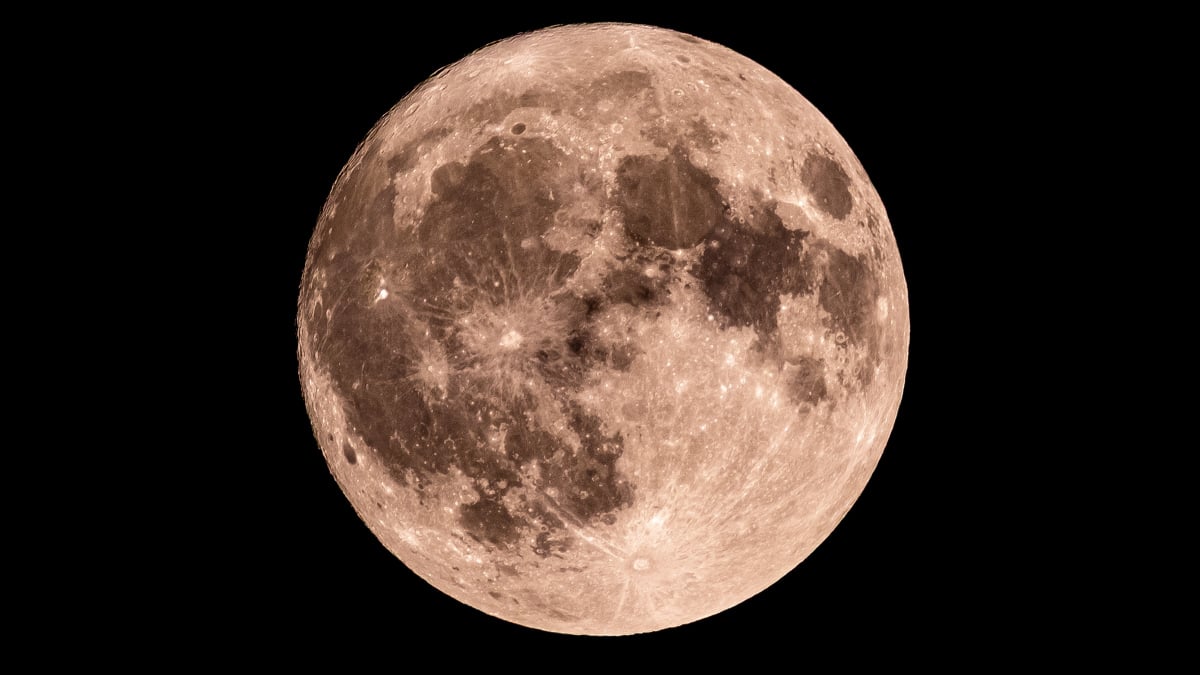
Currently, we are witnessing the Waxing Gibbous phase of the lunar cycle, where a significant portion of the Moon’s surface is brilliantly illuminated, creating a stunning spectacle in the night sky. This phase presents an excellent opportunity for both amateur and seasoned astronomers to explore the details of our celestial neighbor. Continue reading to discover the fascinating features you can observe in tonight’s lunar display.

What is the current Moon phase and its significance?
As of Sunday, April 26, the Moon is in the Waxing Gibbous phase, boasting an impressive 73% illumination, according to NASA’s Daily Moon Guide. This phase is pivotal for lunar observation, as it allows enthusiasts to see a variety of surface details without the harsh glare that accompanies a Full Moon. The Waxing Gibbous phase serves as an ideal time for lunar photography and amateur stargazing.
With just the naked eye, you can identify prominent features such as Mare Crisium, the Copernicus Crater, and the Tycho Crater. Those equipped with binoculars will be rewarded with views of the Mare Frigoris, Posidonius Crater, and the majestic Apennine Mountains. For those using telescopes, the excitement increases dramatically as you can observe not only these features but also the historic Apollo 17 landing site, Rupes Altai, and Rupes Recta. Each of these features tells a story of the Moon’s geological history, making this a riveting time for exploration.
When will the next Full Moon illuminate our skies?
The next Full Moon is anticipated to occur on May 1, marking the first of two Full Moons in May. This event, often referred to as a Blue Moon when it occurs twice in a month, provides another excellent opportunity for skywatchers to capture stunning lunar images and witness the Moon’s full beauty. The Full Moon phase will showcase the entire lunar surface, allowing for an immersive experience as you gaze upon its bright, reflective surface.
What are the different Moon phases and their characteristics?
According to NASA, the Moon completes a full orbit around Earth approximately every 29.5 days, transitioning through a sequence of eight distinct stages known as Moon phases. Despite the same face of the Moon always being visible to us, the sunlight illuminating the Moon changes as it orbits our planet, resulting in the recognizable cycle of full, half, and crescent shapes. Understanding these phases is crucial for lunar observation and appreciation.
The New Moon occurs when the Moon is positioned between Earth and the Sun, rendering it virtually invisible to the naked eye. Following this, the Waxing Crescent appears as a slender sliver of light on the right side (in the Northern Hemisphere). The First Quarter showcases half of the Moon lit on the right side, creating a half-Moon appearance. As we progress into the Waxing Gibbous, more than half of the Moon is illuminated, but it has not yet reached fullness.
When the Full Moon phase arrives, the entire face of the Moon is fully illuminated, creating a breathtaking sight that captivates observers. Subsequently, the Moon enters the Waning Gibbous phase, during which it begins to lose light on the right side (Northern Hemisphere). The Third Quarter, also known as the Last Quarter, presents another half-Moon, but this time with the left side illuminated. Finally, the Waning Crescent shows a thin sliver of light remaining on the left side before the Moon returns to darkness, completing the cycle.


 Ethan Carter