 Brandon Fletcher

The Insta360 X6 360 camera may not introduce groundbreaking features, but it excels in enhancing existing capabilities, setting a new standard for 360 cameras.
Its superior video quality distinctly differentiates the X6 from competitors. But can it truly serve as your sole action camera, as Insta360 frequently claims? Picture yourself as a budget-conscious videographer, an aspiring influencer, a spirited athlete, or an everyday individual eager to capture weekend memories to share on Instagram. If you seek a single camera solution, the Insta360 X6 could very well be your top choice. keep in mind that mastering the X6 requires some effort, as no 360 camera is entirely user-friendly.
Insta360 X6 Overview
This versatile 360 camera delivers impressive quality images in both 360 and linear formats. Just remember, it shouldn’t be your only camera.
- Outstanding low-light performance
- Numerous 360 and gimbal shooting modes
- Innovative haptic touchscreen
- 47GB of internal storage
- Exceptional battery life
- Gimbal mode lacks the expected performance
- Slightly heavier than competitors
- Slow-motion mode shows inconsistencies
- Priced $150 higher than the X5
Insta360 has undeniably shaped the 360 camera market. Despite competition from DJI and GoPro, the new $700 X6 once again secures its position as the premier choice for fisheye action cameras. This achievement is attributed to three key factors: an upgraded 1/1.1-inch sensor, exceptional 360 video processing capabilities, and innovative software features that transform the X6 into a semi-gimbal vlogging camera, similar to the recently promoted Luna Ultra that Insta360 is also marketing.
Regardless, the X6 is a feature-rich camera. It boasts impressive battery life and an expanded range of shooting options. For $700, you are paying $150 more than the X5’s initial launch price of $550 last April. This price increase is significant, but you are investing in the most comprehensive 360 camera available today. Given its capabilities, this camera could be the only one you need for quite some time.
More Compact Design with Enhanced Lens Quality
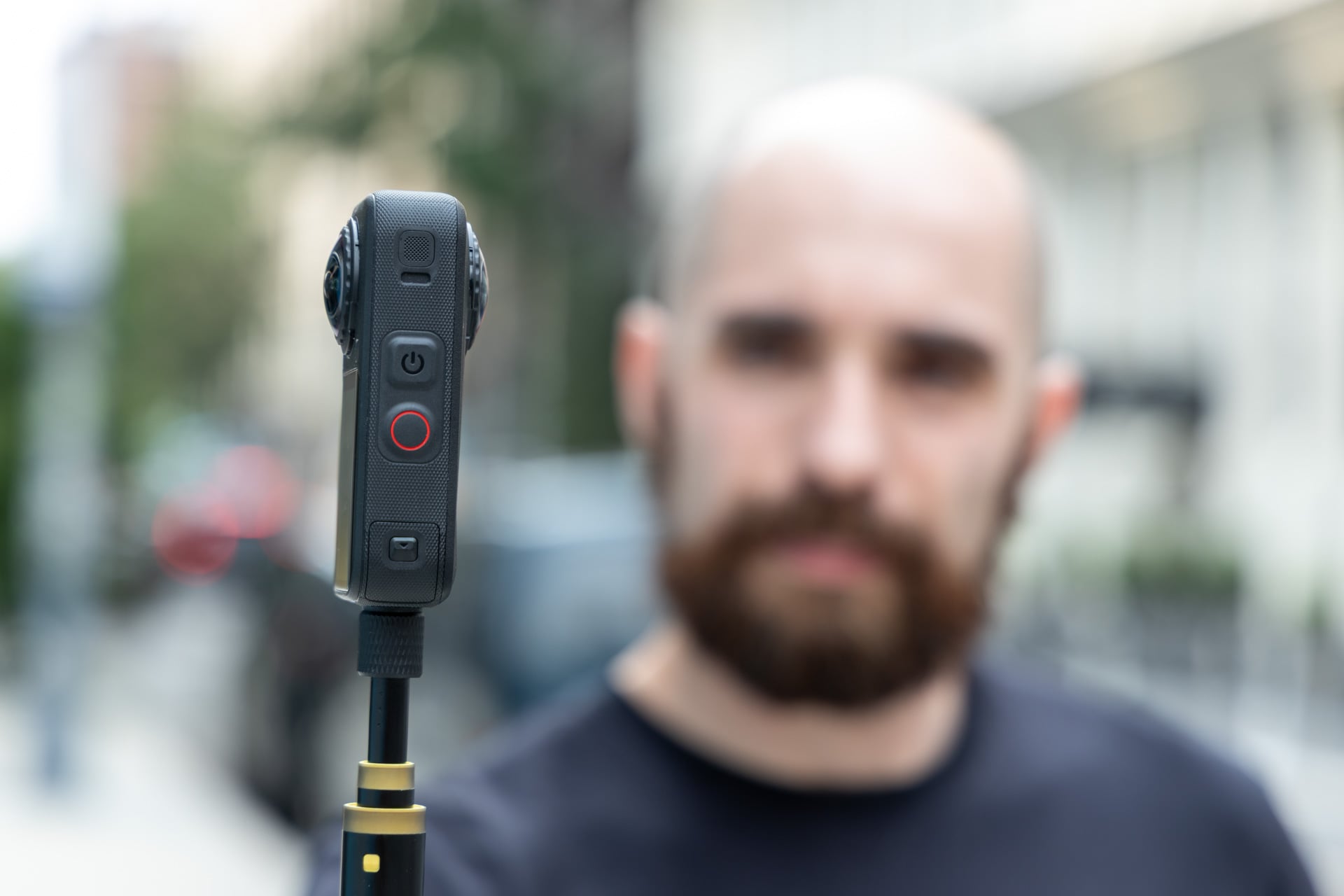
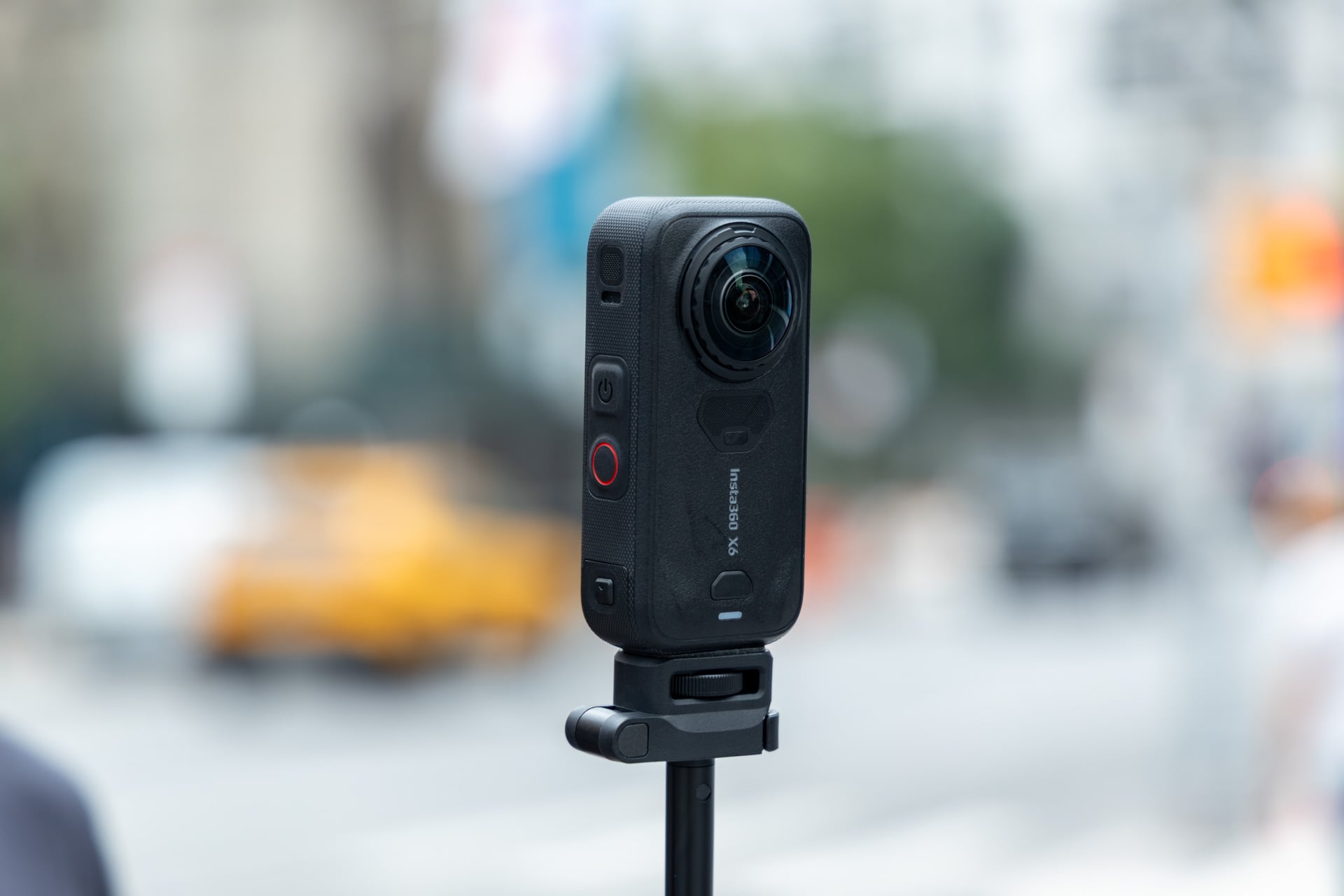
Insta360 has significantly refined its technology in recent iterations of its 360 cameras. The X4 Air serves as an entry-level option, while the X6 embodies the brand’s most advanced offering. It utilizes two large lenses that capture a full 180 degrees in front; these images are seamlessly stitched together, resulting in a cohesive 360-degree video experience.
The key improvement lies in the sensor size. Insta360’s newly developed sensors, co-created with Sony, are referred to as “1-inch equivalent,” but the X6 actually features dual 1/1.1-inch sensors. The company asserts that these new lenses provide a 33% increase in sensor area compared to the 1/1.28-inch sensors found in the X5. the X6 boasts a pixel size of 2.44um at 8K resolution and an impressive 14.5 stops of dynamic range, making it ideal for low-light environments.
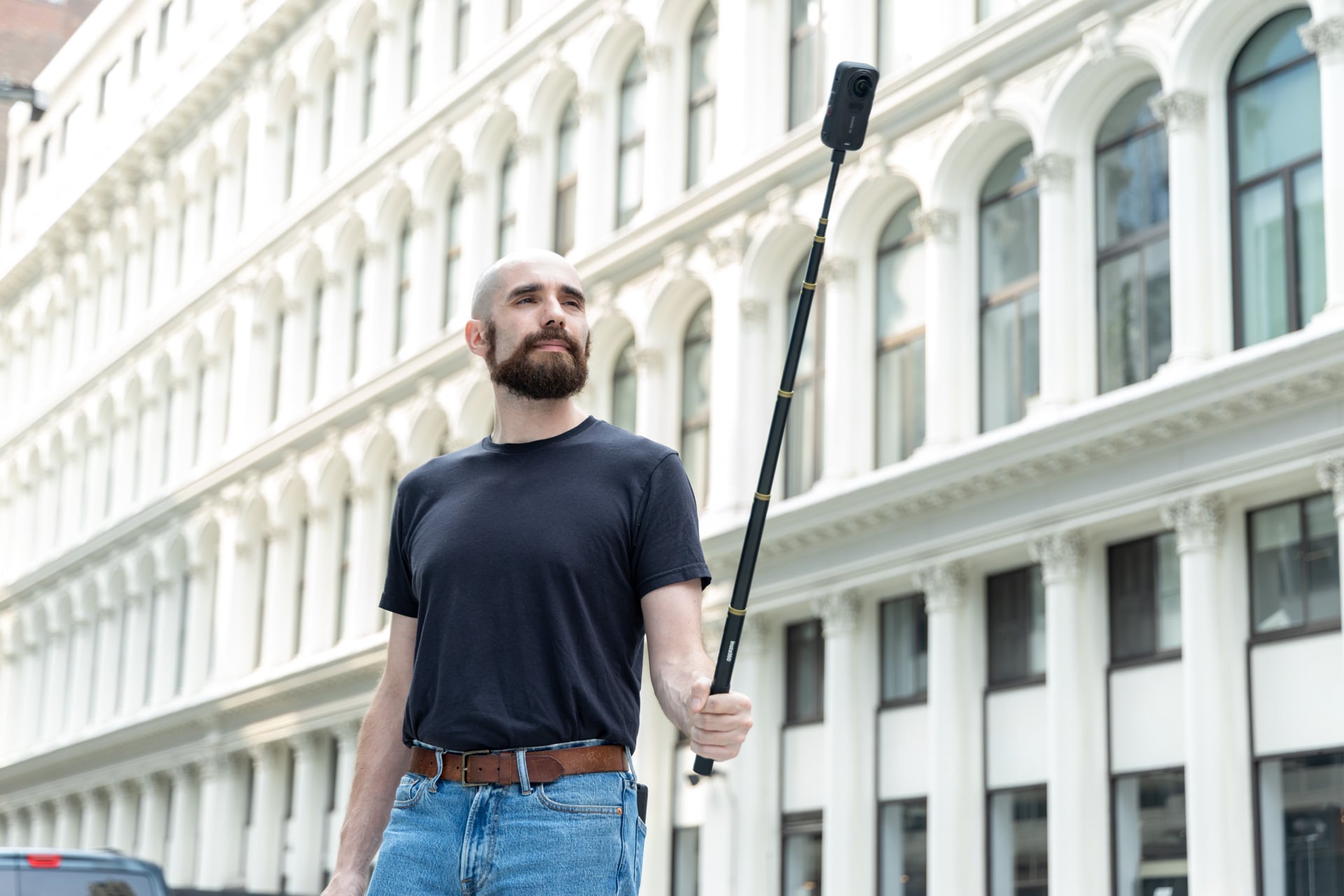
If you’ve used previous models from Insta360, you may have noticed that they have gradually become bulkier. Many are now too large for a standard pocket. The X6 has streamlined its design, measuring approximately 2 x 3 inches while retaining its slender, stick-like form. In contrast, competitors like the DJI Osmo 360 and the GoPro Max 2 adopt bulkier, square designs. weight is a factor, as the X6 weighs in at a heftier 6.9 ounces (0.43 pounds) compared to DJI’s offering. To enhance its premium appeal, Insta360 has also equipped the X6 with an OLED display. the practicality of a 2.32-inch screen during hands-free operation is debatable.
Beyond its size, the X6 features significant upgrades, including 360-degree microphones that capture audio from any direction. a specialized mic is included to minimize engine noise during dirt biking or off-road adventures. Insta360 claims to have enhanced the durability of its dual lenses, but users can still remove and replace them if necessary.
Insta360 has also focused on improving the camera’s internal components. The X6 is powered by an 8-core 3.3 GHz 4nm Qualcomm processor, along with two additional imaging chips. This extra processing capability enables the camera to assess ambient light and adjust settings automatically, which is crucial for optimal performance in challenging lighting conditions.
Unmatched Low-Light 360 Video Quality
Insta360 envisions its 360 cameras as intuitive, set-it-and-forget-it devices. Thanks to its automatic shooting modes, the X6 has become the most hands-free model yet.
I was genuinely impressed by how detailed the footage appeared, even in extremely low-light settings. The camera’s PureView low-light mode activates automatically in dim environments, enhancing the high ISO while effectively reducing graininess—something I’ve often struggled with on competitors like the DJI Osmo 360.
My experiences with a 360 camera are diverse. For every action camera review, I test these devices in my historical sword fighting classes. Typically, the dim fluorescent lighting results in muddled footage with harsh blown-out highlights. I also use these cameras in my professional life to capture consumer products under various lighting conditions. It’s surprising how many major tech companies showcase their gadgets in poorly lit locations.
During a recording session in a dim basement gym and an ‘80s arcade-like product showcase, the X6 managed to capture details that would typically be lost in such environments. Without needing to adjust ISO or aperture settings, the X6 handled all the technical work, allowing me to focus on my positioning to avoid collisions with swinging swords.
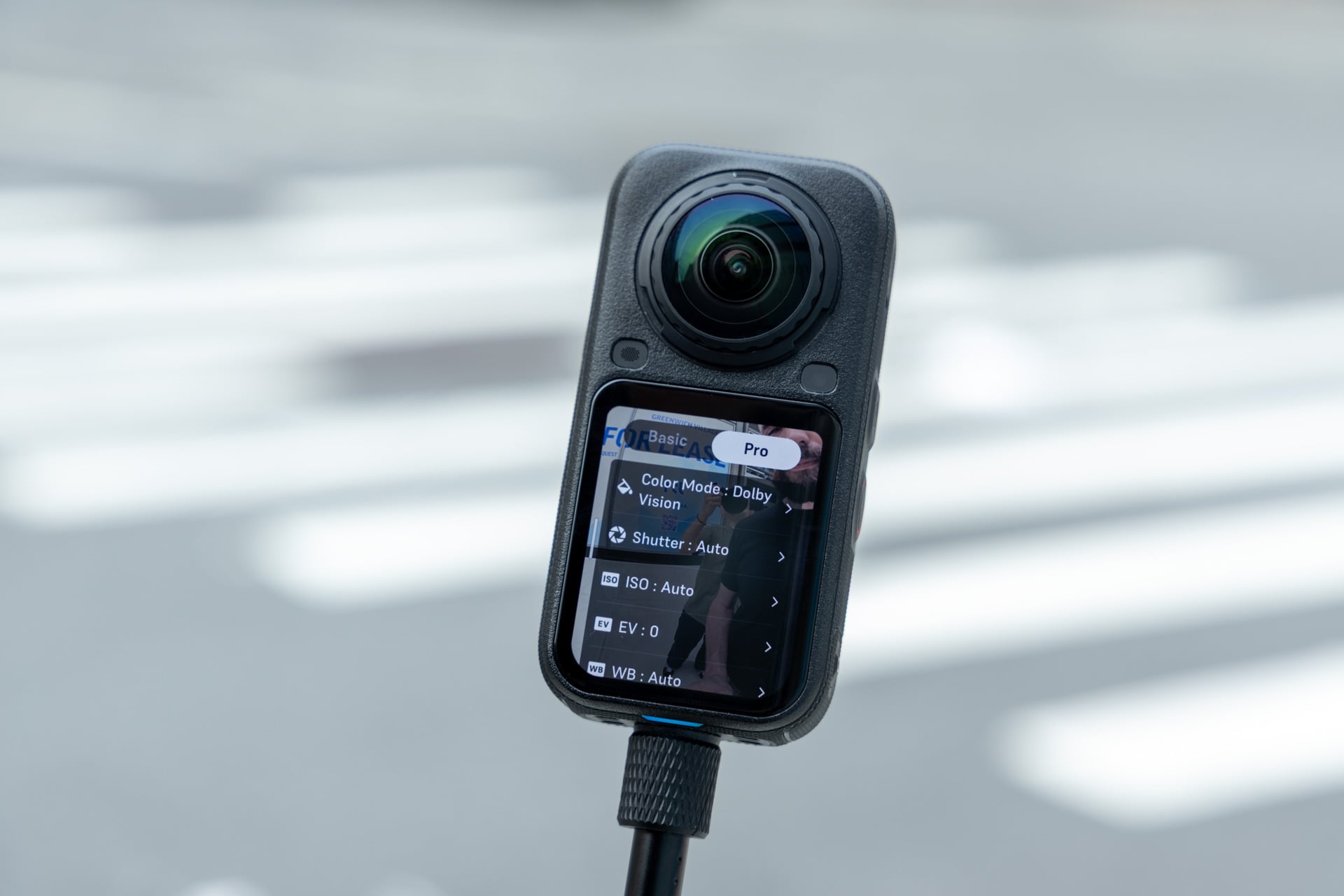
While I captured footage without adjusting any settings, the X6 now supports native shooting with I-Log color grading and Dolby Vision for high-dynamic range content. only one of these options can be utilized at a time, with a maximum resolution of 8K at 30 fps.
Be aware that filming in Dolby Vision or I-Log modes may result in less clarity compared to standard settings unless further adjustments are made. Videographers can modify the color mode, shutter speed, ISO, white balance, and exposure value. This level of control is sufficient for professionals to achieve the desired shots before editing. I-Log is particularly advantageous for creative users, whereas Dolby Vision may require an external microphone for improved audio quality. The built-in 360-degree microphones perform better in crowd settings than for individual vlogs.
Discover the Insta360 X6 at Best Buy
How Does the X6 Perform with Non-360 Footage?
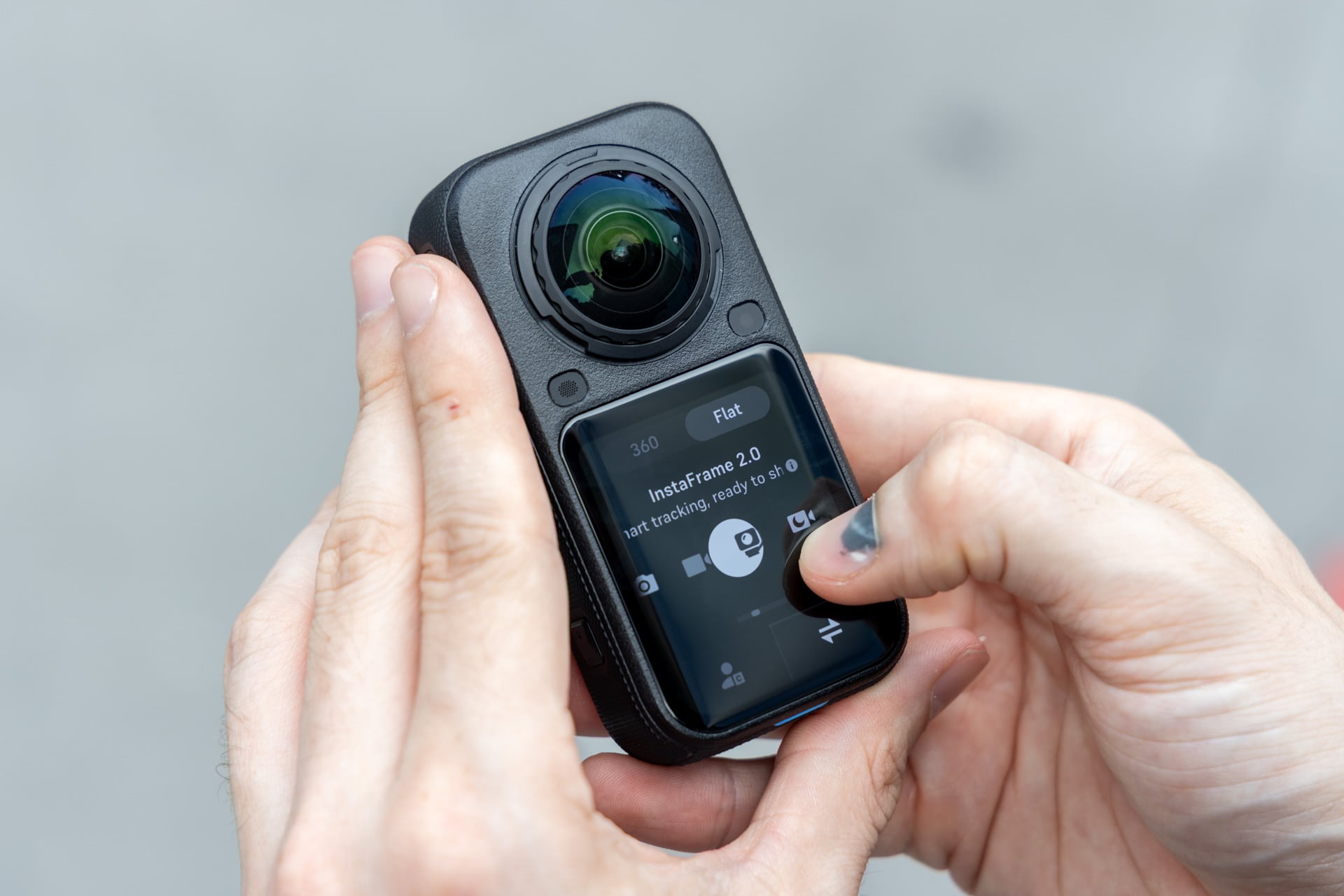
One of the significant enhancements in the X6 is the faux-gimbal mode, which allows for face tracking. You can shoot stable linear video at 4K up to 30 fps in this “InstaFrame 2.0” mode. For standard linear footage, frame rates can reach up to 60 fps. Similar to a gimbal camera, you can move around freely, and the software will keep you centered in the frame.
This mode can potentially outperform mechanical gimbal cameras like the DJI Osmo Pocket 4, whose movement range is limited. The footage I captured with the X6 was suitable for average vloggers. The face-tracking feature was so efficient that I could flip the X6 along with its telescoping handle in the air, and the camera maintained focus on my face throughout the motion.
Insta360 also offers a special magnetic Mini Remote that allows you to add panning or rotation effects to your shots. a notable limitation of this function is the lack of an option to recenter the tracking to different corners of the frame. If you want to position your face in the bottom left corner while allowing for more subjects to be visible, you would need to disable face tracking and film in 360 mode. This is a straightforward software adjustment that could easily be implemented from the $770 Luna Ultra.
While this serves as a functional alternative to a gimbal camera, if you’re looking for a dedicated vlogging shooter, the X6 may not be the ideal choice. Other options for linear shooting include more 4K, PureView, and flat photo settings. Though the Luna Ultra and DJI Osmo Pocket 4 Pro are pricier, they provide superior results.
Similar sentiments apply to other modes, such as the “Bullet Time” slow-motion recording capabilities. This mode allows recording at 8K in 360 degrees at a claimed 100 fps or 4K at a staggering 240 fps. Unfortunately, during my testing, I couldn’t obtain usable footage in this mode, as the frame consistently locked at the stitching line between the two lenses. This may be an aspect that improves by the time of the official release, as I was using early beta software. For now, the GoPro Mission 1 Pro remains the go-to option for compact slow-motion recording.
Capturing Every Angle with Found Footage
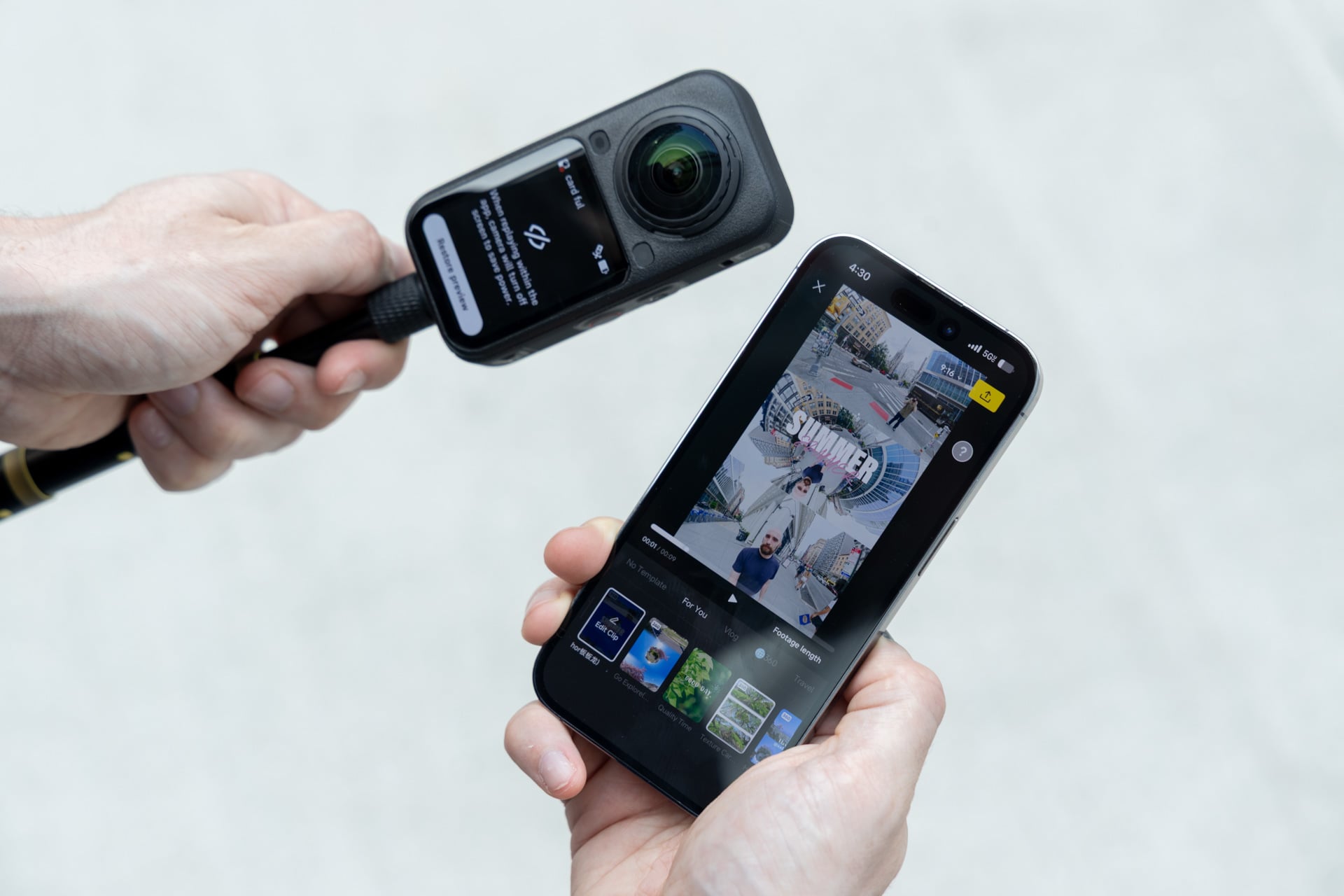
The X6 offers various niche shooting modes, including “Loop Recording” and “Road Mode” tailored for extended recordings while cycling. It also features a standard static “Timelapse” setting and “Starlapse” for capturing starry skies in low light. most of your time with the X6 will likely be spent shooting in standard 8K 360 or 4K linear modes.
When it’s time to transfer footage, you can connect the camera or SD card to your computer or use Insta360’s app. A new addition to the app is the “AI Frame” feature, which promises to automatically adjust your 360 footage to fit the standard 9:16 format suitable for Instagram. some of the preset styles can be as garish as the most over-the-top TikToks.
While it functions to some extent, it may not be ideal if you prefer to focus on subjects other than yourself. As someone who regularly shoots product videos, I would appreciate the ability to instruct the AI to focus on an object rather than my uninterested expression. You can edit the AI-generated video to make further adjustments, but the option to dewarp the AI clips is not available.
I found myself reverting to Insta360 Studio on PC and Mac, where I had to navigate the complexities of keyframes. One cannot expect a 360 camera to be as straightforward as a standard fixed-lens setup. Although this camera simplifies the capture of footage, editing it remains a challenge.
The AI Frame feature sometimes exacerbates common issues associated with 360 cameras. I noticed instances in my footage where the stitching effect created by merging images from the two lenses resulted in distortion. During my tests, the footage also experienced shudders due to slight movements. This is a frequent problem with most 360 cameras, yet I encountered it too often during my editing process.
Enhanced Storage and Battery Life
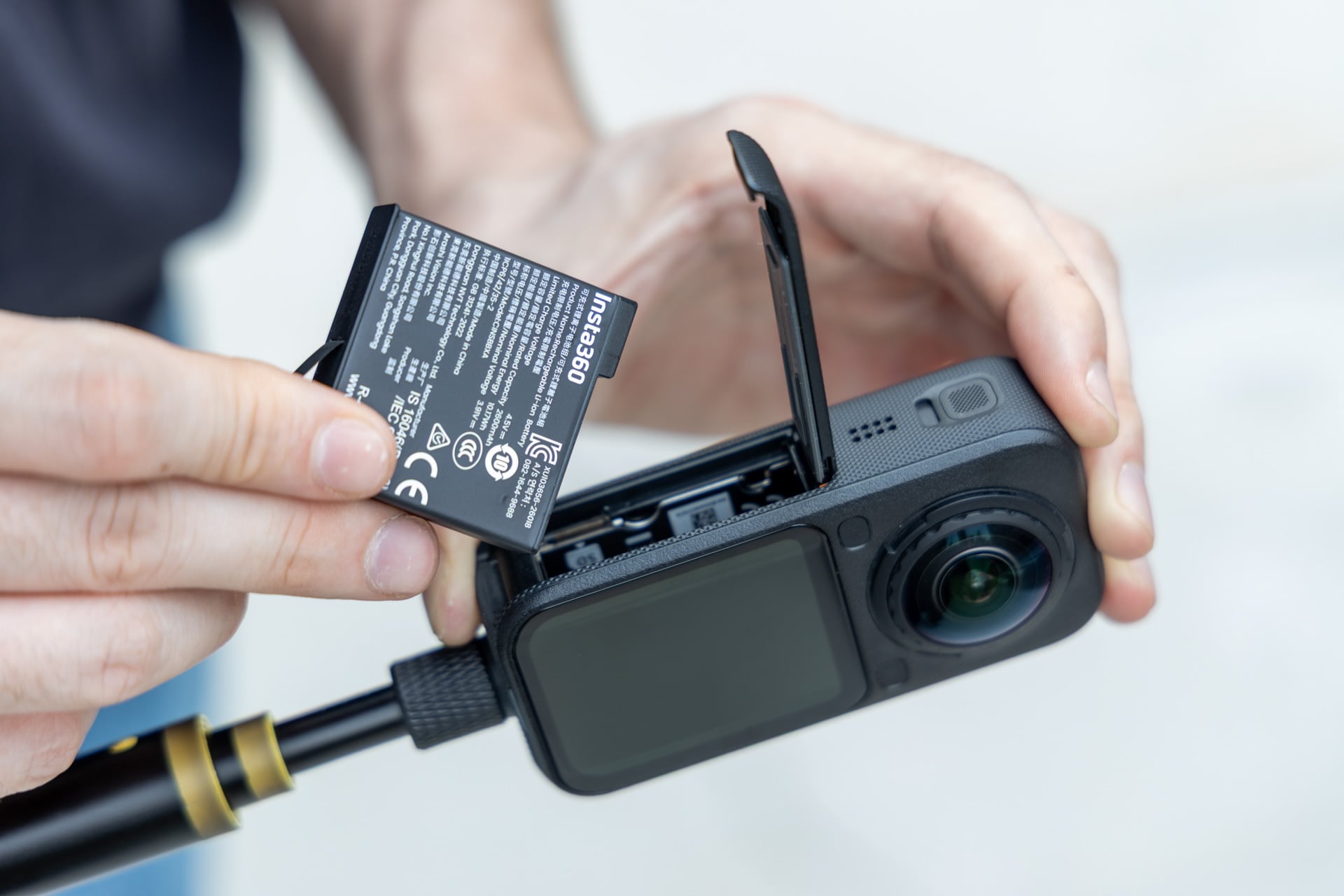
Several noteworthy enhancements from the X5 to X6 warrant attention. Insta360 has improved the waterproof rating to IP68, enabling the camera to be submerged up to 20 meters (65 feet) without a diving case. For deeper underwater adventures, a case accessory extends this limit to 60 meters (196 feet).
The X6 now features 47GB of onboard storage, providing a backup option if your microSD card reaches capacity. upgrades to Wi-Fi 6 and USB 3.0 significantly enhance data transfer speeds, whether wired or wireless. There’s even a convenient NFC (near-field communication) feature that facilitates instant app connectivity by tapping your phone against the X6.
The X6 offers a more tactile experience compared to rival 360 cameras. You can tap the screen to initiate recording, and the device provides haptic feedback while navigating through menus. Among all the advancements from the X5 to the X6, the most impactful is the enhanced battery life. The X6 is equipped with a 2600mAh “Xtreme” battery. During my tests, while recording continuously at 8K and 30 fps, I only depleted about 44% of the battery after nearly an hour of footage. This indicates that users can expect over two hours of recording time before needing to swap batteries.
Is the X6 Your Only Camera Option?
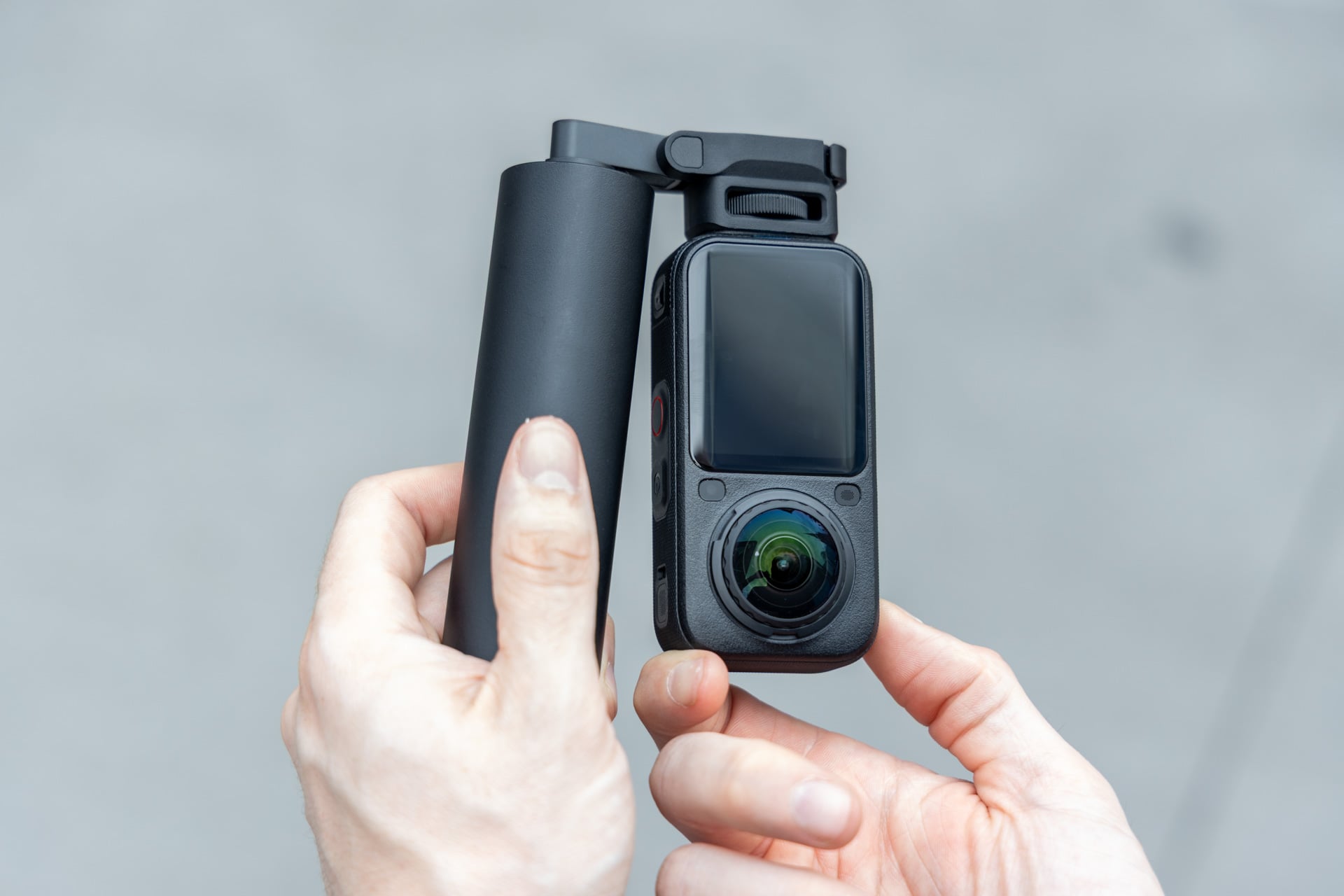
Among all the 360 cameras I’ve used, the X6 integrates seamlessly into my recording workflow, relegating my iPhone camera to its intended purpose: snapping pictures of my cat.
It is not my sole option for every recording scenario. There are instances where I prefer the X6 over compact alternatives like GoPro. Yet, there are times when a simpler recording device is necessary. Despite the investment of $700, editing footage from the X6 typically involves more effort compared to simply transferring clips from my phone directly to TikTok.
Is the video quality truly worth an additional $150 compared to the X5, or over $230 more than the DJI Osmo 360? Most potential buyers may find that the X6 does not provide sufficient value for the price. For the highest quality 360 video, a greater investment may be required. Nonetheless, the X6 is still a commendable camera that delivers quality performance.
Explore the Insta360 X6 at Best Buy


 Daniel Mercer
 David Bridges