David Bridges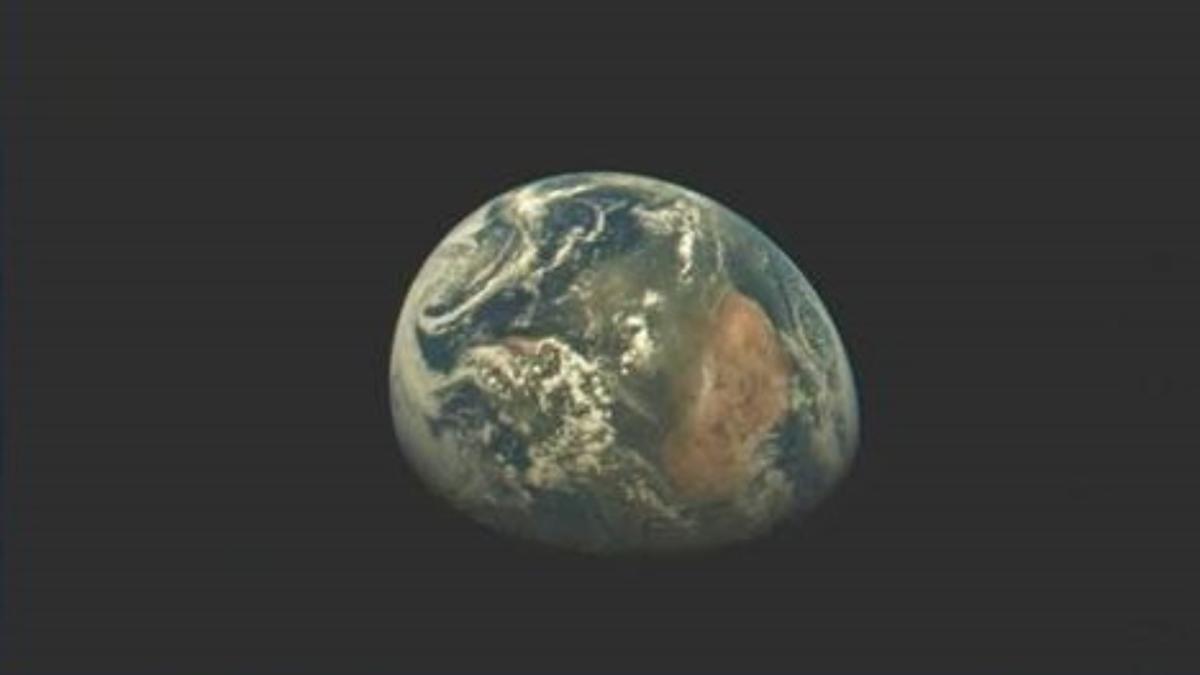

It’s a rare occasion when we catch a glimpse of the enigmatic X-37B space plane during its orbital missions. Recently, the US Space Force unveiled an image reportedly taken last year by the X-37B, showcasing our planet in the backdrop along with a portion of the spacecraft itself. Launched at the end of 2023, this marks the seventh mission for the X-37B. Details about this particular mission remain largely undisclosed. However, its previous deployment concluded in 2022, setting an impressive new endurance record by spending a remarkable 908 days in orbit, which highlights the capabilities and advanced technology of this unmanned space vehicle.
While the image may not provide extensive information, it certainly offers a captivating glimpse into the X-37B’s activities in space. The US Space Force shared that the photo was captured by an onboard camera designed to monitor the vehicle’s health and safety during its operations. As they noted on their platform, “An X-37B onboard camera, used to ensure the health and safety of the vehicle, captures an image of Earth while conducting experiments in HEO in 2024.” This statement piques interest about the ongoing experiments and the mission’s objectives, further emphasizing the space plane’s significance in advancing our understanding of space exploration.
One exciting development regarding the current mission is that it signifies the inaugural attempt for the Boeing-made X-37B to utilize a technique known as aerobraking. This innovative method allows the spacecraft to alter its orbit more efficiently by using the drag of Earth’s atmosphere through a series of passes. The Space Force announced back in October that the X-37B had embarked on this aerobraking process, and recent updates indicate it was successfully executed. They stated, “The X-37B executed a series of first-of-kind maneuvers, called aerobraking, to safely change its orbit using minimal fuel.” This achievement not only showcases the spacecraft’s advanced engineering but also raises questions about how long this current mission will continue and what further insights we may gain from it.


 Daniel Mercer
 Brandon Fletcher