 Brandon Fletcher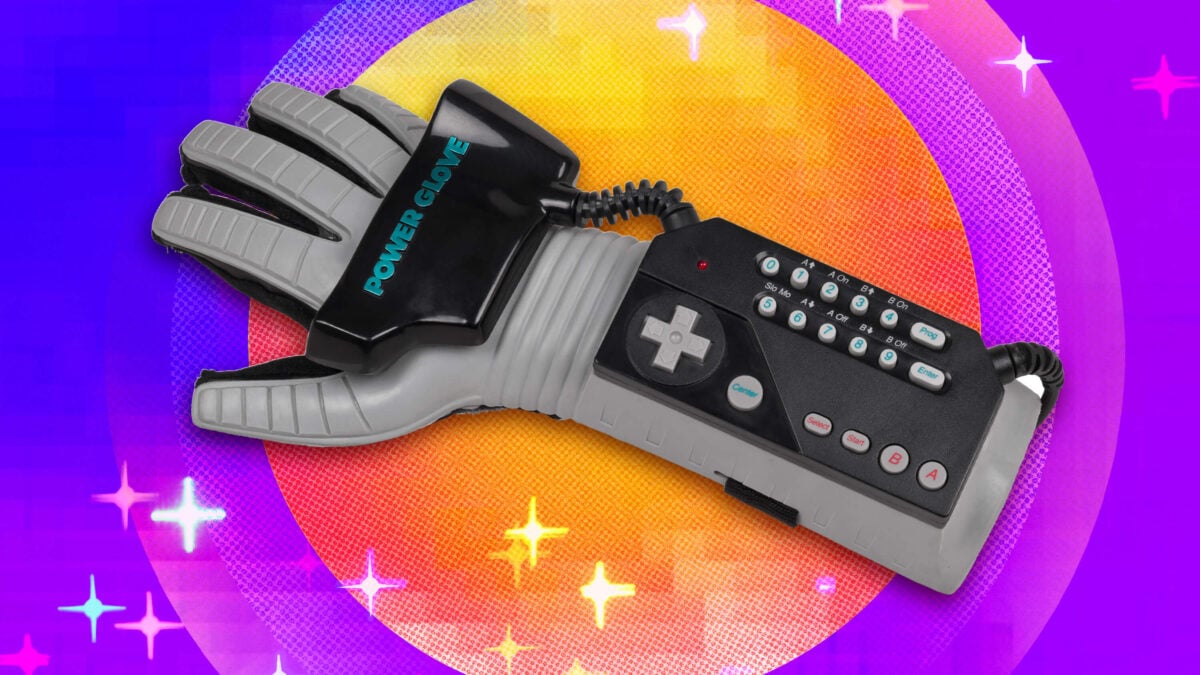

The Power Glove’s memorable appearance in the 1989 film The Wizard marked a pivotal moment in the history of wearable technology. While it wasn’t the first instance of wearables making waves in popular culture, it captivated me and countless others long before we ever considered purchasing our first Fitbits.
If you’re unfamiliar with The Wizard, it functions as a 90-minute advertisement for Nintendo, cleverly disguised as a children’s movie. The story follows a traumatized boy named Jimmy Woods, who possesses an extraordinary talent for Nintendo games. He is rescued from an institution by his half-brother Corey, played by Fred Savage. Together, they embark on a journey to California, picking up Haley Brooks, portrayed by Jenny Lewis, along the way. Their goal is to enter a video game tournament in California offering a $50,000 grand prize, which everyone believes Jimmy has a real chance of winning—if only they can navigate the plethora of Nintendo product placements throughout the film.
As an eight-year-old, I was completely enthralled. The Wizard was the first movie that truly resonated with my passion for video games. It not only gave us an early glimpse of the highly anticipated Super Mario Bros. 3 before its North American release, but it also introduced what I can only describe as “the future”: the Power Glove, a revolutionary Nintendo controller designed to be worn on the arm, allowing players to control NES games through gesture movements.
The Power Glove Captivated Generations of Gamers
For adolescents at the time, the Power Glove epitomized coolness. It embodied everything desirable: it was pricey, exclusive, and the only character wielding it was the film’s rebellious antagonist, Lucas, which ensured it wasn’t perceived as a gadget for nerds. All of us yearned for it, often boasting to classmates that our cousins—who lived far away—owned one.
Interestingly, I never encountered a Power Glove in person, let alone used one, and perhaps that was fortunate. The Power Glove was fundamentally flawed, officially compatible with just two games, and would only work with others through complicated programming.
Nintendo, which merely licensed the Power Glove and had no hand in its creation, hurried its release to ensure it hit shelves for Christmas 1989. Despite its shortcomings, it sold nearly 2 million units at around $100 each (equivalent to about $250 today), largely thanks to an aggressive marketing campaign that highlighted The Wizard. it became a commercial success.
The rushed timeline meant that game developers lacked sufficient time to create new titles to support its launch. There was no way to retroactively add Power Glove compatibility to existing games. The two games that did support it performed poorly, leading Nintendo to withdraw the Power Glove from the market after just one year.
This saga represents a fleeting cultural moment destined to take on a legendary status. For many, it provided not just nostalgic memories in adulthood; it also shaped our perception of wearable technology today.
Wearable Technology Has Always Signified a Glimpse into the Future
The Power Glove’s ineffectiveness is irrelevant. What truly mattered to us at the time was its representation of a technological capability that felt just out of reach, all while looking undeniably cool. This experience was not unique to my generation.
In 1946, the comic book detective Dick Tracy debuted with a radio strapped to his wrist, reminiscent of a watch. By the 1960s, this concept evolved into a two-way radio, not only predicting the smartwatch decades ahead but also laying the cultural groundwork for the development of future wearables (Apple CEO Tim Cook has often expressed his admiration for Dick Tracy comics from his youth).
Similarly, modern attempts to create AI-powered pins draw heavily on the allure of Star Trek-style communicator badges, despite their actual implementations often falling short. The idea of glasses functioning as a digital heads-up display or translator has long been a staple of science fiction, making the resurgence of smart glasses following Google Glass’s failure unsurprising.
There is something uniquely captivating about wearing technology that sparks our imaginations in a way that handheld gadgets do not. Futuristic devices held in people’s hands simply lack the same appeal. Consider the titular Predator from the iconic 1987 film; it could have wielded a futuristic plasma rifle while stalking Arnold Schwarzenegger through the jungle, but that would have made it an alien counterpart to traditional gun-wielding heroes—a dull concept. when the plasma rifle is slung over its shoulder, it appears to gain an additional limb, giving it an unfair advantage over its human prey. Now, that’s a compelling movie moment.
The act of wearing technology suggests a higher level of sophistication, a capability that feels “smarter” than handheld tools, even the most advanced ones. There may be complex psychological reasons for this fascination, but at its core, it likely stems from a simple human tendency towards convenience.
Wearable Technology Signals a Future of Enhanced Convenience
The similarities between the Predator and Lucas Barton from The Wizard are striking: both characters initially gain an advantage over others through their wearable technology. Their gadgets simplify their tasks, while the rest of us must navigate life using our hands, which feels too much like work.
As an avid gamer since childhood, I have always enjoyed video games. witnessing the Power Glove in The Wizard made me believe that an invisible connection existed between the game and myself, accessible only through the Power Glove. While I struggled to maneuver a car using buttons and the D-pad, the Power Glove promised the ability to drive by merely mimicking a steering wheel with my hands, just as I would in real life.
As a child, I didn’t perceive it through the lens of effort. To me and my friends, it was simply the coolest invention imaginable. The Power Glove’s allure lay in its promise of eliminating the effort required for full immersion in a video game—translating intentions into button presses. Instead, I could engage with games through natural, instinctive gestures—punching, finger-gunning, or whatever the game required—without unnecessary steps.
As a child, I was blissfully unaware of the immense challenge involved in programming such a system across multiple games. I also never had my illusions dampened by owning a Power Glove, leaving me with only the vision of a future where gaming would be effortless and immersive. This vision has consistently appealed to consumers of wearable tech in pop culture, for better or worse. It is also what tech companies leverage to generate excitement around new products as technology advances.
Wearable Technology is Finally Realizing Our Cultural Aspirations
I came of age before wearable technology surpassed the capabilities of a digital watch. We could dream of strapping on devices that performed spectacular functions, but the technology of our time couldn’t bring those visions to life. This gap transformed wearables into science fiction, fueled by the creativity of artists like William Gibson, John Carpenter, and films such as The Wizard.
Today, all the necessary technologies to make wearables a reality have finally caught up with our past imaginations. Advancements in microprocessors, rechargeable batteries, and wireless connectivity enable us to incorporate cameras, microphones, and speakers into wearables like glasses, making them practical for everyday use. Smart ring technology is advancing rapidly, and its potential applications are exciting to consider. The possibilities are vast.
New technology alone cannot sustain a profitable market. A consumer base ready to invest in innovative technology is essential to kickstart momentum, and wearables owe a considerable debt to artists who laid the groundwork with years—if not decades—of imaginative advertising for products that companies are only now starting to develop.
So, was The Wizard part of a capitalist strategy to keep me consuming and profits flowing? Absolutely, but it was effective, not just for me but for many of us. While I may have moved past the Power Glove and gesture controls for games (some things are better left in childhood), trying on a new wearable still evokes a sense of approaching that imagined future I glimpsed in the theater as a child, and I believe it always will.

 Daniel Mercer
 David Bridges