 Cameron Steel
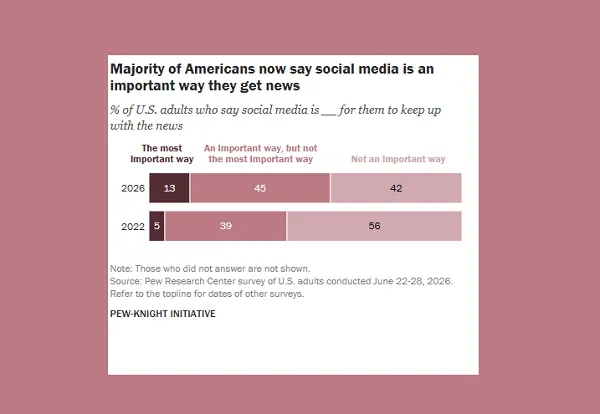

Pew Research released a new report on October 23, revealing that over half of U.S. adults view social media as a primary source for news and information.
This report is based on a survey involving more than 3,500 U.S. adults conducted in June of this year. The findings highlight the substantial impact that social media platforms have on information dissemination. They also emphasize the vital role these platforms play in keeping the voting public informed about significant events.
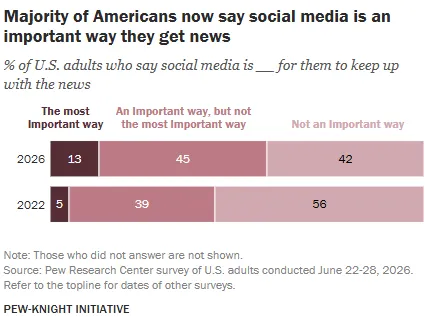
The data indicates that 58% of Americans see social media as a crucial link to current events. Notably, 13% of respondents identify social media applications as their most significant information source. Considering the estimated U.S. adult population of approximately 270 million, as reported by the Annie E. Casey Foundation, this translates to roughly 35 million American adults relying on social media for news updates.
This figure represents a notable increase from the findings of Pew Research’s prior study in 2022, where only 43% of U.S. adults regarded social media as a significant news source, with merely 5% considering it their primary source.
The results stress the increasing dependence on social media platforms, while also highlighting their considerable power to shape media narratives, influenced by each platform’s moderation policies.
This issue has sparked ongoing debate. For instance, Elon Musk acquired Twitter in 2022, citing concerns that the previous management was distorting democratic discourse by controlling which posts gained visibility.
This concern has evolved into what some call the “censorship industrial complex,” a term describing a loosely connected group of activists aiming to regulate online discourse by pressuring platforms to limit certain speech and control which content gets amplified.
In December, U.S. Secretary of State Marco Rubio announced that the State Department was taking measures against individuals allegedly leading organized efforts to coerce American platforms into censoring, demonetizing, and suppressing dissenting viewpoints. This initiative was framed as “Actions to combat the censorship-industrial complex.”
Given the considerable influence of social media platforms, it is understandable that the government seeks to ensure these platforms remain open to diverse perspectives. this freedom can also lead to the unchecked spread of misinformation and misleading narratives.
It is crucial to examine the responsibilities of social platforms in setting guidelines about acceptable speech and determining who makes these decisions.
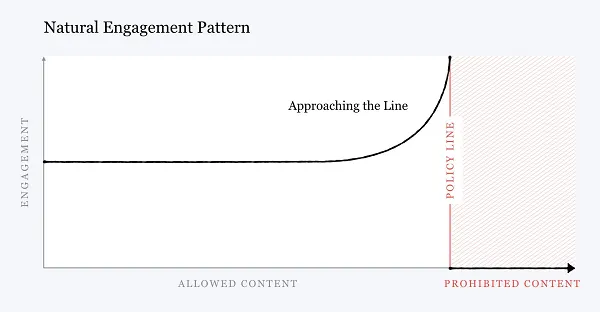
Platforms have shown a tendency to adopt a more hands-off approach, allowing users to dictate acceptable content. given their significant role in shaping the news landscape, this could create a perilous situation. platform algorithms often prioritize engagement over content accuracy, resulting in controversial discussions receiving more visibility.
The notion that users tend to engage more with sensational content was articulated by Meta founder Mark Zuckerberg in 2021. He emphasized the need for greater efforts to counteract the weaponization of misinformation.
Zuckerberg stated, “One of the biggest issues social networks face is that, when left unchecked, people will engage disproportionately with more sensationalist and provocative content. This trend is not new; it is prevalent in cable news and has been a characteristic of tabloids for over a century. When scaled, it can undermine the quality of public discourse and lead to polarization.”
In January 2025, Zuckerberg shifted his stance. In a post about Meta’s decision to move away from fact-checking, he argued that the company has a duty to promote more open discourse and to facilitate discussions on contentious topics. Meta relaxed some of its prior restrictions on discussions about sensitive issues like immigration and gender identity.
By his own reasoning, this change is likely to increase polarization and lead to greater societal harm.
This represents a significant shift in perspective. As social media platforms become ever more essential for information sharing, it raises questions about why Zuckerberg altered his views and chose to permit more open discussions, despite recognizing the potential risks involved.


 Clara Hastings
 Maya Kensington