Daniel Mercer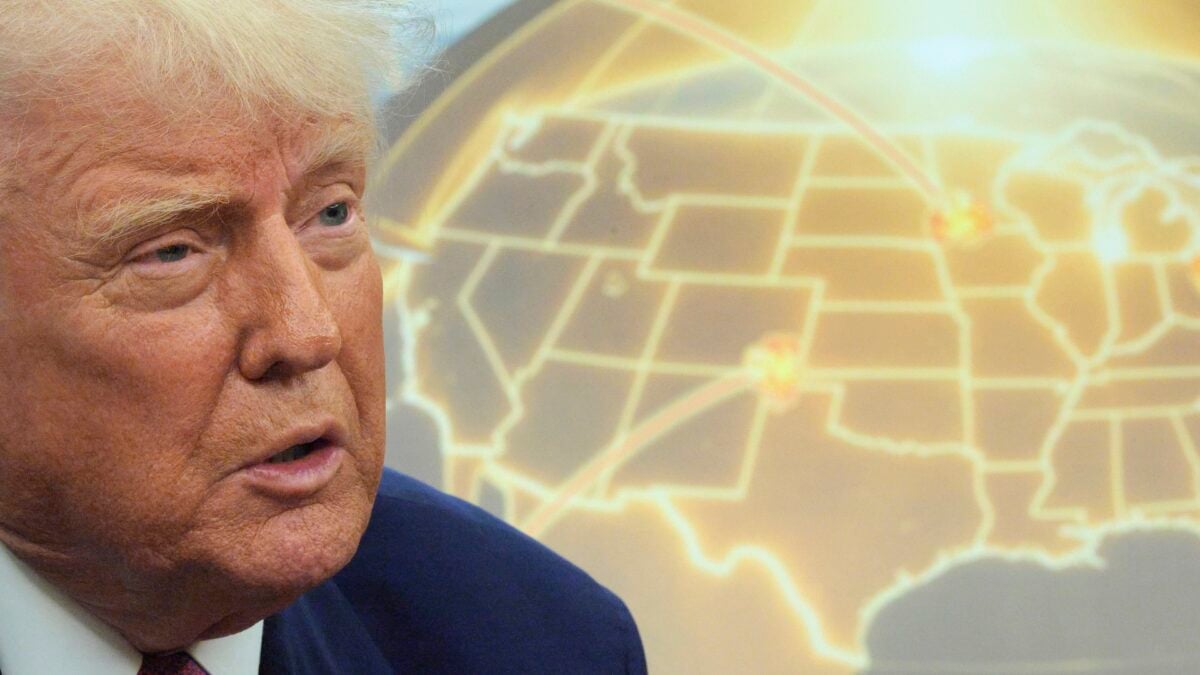

The ambitious Golden Dome project initiated by President Donald Trump aims to establish a robust missile defense system capable of neutralizing threats against the United States. Recent estimates from the Congressional Budget Office indicate that this extensive program will require a staggering investment of approximately $1.2 trillion over the next two decades. This figure significantly surpasses the earlier projection of $175 billion that Trump announced last year, highlighting the escalating costs associated with this ambitious defense initiative.
In January 2025, shortly after taking office for his second term, Trump signed an executive order to launch this project, initially called the Iron Dome for America. This system draws inspiration from Israel’s Iron Dome missile defense technology, but the name Golden Dome has since gained traction, reflecting the president’s well-known affinity for golden aesthetics.
Trump has characterized the Golden Dome as an essential measure for safeguarding the U.S. from a broad spectrum of threats, including those posed by missiles potentially launched from outer space. While the concept of weaponizing space remains speculative, Trump’s rhetoric amplifies the urgency surrounding this defense program.
In a press briefing held in the Oval Office in May 2025, Trump asserted, “This design for the Golden Dome will integrate with our existing defense capabilities and should be fully operational before the end of my term, so we’ll have it done in about three years.” This statement reflects his commitment to fast-tracking the project and underlines his vision for a comprehensive defense strategy.
The inspiration for the Golden Dome stems from the historical efforts of President Ronald Reagan, who proposed a similar defense initiative known as the Strategic Defense Initiative during the 1980s. This initiative aimed to deploy satellite-based lasers to intercept incoming missile threats. Though often dismissed as unrealistic and dubbed “Star Wars” by critics, figures like Trump view the potential of such technology with optimism.
However, experts caution that developing a missile defense system akin to the Iron Dome presents significant challenges, often likened to the difficulty of hitting a bullet with another bullet. While Israel’s Iron Dome effectively protects a relatively small geographical area, the challenge of defending the vast expanse of the continental United States is substantially more complex. As noted by a defense technology expert speaking to Gizmodo, “Everyone looks at it as a replication of Israel’s Iron Dome, but we have to appreciate that Israel’s the size of New Jersey.”
Moreover, the Iron Dome has demonstrated vulnerabilities, as evidenced by incidents where it struggled to intercept a large number of incoming attacks, such as the incident in March when Hezbollah launched 100 rockets, with only about half successfully intercepted, according to Israeli officials who spoke with the New York Post.
The CBO estimate was requested by Sen. Jeff Merkley, a Democrat from Oregon, who criticized the Golden Dome initiative as a financial burden on American taxpayers, referring to it as “nothing more than a massive giveaway to defense contractors paid for entirely by working Americans.” This statement encapsulates the ongoing debate surrounding the project’s financial implications and its purpose.
Many experts express skepticism regarding the feasibility of the Golden Dome. For instance, Joseph Cirincione, the retired president of the Ploughshares Fund, articulated concerns to Gizmodo in 2025, stating that the Golden Dome has “no chance of stopping a determined ballistic missile attack,” despite the substantial resources allocated to researching missile defense over the past four decades.
Research conducted last year examined the necessary defenses against potential ballistic missile strikes from North Korea, revealing discouraging results. The findings suggested that a defense system would require over a thousand weapons stationed in orbit to effectively counter a single ballistic missile. Additionally, North Korea’s capacity to launch anti-satellite attacks poses significant challenges, further complicating the implementation of such a defense system, as outlined by Cirincione.
As reported by the Associated Press, the Republican-led Congress allocated $24 billion for the Golden Dome project last summer. However, if lawmakers intend to transform this missile defense initiative into a reality, they will need to secure additional funding and resources, highlighting the significant financial commitment required to realize Trump’s ambitious vision.