David Bridges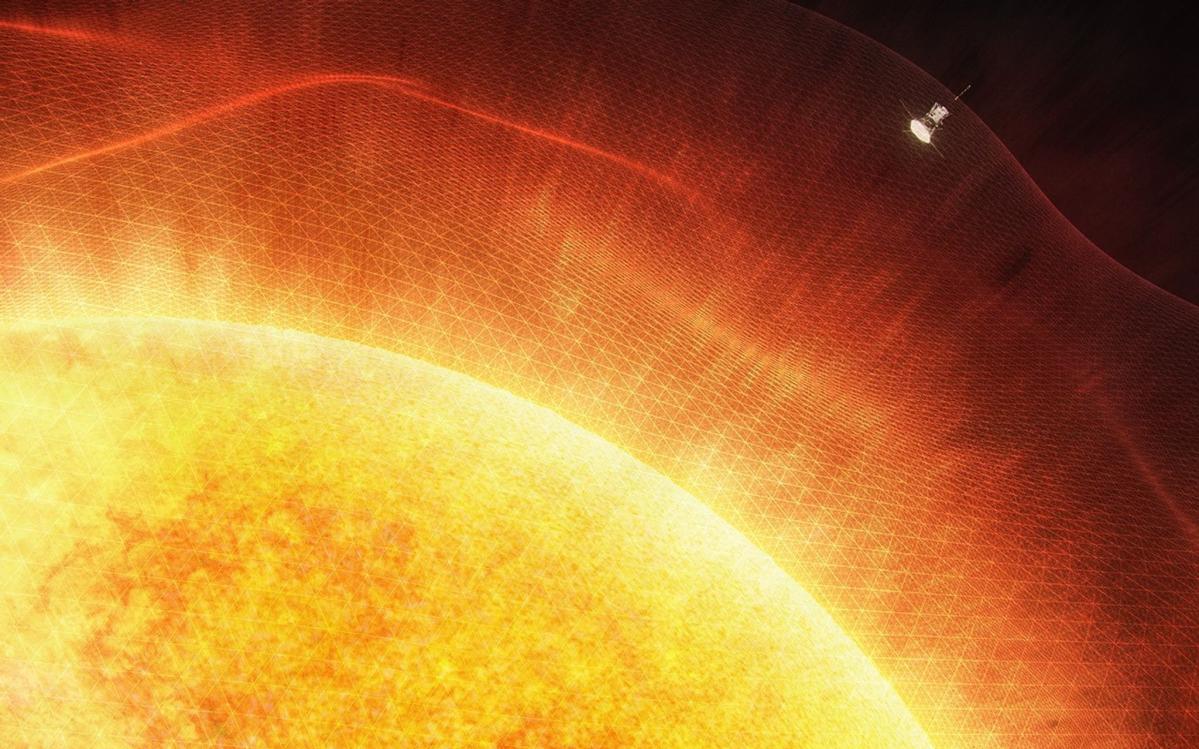
On Friday, NASA announced an exciting milestone: the Parker Solar Probe successfully transmitted a signal confirming its survival after making an unprecedented close approach to the sun. This flyby brought the probe within a mere 3.8 million miles of the sun’s surface, diving directly through the outer atmosphere known as the corona. This remarkable proximity allowed scientists to gather groundbreaking data that sheds light on the sun’s behavior and its impact on our solar system. To visualize this astonishing distance, NASA likens it to a scaled-down model of the solar system, stating that if the distance from the sun to Earth were the length of a football field, the Parker Solar Probe would be merely four yards from the end zone, highlighting just how close it really was.

The Parker Solar Probe is designed to orbit the sun, making its closest approaches approximately every three months. Following its latest flyby, the probe will return for two additional close encounters in 2025, specifically on March 22 and June 19. As it continues its journey, the spacecraft is expected to relay the data collected from this latest approach as soon as it reaches a favorable position for transmission. According to Joe Westlake, the director of the Heliophysics Division at NASA Headquarters, “The data that will come down from the spacecraft will be fresh information about a place that we, as humanity, have never been.” This achievement marks a significant step forward in solar research and our understanding of stellar phenomena, showcasing the incredible capabilities of modern space exploration.


 Daniel Mercer
 Brandon Fletcher