David Bridges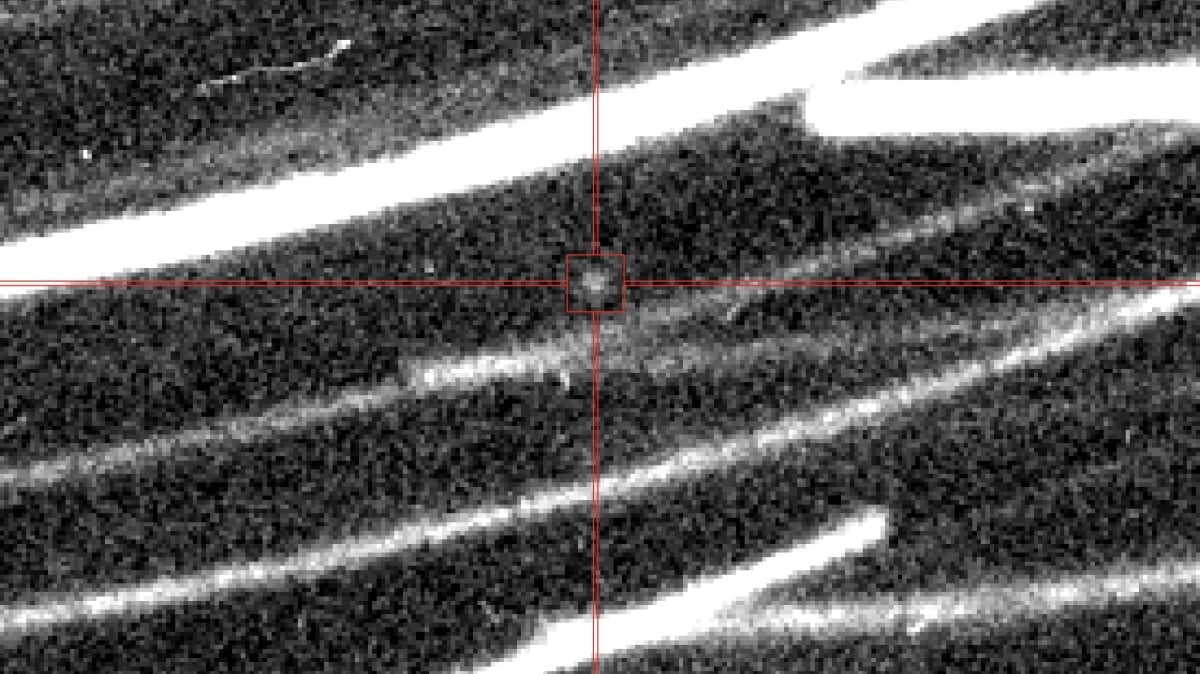

A mini moon that is set to depart from Earth’s orbit soon may actually be a fragment of our planet’s larger moon — a celestial body that has dominated our night sky long before humanity ever set foot on Earth. This intriguing revelation sheds light on the origins and nature of these temporary satellites that occasionally visit our planet.
A comprehensive follow-up study has meticulously analyzed the bus-sized space rock to gain deeper insights into its composition, rotational speed, and trajectory. Researchers indicate that this mini moon represents a hybrid between an S-type asteroid, which is primarily composed of silicates and metals, and a V-type, similar to Vesta, the second-largest object found within the main asteroid belt. This classification helps scientists better understand the characteristics and origins of such celestial objects.
While the findings of the study were not definitively conclusive, they strongly suggest that the mini moon, officially designated as 2024 PT5, has a lunar origin. Its composition closely resembles powdered samples collected by the Soviet Union’s Luna 24 mission in 1976, along with lunar samples from NASA‘s Apollo 12 mission in 1969. Both of these specimens were gathered from the maria, the dark, smooth plains on the moon, which were formed from ancient lava flows that solidified over time.
The research paper, authored by the two astronomers who discovered the mini moon back in August, posits that 2024 PT5 might have been created from craters formed within the last million years. Currently, this manuscript is under peer review for publication in the esteemed journal Astronomy & Astrophysics Letters, contributing to the growing body of knowledge about transient lunar bodies.
NASA finds Earth’s moon didn’t need hundreds of years to form. Try hours.
This is the trajectory of 2024 PT5 around Earth, from 25 years before to 25 years after the current epoch, according to the latest study.
Credit: Carlos de la Fuente Marcos / Raúl de la Fuente Marcos graphic
Asteroid 2024 PT5, which completes a rotation every hour, has been orbiting Earth since September 29 and is expected to make its exit on November 25, as detailed in the manuscript. Its presence has sparked considerable debate and excitement, with many people questioning whether it is appropriate to classify such a diminutive and temporary rock as a moon. Notably, celebrity astrophysicist Neil deGrasse Tyson has commented on the terminology, suggesting that the label “mini-moon” is merely “click bait.”
Despite the ongoing debate regarding its classification, Carlos de la Fuente Marcos, one of the astronomers involved in the discovery and based at the Universidad Complutense de Madrid in Spain, holds a different perspective. He finds the term “mini moon” to be fitting and cites scientific literature that supports its usage in his research papers.
“What we have here is a typical example of using different scientific criteria,” he explained to Mashable. “It is a temporarily captured satellite of Earth — feel free to call it a mini moon if you prefer.”
Mashable Light Speed
What remains clear is that asteroids are frequently affected by Earth’s gravitational forces, leading to these intriguing encounters. Most of these celestial bodies pass by without completing a full orbit around our planet. Many are believed to originate from the so-called Arjuna asteroid belt, a group of celestial rocks that are located near Earth and were first identified in the early 1990s.
These asteroids complete one revolution around the sun annually, and the Earth, along with its moon, travels through the center of this asteroid belt, according to de la Fuente Marcos. In fact, the likelihood of capturing rocks from this group is so high that this specific object might very well become a mini moon once again in the future.
However, in contrast to other mini moons that have visited recently, 2024 PT5 has a relatively short duration of orbit. For instance, in July 2006, an asteroid known as RH120 orbited Earth for an entire year before being ejected in July 2007. Astronomers suspect that another asteroid, which departed in May 2020, may have been orbiting our planet for several years.

An Apollo 12 astronaut holds a container of lunar soil on the moon on Nov. 24, 1969.
Credit: NASA Marshall Space Flight Center
Although these mini-moon events occur with some frequency, they should not be regarded as commonplace occurrences, according to Antonio Maudes, CEO of Light Bridges, an organization that operates multiple robotic telescopes located in Spain’s Canary Islands. His company’s Two-meter Twin Telescope played a crucial role in providing observational data for the research team involved in this study.
“You will probably not find more interesting objects than these in the solar system because they are so close to Earth, and they will return,” he remarked to Mashable, expressing excitement about the possibilities these mini moons present. “That’s incredibly cool.”
The company is in the process of developing a project dedicated to monitoring the cislunar space, the area surrounding Earth and the moon. The project’s goal is to enhance astronomers’ statistical understanding of the origins, orbits, materials, and rotational velocities of mini moons. This information is vital not only for identifying potentially hazardous rocks that could impact Earth but also for exploring commercial opportunities in space.
“Call it a mini moon if you like.”
Venture capitalists have been actively discussing the potential for a burgeoning space-mining industry, focusing on the extraction of valuable minerals. The Arjuna asteroids, being significantly closer than those in the primary asteroid belt located between Mars and Jupiter, could serve as more accessible targets for future mining missions.
Adolfo Nemirovsky, a physicist and advisor to Light Bridges, draws an analogy between these nearby asteroids and Home Depot — suggesting they are relatively convenient sources for gathering materials necessary to construct moon bases and support various space missions.

The Two-meter Twin Telescope in the Canary Islands provided observational data of the mini moon to researchers.
Credit: Light Bridges
Even though 2024 PT5 is now on its way out, many astronomers appreciate that its presence has heightened public awareness regarding the abundance of cosmic material that continually orbits our planet. This awareness opens the door for deeper exploration into our solar system’s dynamics.
“You may perceive an empty void between Earth and the moon, but that perception is misleading,” Maudes emphasized. “In reality, a multitude of different forces and objects are at play in this space.”
NASA plans to observe 2024 PT5 using the Goldstone Solar System Radar in California in January 2025. At that time, the object will be located at a considerable distance — approximately five times farther than the moon, roughly 239,000 miles away — before it continues its journey along its orbital path around the sun.
var facebookPixelLoaded = false;
window.addEventListener(‘load’, function(){
document.addEventListener(‘scroll’, facebookPixelScript);
document.addEventListener(‘mousemove’, facebookPixelScript);
})
function facebookPixelScript() {
if (!facebookPixelLoaded) {
facebookPixelLoaded = true;
document.removeEventListener(‘scroll’, facebookPixelScript);
document.removeEventListener(‘mousemove’, facebookPixelScript);
!function(f,b,e,v,n,t,s){if(f.fbq)return;n=f.fbq=function(){n.callMethod?
n.callMethod.apply(n,arguments):n.queue.push(arguments)};if(!f._fbq)f._fbq=n;
n.push=n;n.loaded=!0;n.version=’2.0′;n.queue=[];t=b.createElement(e);t.async=!0;
t.src=v;s=b.getElementsByTagName(e)[0];s.parentNode.insertBefore(t,s)}(window,
document,’script’,’//connect.facebook.net/en_US/fbevents.js’);
fbq(‘init’, ‘1453039084979896’);
fbq(‘track’, “PageView”);
}
}



 Brandon Fletcher