David Bridges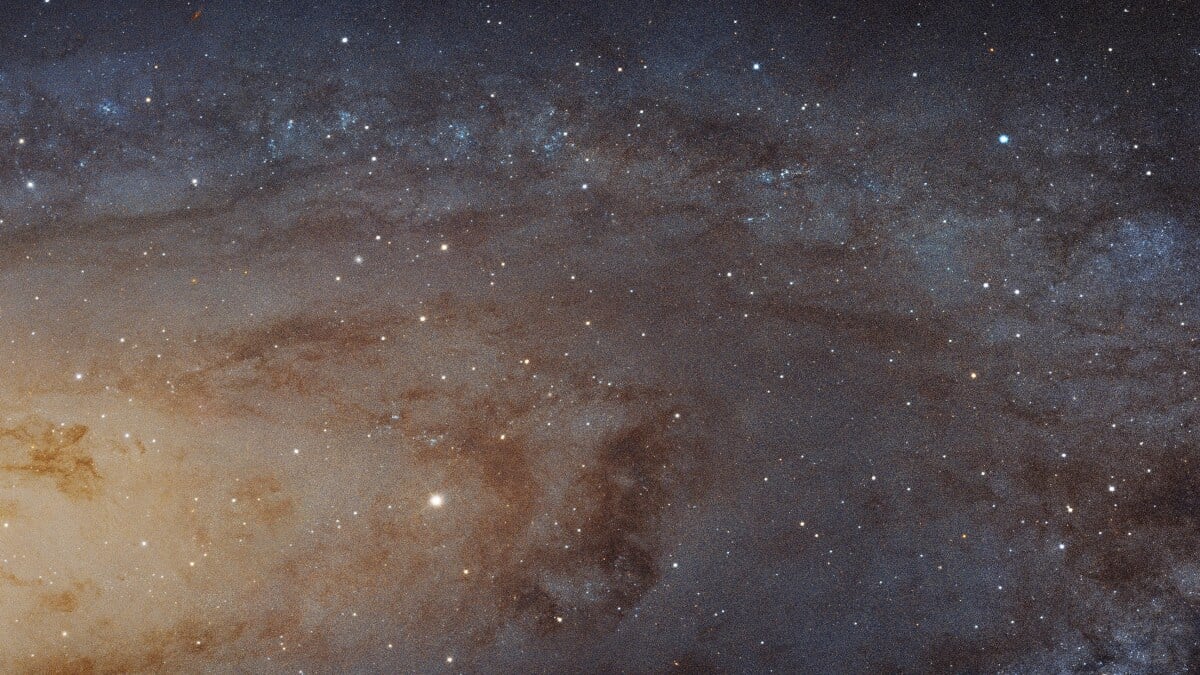

Discover the Unexpected Behavior of Dwarf Galaxies Surrounding Andromeda
Surrounding the Andromeda galaxy, scientists have identified three dozen tiny galaxies that are exhibiting behaviors that defy current scientific expectations. This intriguing phenomenon has sparked curiosity and further investigation, prompting astronomers to delve deeper into the enigmatic nature of these celestial bodies.
NASA’s Hubble Telescope Reveals Insights into Andromeda’s Satellite Galaxies
NASA‘s Hubble Space Telescope has focused on Andromeda, conducting an extensive study to understand how its orbiting satellite galaxies have formed and evolved over time. The findings have unveiled a distinct population of dwarf galaxies that differ significantly from those orbiting the Milky Way, offering fresh perspectives on galaxy formation and evolution.
Star Formation Surprises: Dwarf Galaxies Continue to Create Stars
Located approximately 2.5 million light-years away, these dwarf galaxies have a fascinating history of star formation. Contrary to what computer simulations predicted, these galaxies continued to form new stars from a reservoir of gas, rather than ceasing production entirely. This ongoing star formation challenges previous assumptions about the lifecycle of dwarf galaxies in the cosmos.
Expert Insights on Dwarf Galaxy Formation
“Star formation really continued to much later times, which is not at all what you would expect for these dwarf galaxies,” stated astronomer Alessandro Savino from UC Berkeley. “No one knows what to make of that so far,” he added, highlighting the mystery surrounding the star formation processes in these dwarf galaxies.
A tiny galaxy ceased making stars for billions of years. Then it rebooted.
Hubble captured a bird’s eye view of the known dwarf galaxies orbiting the large Andromeda galaxy. These 36 smaller satellites are circled in yellow.
Credit: NASA / ESA / Alessandro Savino / Joseph DePasquale / Akira Fujii DSS2
Exploring the Diversity of Dwarf Galaxies Beyond the Milky Way
Historically, astronomers have primarily studied dwarf galaxies in close proximity to the Milky Way. However, the unique characteristics of Andromeda’s satellite galaxies provide an opportunity to explore whether these are representative of the broader universe. By directing Hubble at Andromeda, researchers aim to gain a better understanding of these celestial companions.
Groundbreaking Study Maps Andromeda’s Dwarf Galaxies
The recent study, published in The Astrophysical Journal, is based on extensive observations collected from over 1,000 telescope orbits. This sweeping scientific campaign enabled astronomers to construct a detailed 3D map of Andromeda’s 36 dwarf galaxies and to analyze how they have formed new stars over the 13.8 billion years since the Big Bang. These images provide an unprecedented bird’s-eye view of Andromeda and its surrounding environment, enhancing our understanding of galaxy formation.
Mashable Light Speed
Unraveling the Mysteries of Dwarf Galaxy Alignment and Movement
In addition to the unexpected longevity of star formation in these dwarf galaxies, scientists were intrigued to discover that half of them are located on the same plane and moving in a synchronized direction. This is particularly unusual, as mergers and collisions between galaxies typically lead to irregular movement patterns. Such findings raise questions about the formation and evolution processes of these dwarf galaxies.
Investigator Insights on Dwarf Galaxy Configuration
“That’s weird,” remarked Daniel Weisz, the principal investigator at UC Berkeley. “It was actually a total surprise to find the satellites in that configuration, and we still don’t fully understand why they appear that way.” This statement underscores the need for further research to unravel the dynamics of these galaxies and their unusual behavior.
Understanding the Impact of Reionization on Star Formation
Astronomers generally understand that galaxies start small, gradually growing larger by accruing gas and merging with other galaxies. However, most dwarf galaxies that formed stars prior to the so-called Epoch of Reionization never resumed star formation afterward. This epoch, which occurred more than 13 billion years ago, marked a significant transition when the infant universe evolved from a neutral state to one filled with free electrons and protons. This raises questions about the factors contributing to ongoing star formation in Andromeda’s satellites.
The above animation gives a fly-around view of the Andromeda galaxy and its surrounding dwarf galaxies, based on Hubble data.
Challenging Existing Theories: Dwarf Galaxies and Reionization
Historically, many scientists have believed that the majority of the tiny galaxies ceased their star-making activities during the first few billion years of the universe, attributing this phenomenon to reionization. However, a growing number of researchers are calling that idea into question, suggesting that other factors may be at play.
Collision History of Andromeda: Insights into Satellite Diversity
Astronomers suspect that Andromeda experienced a significant collision with another galaxy relatively recently, possibly between 2 to 5 billion years ago. In contrast, the Milky Way likely hasn’t collided with another galaxy for 8 to 10 billion years. This more recent collision, combined with Andromeda’s greater mass, could elucidate the galaxy’s complex and diverse satellite system. This research has intensified speculation that dwarf galaxies can exhibit a broader range of evolutionary paths than previously understood, challenging the prevailing models based on the Milky Way’s satellite galaxies.
New Perspectives on Low-Mass Galaxies and Their Evolution
“Everything scattered in the Andromeda system is very asymmetric and perturbed. It does appear that something significant happened not too long ago,” stated Weisz. “Our work has shown that low-mass galaxies in other ecosystems have followed different evolutionary paths than what we know from the Milky Way satellite galaxies.” This statement emphasizes the need for more observations and studies to fully comprehend the complexities and variances among dwarf galaxies across different galactic systems.
var facebookPixelLoaded = false;
window.addEventListener(‘load’, function(){
document.addEventListener(‘scroll’, facebookPixelScript);
document.addEventListener(‘mousemove’, facebookPixelScript);
})
function facebookPixelScript() {
if (!facebookPixelLoaded) {
facebookPixelLoaded = true;
document.removeEventListener(‘scroll’, facebookPixelScript);
document.removeEventListener(‘mousemove’, facebookPixelScript);
!function(f,b,e,v,n,t,s){if(f.fbq)return;n=f.fbq=function(){n.callMethod?
n.callMethod.apply(n,arguments):n.queue.push(arguments)};if(!f._fbq)f._fbq=n;
n.push=n;n.loaded=!0;n.version=’2.0′;n.queue=[];t=b.createElement(e);t.async=!0;
t.src=v;s=b.getElementsByTagName(e)[0];s.parentNode.insertBefore(t,s)}(window,
document,’script’,’//connect.facebook.net/en_US/fbevents.js’);
fbq(‘init’, ‘1453039084979896’);
fbq(‘track’, “PageView”);
}
}



 Daniel Mercer
 Brandon Fletcher