David Bridges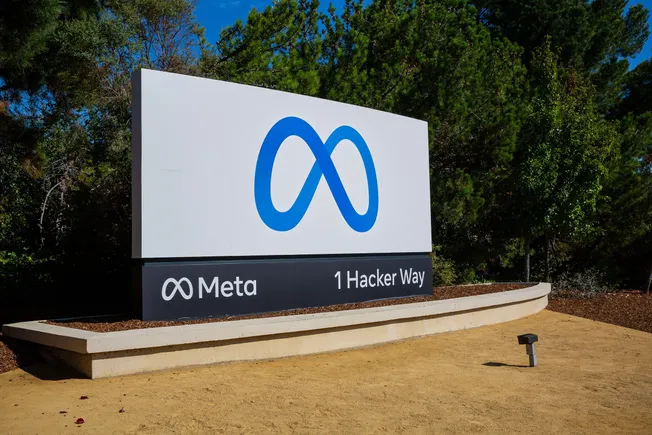
The ongoing evolution of generative AI tools has raised crucial questions regarding copyright implications that are both significant and complex. Key considerations include whether individuals can claim ownership over AI-generated works and whether these AI projects are effectively appropriating the creations of artists.

Currently, these issues occupy a somewhat murky legal landscape, as existing copyright laws were not formulated to accommodate the unique nature of AI-generated content. This gap creates challenges in prosecuting cases related to copyright infringement from both perspectives—ownership and unauthorized use.
Recently, Meta achieved a significant legal victory when a federal court ruled that the company did not infringe copyright laws by training its AI models on original works. This ruling is pivotal in the ongoing debate about AI and copyright issues.
In 2023, a coalition of authors, including prominent figures like Sarah Silverman, initiated legal proceedings against both Meta and OpenAI for utilizing their copyrighted creations without authorization to train their respective AI systems. These authors presented evidence indicating that the AI models were capable of reproducing their works with alarming accuracy. They argued that this demonstrated unauthorized use of their legally protected material. Additionally, the lawsuit contended that both companies had intentionally removed the copyright information from their books to obscure this infringement.
In his ruling, Judge Vince Chhabria determined that Meta’s actions were deemed “transformative.” He emphasized that the primary function of Meta’s processes is not to produce competing works but rather to enable entirely new applications of language. This distinction is crucial in analyzing the legal boundaries of AI content generation.
According to the judgment:
“The intent behind Meta’s copying was to train its large language models (LLMs), which are innovative tools capable of generating a wide variety of text and executing numerous functions. Users can request Llama to edit a drafted email, translate text into different languages, create a script based on a hypothetical situation, or perform various other tasks. In contrast, the primary purpose of the plaintiffs’ books is to provide entertainment or educational value.”
Consequently, the judge concluded that since the reuse of the works was not intended to establish a competing market for those creations, the doctrine of “fair use” applies to this case.
However, the ruling comes with several caveats.
The judge pointed out that the case “lacked meaningful evidence regarding market dilution.” Absent this critical element, Meta’s defense, which claims fair use, remains valid.
Additionally, the judge remarked:
“In cases similar to Meta’s, it appears that plaintiffs often prevail, particularly when those cases have well-developed records concerning the market impact of the defendant’s actions. Regardless of how transformative the training of LLMs may be, it is difficult to envision that using copyrighted materials to develop tools that generate billions or trillions of dollars, while potentially enabling the creation of a near-limitless array of competing works, could be justified as fair use. Some cases may present even stronger arguments against fair use.”
In essence, the judge acknowledges that while the intent behind the use in this instance is not to create rival works that might harm copyright holders and their income potential, it is undeniable that AI models can facilitate such outcomes. However, in this particular instance, the argument against Meta was not sufficiently articulated to favor the plaintiffs.
Therefore, although it may appear to be a setback for artists, who feel that generative AI projects are appropriating their creations, the ruling implies that there is potential for a legal case that could enable artists to argue that such usage constitutes a violation of copyright. Unfortunately, this specific case did not achieve that outcome.
While this situation is challenging for artists seeking legal recourse against generative AI projects and the unauthorized use of their works, it is emblematic of a broader issue in the industry.
Recently, a federal judge ruled in favor of Anthropic in a similar legal dispute, thereby allowing the company to continue training its models on content protected by copyright.
The critical issue in both cases revolves around the concept of “fair use” and what qualifies as “fair” in the context of repurposing content for alternative applications. Fair use laws are typically designed to protect journalists and academics who report on material serving educational purposes, even if copyright holders disagree with such usage.
Do large language models (LLMs) and AI projects fall under that same legal framework? According to the legal definition, yes, since their intent is not to recreate original works but to enable new applications based on those elements.
In theory, an individual artist might successfully pursue a case where an AI-generated work has clearly and directly replicated their own creation. However, such replication would need to be undeniably apparent, and it would likely require evidence that the AI creator has gained a substantial benefit from the work to support the claim.
Moreover, it’s essential to note that individuals cannot claim copyright over AI-generated works, adding another layer of complexity to the legal landscape surrounding AI and copyright.
Additionally, both cases involve significant questions concerning how Meta and Anthropic accessed these copyright-protected materials initially, amidst allegations that such materials were acquired from dark web databases for mass training purposes. While these claims remain unproven, they introduce another dimension related to content theft.
So what is the current status regarding the legal use of generative AI content?
The situation remains quite uncertain, and the judge in this case highlighted that there may be alternative legal arguments capable of prevailing in similar cases in the future.
However, this is not such a case, and due to the absence of legal frameworks specifically designed for AI, the precise nature of what constitutes a valid legal argument remains unclear. As of now, we have not established a legal precedent that would prevent AI from training on copyright-protected works.


 Troy Sanders
 Clara Hastings