

 David Bridges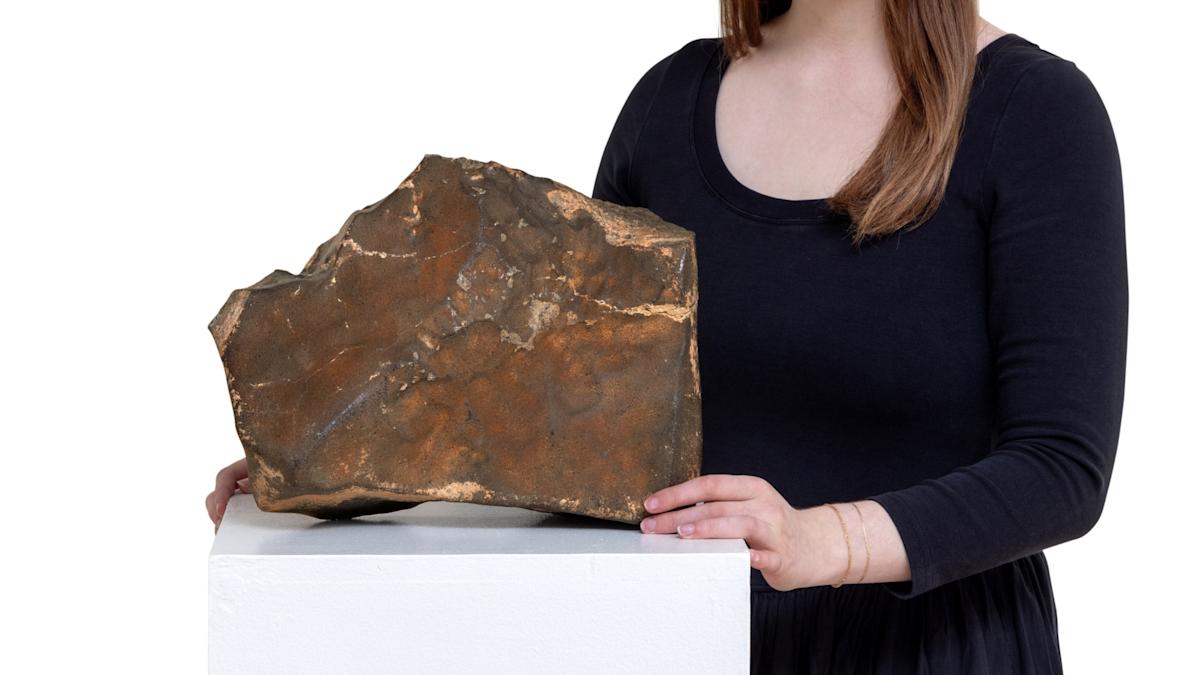

Imagine being able to add a remarkable piece of the universe to your collection, made possible by a recent Sotheby’s auction where a staggering $5.3 million was paid for a fragment of Mars. This extraordinary Martian meteorite was unearthed in 2023 from a remote location in the Sahara Desert, specifically in Niger, highlighting the intersection of nature’s wonders and human desire.
Obtaining Martian meteorites of any size is not just rare; it’s a feat of cosmic proportions. Initially, an asteroid must collide with the surface of the Red Planet to dislodge material. According to Sotheby’s, there are merely 19 Martian craters capable of launching such pieces into space. This particular fragment then traveled an astonishing 140 million miles across the vastness of space before finally landing on Earth. Out of more than 77,000 officially recognized meteorites, only around 400 originate from Mars, making this acquisition even more extraordinary.
The meteorite, designated as NWA 16788, features a reddish-brown, scarred exterior that closely resembles a miniature version of the Martian landscape, captivating both collectors and scientists alike.
This meteorite stands out not just for its origin but also for its size, being approximately 70 percent larger than the second-largest known piece of Mars found on our planet. With dimensions of 14.75 x 11 x 6 inches and a weight exceeding 54 lbs, it represents about 6.5 percent of all known Martian material available on Earth, making it a significant specimen for both collectors and researchers.
The final winning bid was recorded at $4.3 million, but with additional fees, the total reached over $5.3 million, setting a new record as the most valuable meteorite ever auctioned. This sale underscores the growing interest in extraterrestrial specimens among investors and collectors alike.
Prior to the auction, the auction house conducted rigorous testing on a small sample of this space rock to ascertain its chemical makeup. The analysis confirmed that it possesses a distinctly Martian chemical composition, with over 21 percent of the rock consisting of maskelynite, a unique glass formed as a result of the impact when the asteroid collided with the Martian surface.


 Daniel Mercer
 Brandon Fletcher



