 Brandon Fletcher

Understanding Why Bluetooth Remotes Haven’t Fully Replaced Infrared Technology
The evolution of TV remote controls is quite fascinating. The first remote control, named the Lazy Bones, was introduced by Zenith Radio Corporation in 1950. Unlike modern remotes, it used a long cable to connect to the television. In 1955, the “Flash-Matic” became the first truly wireless remote, utilizing a beam of visible light to send commands to four photo cells on the TV’s front panel. By the 1980s, infrared (IR) remotes emerged as the industry standard, and they have remained prevalent for over forty years.
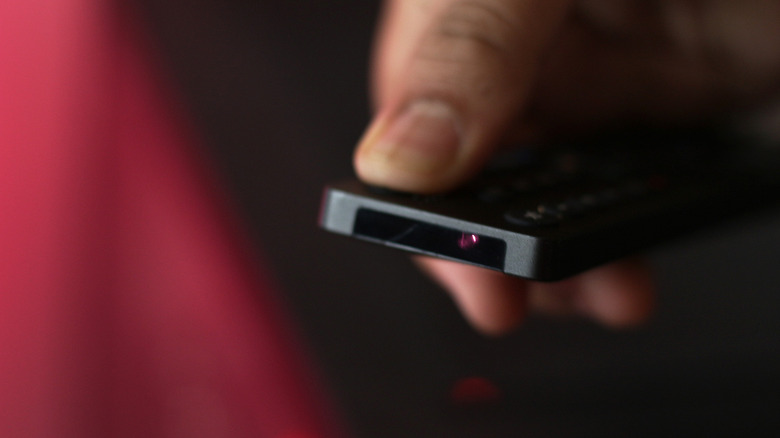
Infrared remotes function by emitting rapid pulses of invisible light through an LED. The infrared receiver on the television interprets these signals and executes the command. If you point your smartphone’s camera at the front of an IR remote and press a button, you might see the infrared LED blink. Although many modern TVs come with Bluetooth-enabled remotes offering advanced features like voice control and air gestures, they still incorporate an IR transmitter.
The affordability of infrared technology plays a significant role in its continued use. With years of mass production and its established presence in TV remotes, implementing IR technology is very cost-effective. Many TVs, soundbars, and other entertainment devices have been designed around this standard, making compatibility one of IR’s strongest attributes. It would be impractical to abandon a technology that has become synonymous with televisions, especially since Bluetooth and infrared can work together in contemporary remotes.
What Are the Practical Applications of Infrared in TV Remotes?
Adnan Ahmed for Engadget
A Bluetooth remote can only function with your TV when it is paired. Recall the initial setup of your smart TV; pairing the remote is necessary. But how did you control the TV prior to pairing? The answer lies in infrared technology. Your remote uses infrared signals to power the TV on, especially since Bluetooth may not be active when the TV is in standby mode.
I conducted a test using my TCL smart TV, which comes with a Bluetooth remote. The remote relies on infrared signals for two primary functions: turning the TV on and off. All other operations, such as navigating the menu or adjusting the volume, are transmitted via Bluetooth. When I unpaired the remote from the Bluetooth settings on my TV, it reverted to using infrared for signal transmission.
Bluetooth offers a significant benefit—it does not require a direct line of sight to communicate with the TV. This means you can comfortably relax under a blanket without the need to adjust your position every time you want to change the volume. While infrared technology is efficient in terms of battery usage, this advantage is less impactful today, as most TV remotes default to Bluetooth. In the end, infrared technology may serve as a reliable backup and assist with initial pairing, but your TV remote predominantly utilizes Bluetooth for its operations. Bluetooth enables you to control your TV using your Android smartphone as a remote.


 Daniel Mercer