 Ethan Carter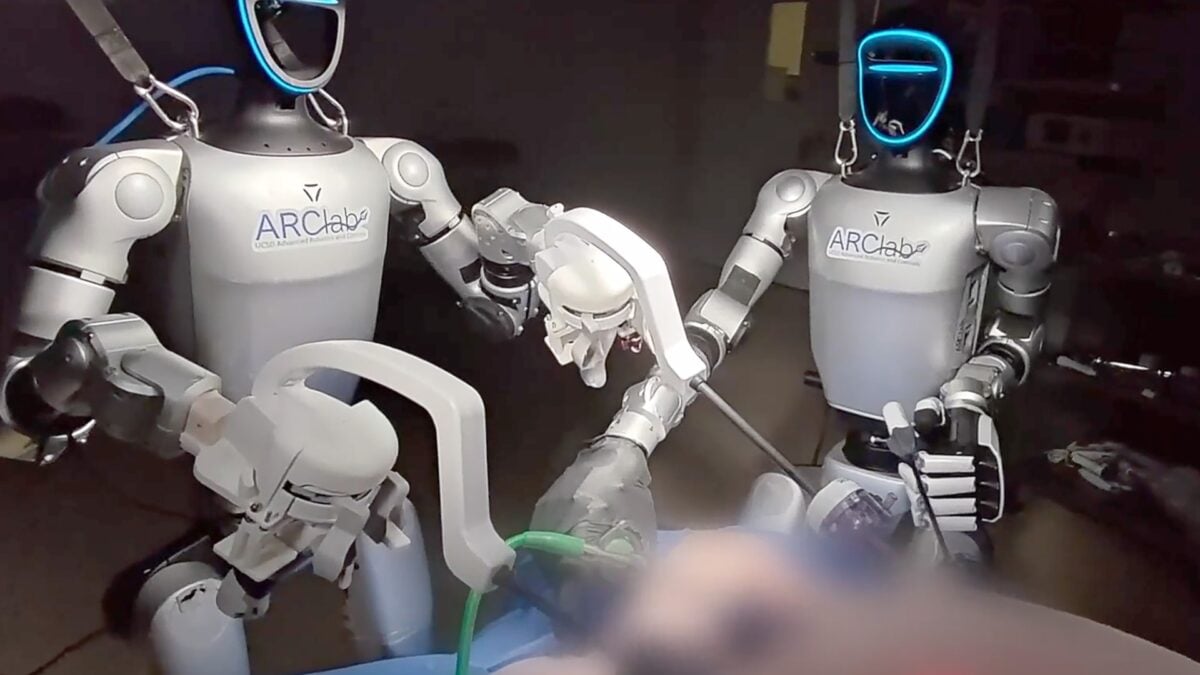

Surgeons specializing in rare and complex procedures face some of the highest burnout rates in the medical field, as highlighted by the American Medical Association. The demanding nature of their work, which often involves intense travel for emergencies and the pressures of a profit-driven healthcare system, contributes significantly to this issue.
Recently, a collaborative team of engineers and surgeons at the University of California, San Diego, achieved notable success in two pre-clinical trials. They developed humanoid robots that can perform surgeries using standard handheld surgical instruments designed for human use. While remote surgeries have utilized custom robotic arms in various settings, including space missions, these trials marked the first instance of android-like robots effectively manipulating surgical tools like human surgeons.
During the first trial, the robot surgeon collaborated with a human assistant to delicately remove the gallbladder from a live test animal, specifically a pig, with a licensed veterinarian present to oversee anesthesia and ensure the animal’s welfare. In the second trial, two humanoid robots worked in tandem to carry out the same gallbladder surgery.
“Remotely operated and autonomous humanoid robots hold significant potential for expanding access to vital surgeries for patients who would otherwise be unable to receive them,” stated Michael Yip, one of the study’s senior authors and an engineering professor. “This innovation can help alleviate the healthcare crisis not just in the United States, but globally.”
Innovative Humanoid Surgical Robots
Current surgical robots, such as the more than 1,700 da Vinci surgical systems found in hospitals around the globe, are large mechanical devices that typically feature three to four arms and weigh around 1,800 pounds (817 kilograms). In contrast, UC San Diego’s robot, nicknamed “Surgie,” weighs a mere 60 pounds (27 kg).
Surgie distinguishes itself by having two legs, enabling it to navigate its environment and potentially retrieve essential instruments for its human surgical team. Yip envisions a future where these humanoid robots can be deployed in settings where retrofitting an entire operating room for a da Vinci system would be impractical.
“Many communities face challenges with surgical team staffing, resulting in patients not receiving necessary treatments,” Yip noted, who also directs UC San Diego’s Advanced Robotics and Controls Laboratory (ARCLab). “These robots could be utilized in remote areas where staffing is limited or in challenging environments such as search and rescue operations, where a rapid deployment of medical resources is crucial,” he elaborated.
Enhancing Surgical Procedures with Robotics
The human surgeons and surgical trainees involved in these robotic surgeries participated in post-operation surveys for the study published in the journal Nature this July. The remote operators of the humanoids responded to questions regarding the system’s ergonomics and how effectively the robots followed their commands. Other participants shared their experiences of working alongside robotic teammates.
“We were pleasantly surprised by how well Surgie integrated into our workspace and workflow,” remarked Nikita Thareja, a co-author and general surgery resident, in a statement.
The study did identify latency issues for the robots’ remote operators. Researchers are actively working to enhance this aspect for future long-distance operations. Shanglei Liu, a surgeon from UC San Diego’s School of Medicine who operated the robots, noted that the slower pace and occasional need for recalibration during surgeries is typical of early-stage systems.
Previously, a robotic version of the minimally invasive laparoscopic surgery performed in these trials could take up to six hours; now, it has been reduced to just thirty minutes.
Liu expressed enthusiasm for Surgie’s potential: “It requires a fraction of the cost and space compared to traditional systems, making it easy to deploy in various settings, from rural communities to battlefield scenarios and even in space.”


 Daniel Mercer
 Brandon Fletcher