 Brandon Fletcher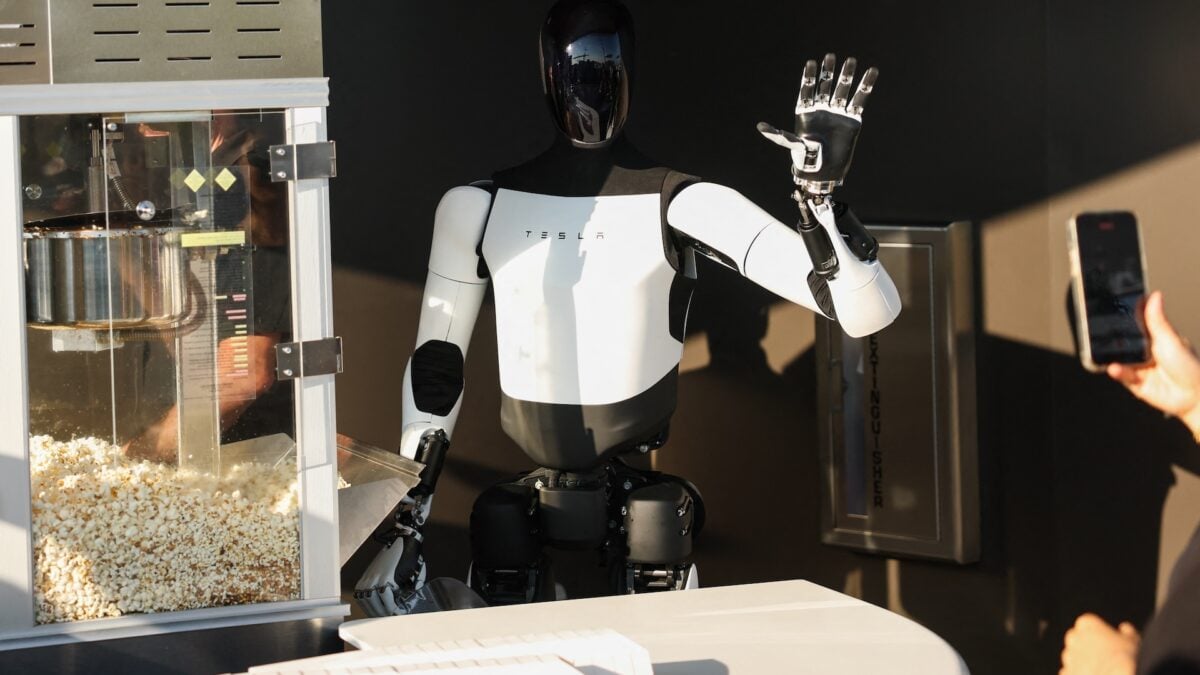

Elon Musk has made bold claims about a future where Americans will no longer need to work and will receive compensation for leisure. He attributes this vision to his humanoid robot, Optimus, which he asserts will handle tasks ranging from household chores to childcare. Musk envisions that the emergence of Optimus will create a perfect society, eliminating the need for work and money.
Ironically, Musk often criticizes individuals receiving government assistance. Recently, he shared a tweet expressing concern over the distribution of free bread in Ancient Rome, suggesting it contributed to the empire’s decline.
Musk’s tweet read, “They faced the same issues in Ancient Rome,” in response to a lengthy message from a user named Handre, who promotes free market ideas.
“Rome provided free grain to 40,000 citizens in 73 BC. By 46 BC, Julius Caesar found 320,000 people lining up for their monthly ration. This eight-fold increase occurred in under three decades, illustrating how welfare systems expand,” Handre tweeted.
“What did the dole require? Enormous grain imports from Sicily, Sardinia, and Egypt, managed through state logistics funded by taxes and military conquests. When the revenue from conquests dwindled, the obligation persisted. Rome essentially issued a check against future military victories that ultimately failed to materialize,” the tweet continued.
“The lesson is straightforward. When you distribute benefits, you create dependency. With dependency comes political power to those who control the benefits. The grain dole didn’t weaken Rome immediately, but it made future reforms politically unfeasible.”
They faced the same issues in Ancient Rome https://t.co/50FKEJoiAI
— Elon Musk (@elonmusk) August 23, 2026
Musk considered this to be a brilliant insight with significant relevance to contemporary politics.
Modern Republican critiques suggest that providing free food through programs like SNAP disincentivizes work, leading individuals to rely on government support. Musk echoed similar sentiments during his tenure at DOGE, the Department of Government Efficiency, last year. As the wealthiest individual globally, who benefits from numerous government contracts, he aimed to drastically reduce the federal workforce for cost-cutting reasons. His actions resulted in the loss of approximately 300,000 government jobs, compromising public safety. A study published in Lancet projected that cuts to USAID could lead to around 4.5 million child fatalities by 2030.
Musk’s insistence that government should not provide free resources to average Americans starkly contrasts with his assertions that robots will create a society where everyone is affluent and free from work obligations. These conflicting ideas raise questions. Why should only future generations benefit from a robust social safety net or an ideal government? What unique capabilities do Musk’s robots possess to bring about this change?
Despite Musk’s many ambitious predictions regarding robots, several have not materialized. In January 2025, he anticipated producing around 10,000 robots by year-end. even if he achieves mass production of Optimus robots, it is unrealistic to presume they will usher in a post-scarcity utopia. That concept does not align with reality.
Universal basic income—Musk’s vision of a universal high income—can only be realized through political action, not technological advancements. Gizmodo has discussed this topic on multiple occasions. Back in 2025, we labeled this notion as one of Musk’s most absurd claims. The creation of sophisticated robots does not guarantee a society where everyone enjoys free resources. If it did, our economic landscape would look remarkably different today.
As of 2026, automation has transformed work in ways unimaginable to Americans from 1826. We have advanced technologies, such as the internet, that grant us instant access to vast information through the devices we carry in our pockets. These devices can capture images, produce videos, and solve complex equations that are beyond mental calculation. none of these technological advancements inherently lead to equitable resource distribution to those in need. Programs like Medicare, Medicaid, and SNAP are components of a social safety net established by government efforts. They did not spontaneously arise from the generosity of wealthy industrialists in the 20th century.
Yet, Musk and his Republican allies—who reportedly plan to invest around $200 million in the upcoming midterm elections—have actively sought to dismantle that social safety net. In the past year, about 4 million individuals, including 1.5 million children, have lost their SNAP benefits due to Republican budget legislation known as the Big Beautiful Bill. Given this context, why would anyone trust Musk to create a society of prosperity and leisure when he has played a role in depriving children of food?
Merely building robots will not resolve these issues. While humanoid robots might offer exciting and beneficial applications, whether they are Musk’s Optimus or developed by more advanced companies, they will not create a world of abundance where everyone can lounge at home without concern. Musk frequently criticizes individuals who adopt that lifestyle on social media, revealing a lack of comprehension regarding how such statements reflect poorly on him.


 Daniel Mercer