 Ethan Carter


Any day now would be fantastic.
Foldable smartphones have transitioned from novelty to a more common option. Seven years have passed since Samsung unveiled the first Galaxy Fold, which faced numerous challenges. Over the years, foldable phones have evolved significantly, featuring improved displays, sleeker designs, and all the modern functionalities expected from today’s devices. despite their advancements, foldable phones are still not as prevalent as traditional smartphones, primarily due to unresolved issues that manufacturers must address for wider consumer acceptance.
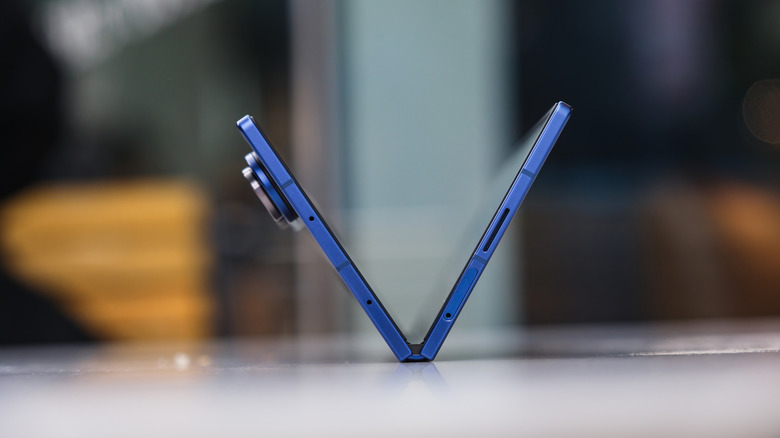
While many users express concerns about the durability of foldable devices and the visible crease on the display, there’s another frustrating issue that often goes unnoticed: the tendency for these phones to wobble when positioned flat. This problem largely stems from the camera design. In today’s smartphone market, a significant camera bump has become standard. In fact, Apple famously coined the term “Camera Plateau” for the iPhone’s camera design, although most users don’t refer to it by that name.
Why Do Foldable Phones Wobble So Much?
tinhkhuong/Shutterstock
This wobbling issue is pronounced in foldable phones. Manufacturers strive to create slimmer profiles so that when folded, they resemble standard smartphones. essential components like camera sensors require considerable internal space. This leads to various design workarounds, with the camera bump being an innovative solution. It allows lenses to protrude beyond the device’s body. The downside, however, is that this pronounced bump causes significant wobbling when the phone is placed on flat surfaces.
Take the Galaxy Z Fold 8 as an example. Its camera module not only protrudes noticeably but is also positioned vertically on the back, resulting in increased wobbling when the device is laid flat. Many users have taken to platforms like Reddit to voice their frustrations about the Z Fold 8’s instability. This persistent issue can be quite bothersome over time. Some users have even resorted to disassembling their devices to remove the rear cameras entirely—a drastic step that reflects their dissatisfaction with this design choice.
You might be wondering, “What can be done about this?” As smartphones become thinner and cameras improve, this challenge is likely to remain. Larger sensors are necessary for enhancing camera performance. One potential solution could involve increasing the thickness of phones to create a flat back, reminiscent of older models. it’s unlikely that manufacturers will pursue this direction. For now, investing in a thicker case for your foldable device may be the most practical solution.
What Are the Drawbacks of Opting for a Foldable Phone?
Wongsakorn 2468/Shutterstock
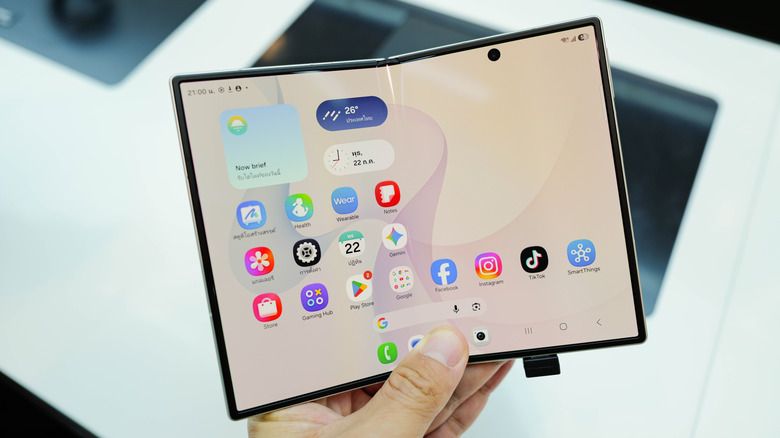
Using foldable smartphones can be an exciting experience. They offer the convenience of a small tablet that can easily fit in your pocket. While these devices are not yet dominant in the market, Samsung’s latest models are gaining significant attention. With rumors of Apple launching its first foldable iPhone soon, foldable smartphones are poised to attract even more interest. there are several trade-offs to consider when using foldable phones, beyond just the noticeable camera bump.
The crease in the center of the display remains an issue. Manufacturers have made strides to minimize its visibility, but the screen often still exhibits a wrinkled appearance. Over time, especially after repeated use, this crease becomes more pronounced. Software compatibility is another challenge, particularly on Android devices. Many applications do not fully utilize the larger screen size, leading to awkward displays in apps like TikTok on the wider, shorter screen of the Z Fold 8. This is an area where Apple may excel, as iOS applications typically adapt faster to new features and devices.
Another significant drawback is the price. Foldable phones are generally much more expensive than traditional smartphones, yet they do not always offer superior hardware. For instance, the Galaxy Z Fold 8, priced at $2,100, lacks features such as 5x optical zoom and 60W fast charging that are available on the S26 Ultra. The anticipated foldable iPhone is also expected to miss out on standard features like a telephoto lens and Face ID, which are commonplace in iPhone Pro models. It’s probable that in the future, consumers will no longer have to compromise between a foldable display and essential features. Until then, users must carefully weigh their options to determine which smartphone best suits their needs.


 Daniel Mercer