David Bridges

Meta is implementing stringent new verification requirements for advertisements related to financial services in Australia. This initiative aims to combat the increasing prevalence of “celeb-bait” scam advertisements that exploit fake celebrity endorsements to deceive and defraud unsuspecting individuals.
In the image above, you can clearly see how celeb-bait scams misuse the likenesses of prominent celebrities to promote questionable products or trick users into fraudulent schemes. Such deceptive practices have become alarmingly common across various online platforms, creating significant risks for consumers.
These fraudulent advertisements, which many users have encountered online, represent a serious issue. In response, and under a revised agreement with Australian regulators, Meta is taking decisive measures to protect Australian users from falling victim to these scams. The initiative reflects a commitment to enhancing consumer safety and trust in online advertising.
As reported by The Guardian:
“Beginning in early February, Meta will require advertisers seeking to run ads about financial services to verify information about the beneficiary and payer. Businesses will be required to provide their Australian financial services licence number or declare an exemption. Individuals will need to provide a government-issued ID.”
Meta elaborates on these updates, emphasizing the importance of compliance:
“Beginning February 2025, ads covered by the Australia Online Scams Code, which includes ads promoting financial products or services to users in Australia, will need to adhere to Meta’s verification and on-ad disclaimer requirements before being published to Meta’s platform.”
Australia’s Online Scams Code has been endorsed by all major online advertising platforms. This code encompasses various agreed-upon measures aimed at combating scams and ensuring effective reporting of scam activities within their applications.
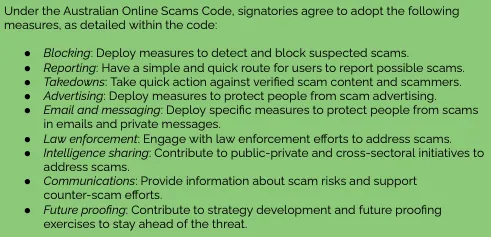
These essential measures will now extend to formal requirements for financial services providers operating in the region, enhancing accountability and transparency.
The recently updated requirements mirror regulations that Meta has already implemented for financial advertisements in Taiwan and the U.K., demonstrating a commitment to global standards in combating online fraud.
So why haven’t these measures been rolled out in all regions?
Meta is actively enhancing its approach to tackling celeb-bait scams by introducing innovative facial matching processes. These technological advancements are designed to help filter out misleading promotional content and protect users from fraudulent schemes.
However, it’s important to note that Meta is not legally obligated to enforce identical restrictions across all regions at this time. As such, it appears that Meta is keen to maximize its advertising revenue without the limitations imposed by stringent regulatory frameworks that could hinder the growth of such ads.
This perspective might seem cynical, but it could also stem from practical considerations regarding operational processes and the time required to implement these changes across various markets. Currently, the updated regulations are only officially required in Australia, Taiwan, and the U.K.
As previously mentioned, Meta indicates that these new regulations will take effect in Australia starting February of next year, marking a significant step in the fight against online scams.



 Maya Kensington
 Tessa Everly