 Sophie Langley

Recent changes indicate that Facebook Pages may now face charges for including links in their posts within the app.
The introduction of Meta One for Business subscription plans this week, has seemingly led to an expansion of testing aimed at limiting link postings for non-subscribing professional accounts.
Meta One for Business allows users to include a specific number of links in Instagram posts and Reels each month, with limits varying by subscription tier.
Currently, Facebook post links are not highlighted as a benefit, but this may change soon. This week, numerous Facebook managers reported receiving a pop-up notification regarding this change on their accounts.
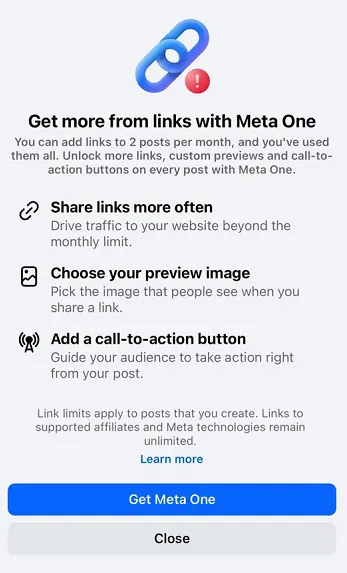
As mentioned in the official announcement, some accounts now face a limit of two link posts on Facebook each month unless they opt for a Meta One subscription.
This practice is not entirely new. Meta previously initiated a limited test in December 2025, restricting certain pages to a maximum of two links per month. With the launch of Meta One for Business, it appears that the company has broadened this restriction to encompass more Pages.
Meta clarified that this test aims to determine if allowing a higher volume of link posts provides additional value for paying users.
Furthermore, Meta stated that publisher Pages are excluded from this test to ensure continued content flow within the app.
However, other Pages may soon face restrictions, necessitating significant strategic adjustments for some brands.
Despite these changes, the overall impact on performance may not be as substantial as anticipated.
Meta has consistently reported minimal exposure for posts that include link clicks. According to their Widely Viewed Content report from Q1 2026, 98.7% of post views in the U.S. during that timeframe did not contain links to external sources..
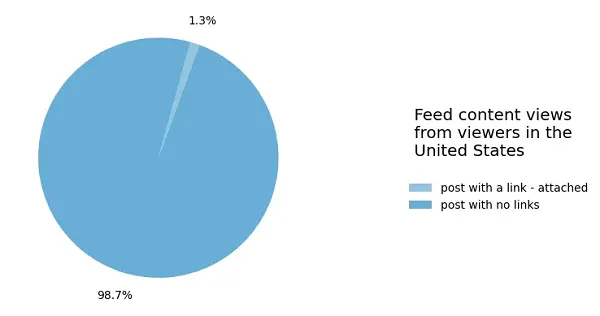
The visibility of link posts has been gradually decreasing, falling from 9.8% of viewed content that included links in 2022, when Meta first began sharing this data, to a record low of 1.3% as reported now.
Considering that link posts receive such limited exposure, the anticipated impact of restricting them may not be as significant as some business users expect. they have the option to subscribe to Meta One for more posting capabilities.
Nevertheless, this approach may feel somewhat deceptive, aligning with the company’s typical strategy of attracting business users before imposing charges for access.
In 2016, Meta CEO Mark Zuckerberg outlined the company’s three-stage monetization strategy for applications:
- Develop a product that resonates with users
- Encourage organic business engagement within the app without charge
- Demonstrate additional opportunities for businesses aiming to enhance their reach and visibility
Although it may seem excessive for Meta to charge users for posting content that ultimately benefits the company, this practice aligns with their established strategy.


 Troy Sanders
 Maya Kensington