 Ethan Carter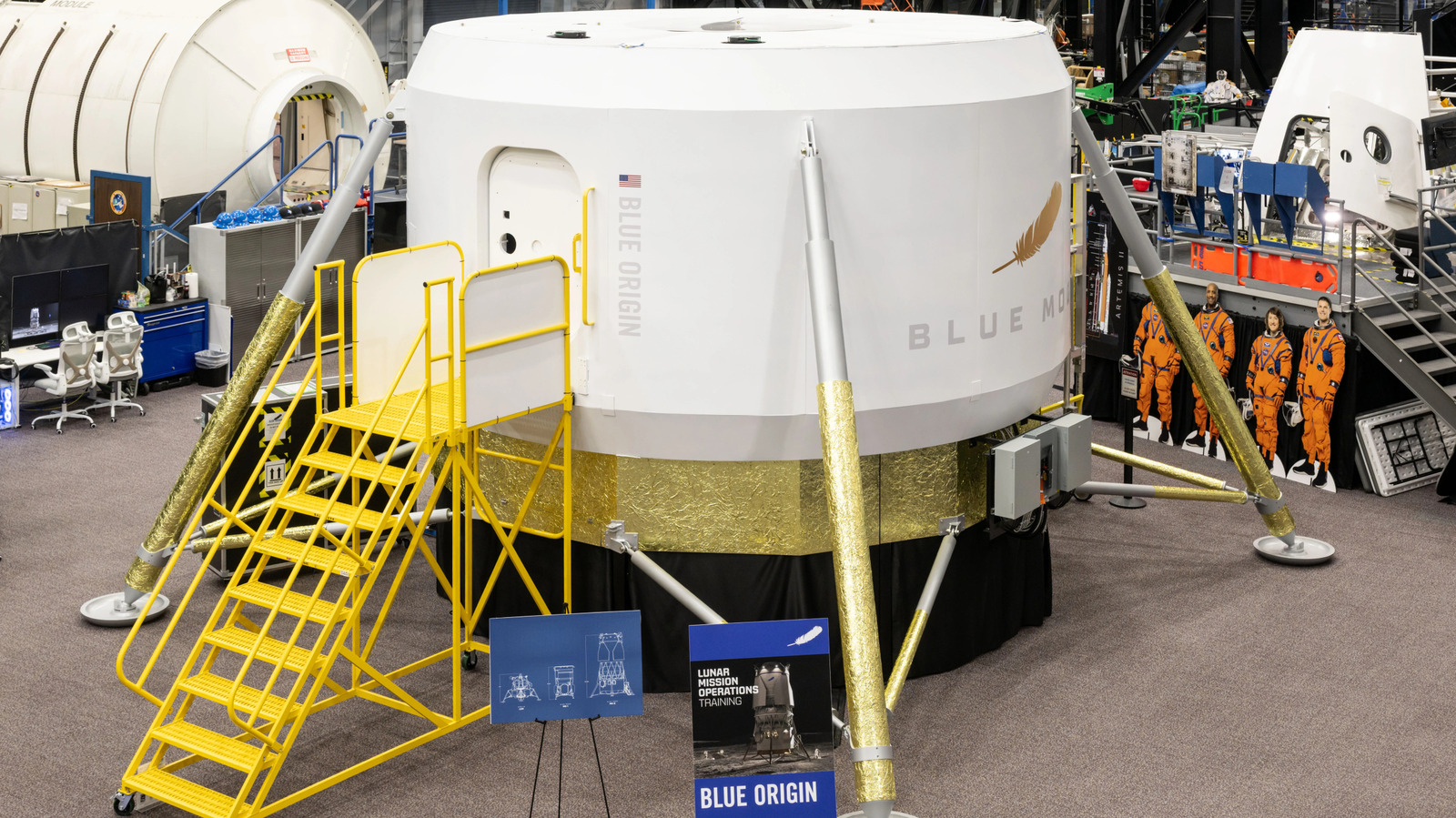

In a significant advancement following the successful Artemis II crewed mission, NASA is intensifying its efforts to achieve the next critical objectives in its ambitious plan to return astronauts to the moon. The space agency has set its sights on a lunar landing by 2028, collaborating with both Blue Origin and SpaceX to deliver the necessary landers that will facilitate human exploration on the moon’s surface. Although neither company has yet proven its capabilities with a successful moon landing, NASA recently announced the availability of a full-scale prototype of the crew cabin from Blue Origin’s Mark 2 lander. This exciting development allows for the commencement of training activities essential for future missions.
With the impressive 15-foot-tall prototype situated at NASA’s Johnson Space Center, both NASA and Blue Origin are poised to perform a comprehensive series of human-in-the-loop tests. These tests will involve meaningful human interaction and will cover various mission scenarios, including critical mission control communications, thorough spacesuit checkouts, and preparations for simulated moonwalks. NASA has clarified that this mock-up represents just the crew cabin, which forms the base of the entire lander system. When fully assembled, the complete lander will reach an impressive height of 52 feet. Recent attempts have highlighted the complexities of achieving a smooth lunar landing, underscoring the considerable challenges both Blue Origin and SpaceX face in meeting NASA’s timeline.
An uncrewed variant of Blue Origin’s lander, known as Endurance (or MK1), is currently undergoing rigorous testing within NASA’s thermal vacuum chamber. This testing phase is crucial as it prepares the lander for its inaugural mission this year, during which it will deliver important scientific payloads to the lunar surface. As part of the next phase of the Artemis program, the upcoming Artemis III crew will embark on a journey aboard the Orion spacecraft, aiming to reach low Earth orbit. During this mission, they will test docking capabilities with the landers from both Blue Origin and SpaceX, depending on which lander is operationally ready. NASA has set an ambitious target for this mission in 2027, further cementing its commitment to lunar exploration.

 Daniel Mercer