 Daniel Mercer
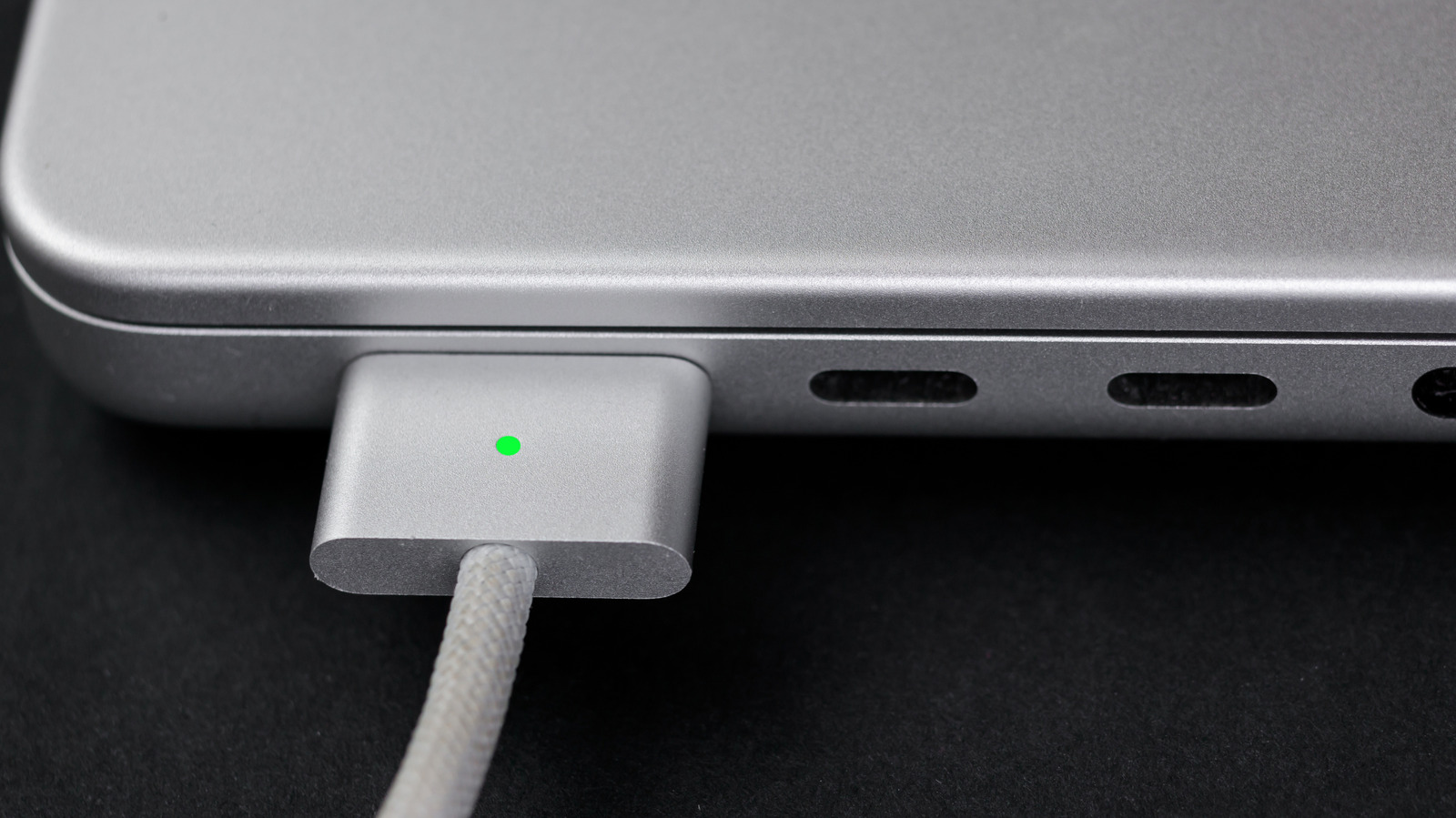

MagSafe offers enhanced safety and convenience, while USB-C presents unique advantages of its own.
Modern MacBooks showcase Apple’s innovative charging solution known as MagSafe. This feature often becomes a decisive factor for potential buyers. The magnetic connection allows the charger to detach easily if the cable is pulled sharply, helping to prevent accidents when someone trips over it. MacBooks also support charging via USB-C, which has emerged as an industry standard. While simultaneous use of both charging methods is not possible, each option can serve effectively depending on your current requirements.
It’s important to clarify that the MagSafe charging technology used for MacBooks is distinct from the MagSafe technology used in iPhones. The iPhone’s MagSafe operates based on the Qi standard, whereas the MacBook’s MagSafe utilizes a proprietary and notably smaller connector. Despite these differences, both systems operate on the principle of magnetic attachment versus traditional plugging.
Over time, MagSafe for MacBooks has evolved, with MagSafe 3 being the latest iteration. Each generation maintains the core functionality, but variations in physical size and power capacity render them incompatible with one another.
Understanding the Key Differences Between MagSafe and USB-C
Alina Vytiuk/Getty Images
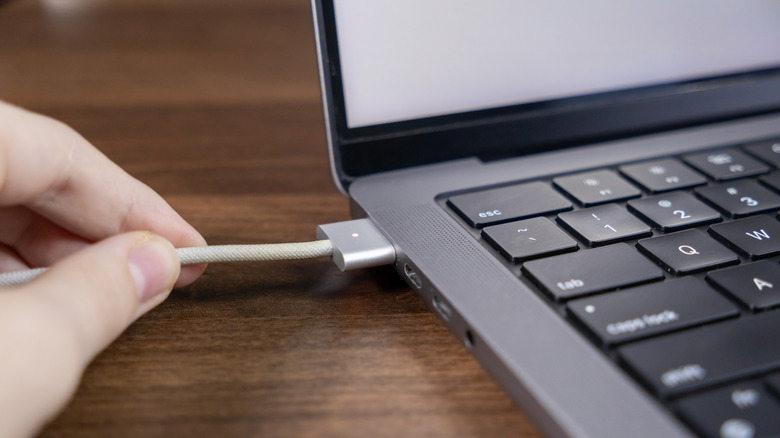
When comparing charging methods, both MagSafe and USB-C have their advantages and drawbacks. The primary benefit of MagSafe is its ability to protect your laptop from accidental pulls. If someone trips over the cable or you mistakenly yank it, the connection usually disengages, preventing your MacBook from falling.
In contrast, USB-C requires proper alignment to connect securely. If an unexpected incident occurs, there’s a significant risk that your MacBook will be dragged along with the cable, potentially leading to damage.
Charging power is another critical aspect to consider. The MagSafe cable is engineered for rapid charging. For instance, if you own a 2021 MacBook Pro or a 2022 MacBook Air, MagSafe can deliver up to 140W of power, provided you have the appropriate power adapter. Apple offers a $99 adapter that pairs with the MagSafe cable to facilitate this fast charging capability, enabling a remarkable 50 percent charge in just 30 minutes.
USB-C presents a different scenario. While some USB-C cables have the potential to deliver higher wattages, most adhere to the 60W standard, which is significantly lower than MagSafe’s capacity. Specialized cables can achieve up to 100W or 240W, and Apple even markets a 240W USB-C cable. This distinction is crucial when selecting a new cable, especially if fast charging is a priority.
Identifying Scenarios Where USB-C Excels
Habanero Pixel/Shutterstock
As discussed, MagSafe often emerges as the preferred option in various situations. It enhances safety, supports rapid charging, and keeps USB-C ports available for other devices. The user experience is straightforward; you don’t have to navigate complex charging standards. Simply use the recommended Apple combination for optimal performance.
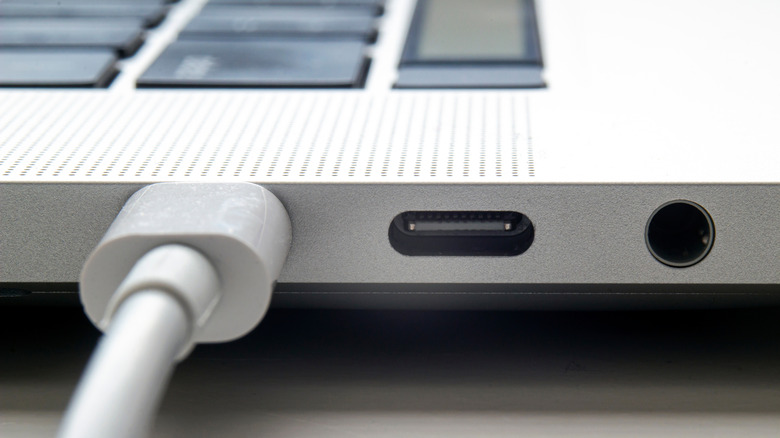
USB-C presents its own set of conveniences. The most significant advantage is its versatility, allowing a single cable to manage multiple devices. This is particularly useful for travelers, as it reduces cable clutter in your bag. A fast USB-C charger can power not only your Mac but also your iPhone, iPad, and any other USB-C compatible device. In contrast, MagSafe is exclusive to Macs.
If you possess a MacBook Pro released after November 2023, you can take advantage of USB-C’s ability to charge at up to 240W. With the appropriate cable and power adapter, this feature enhances the appeal of USB-C, especially for those prioritizing ultra-fast charging. choosing between the two options depends on your specific needs. Keeping both cables handy allows for maximum flexibility in various scenarios.



 Ethan Carter