 Brandon Fletcher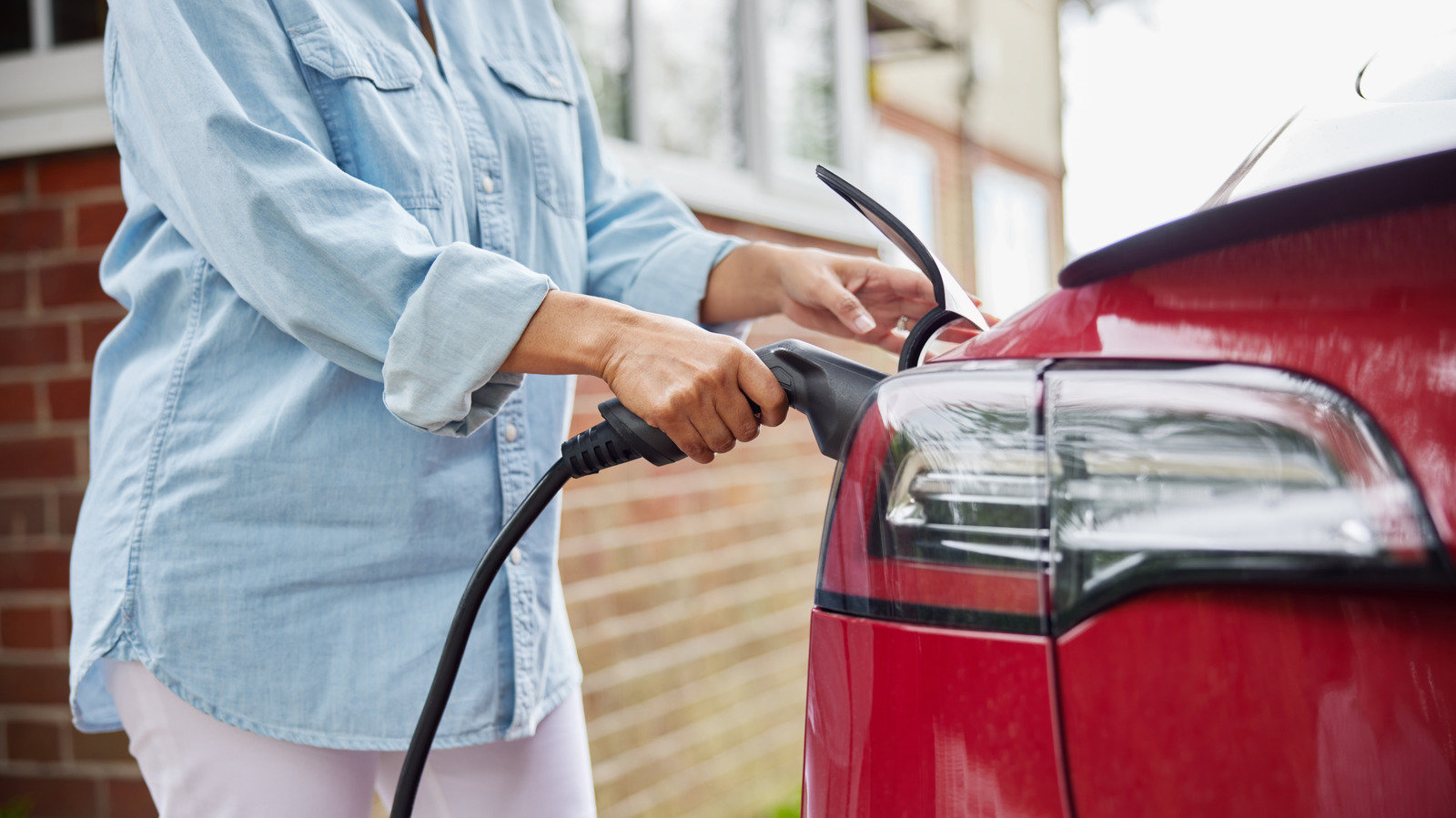

If you don’t drive long distances daily, a Level 1 charger may be sufficient for your needs.
As a new electric vehicle owner, you may be surprised by the variety of charging options available, whether at home or on the go. The terms Level 1, Level 2, and Level 3 charging are standardized in the industry, but they don’t provide much insight on their own. Installing a Level 2 charger can be a costly investment, so it’s vital to determine whether it’s necessary for your situation.
A Level 1 charger can take over 40 hours to fully charge an EV’s battery, while a Level 3 charger can add a significant range—hundreds of miles—in just one hour. Although faster charging may seem advantageous, factors like cost and battery health also play a crucial role. The optimal charging level for you will depend on your daily driving habits, charging locations, and local electricity rates.
Understanding the Differences Between Level 1, Level 2, and Level 3 Charging
A Level 1 EV charger connects to standard 120-volt household outlets in North America, limiting its charging power to about 1.4kW. In contrast, Level 2 chargers utilize 240-volt circuits and can provide significantly more power. Depending on the charger and circuit, a 40-amp Level 2 charger (on a 50-amp circuit) can deliver as much as 9.6kW. There are also Level 2 chargers rated up to 80A, capable of delivering up to 19.2kW if your home’s electrical system can support it.
Both Level 1 and Level 2 chargers supply alternating current (AC) from the grid to the EV, while the vehicle’s onboard charger converts this AC to direct current (DC) for the battery. This conversion process is not entirely efficient, producing heat, and onboard chargers operate within a specific power limit. In the case of Level 3 charging, the conversion from AC to DC occurs before reaching the vehicle, allowing high-voltage power to be delivered directly to the car’s battery.
Level 3 chargers can provide power ranging from 50kW to 500kW. It’s important to note that charging speeds decrease as the battery approaches full capacity, meaning no EV will maintain peak charging rates for an extended period. Regardless, Level 3 chargers can fully recharge a depleted EV battery within one to two hours. This is particularly true for newer models that can handle higher power levels, such as the Lucid Gravity, which can charge at up to 400kW if a compatible Level 3 charger is available. The Tesla Model Y, on the other hand, has a maximum charging power that varies between 175kW and 250kW, depending on the specific model.
Deciding Between Level 1 and Level 2 Chargers for Home Use
Casezy idea/Shutterstock
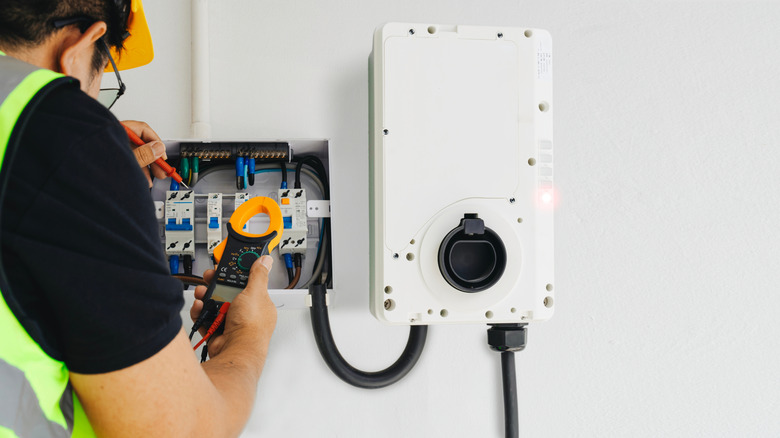
If your daily driving distance is minimal, a Level 1 charger will suffice. There’s little justification for investing in a Level 2 charger and the necessary electrical upgrades when your EV can fully charge overnight. If you’re on a time-of-use plan with your utility provider, you can schedule your charging during off-peak hours, ensuring you have ample range for your commute the following day.
The U.S. Environmental Protection Agency (EPA) estimates that Level 1 charging adds approximately 5 miles of range for each hour of charging. With a typical 8-hour overnight charge, you could gain around 40 miles of range.
Level 2 chargers become increasingly advantageous for those who frequently drive longer distances. They allow you to capitalize on off-peak electricity rates, adding over 30 miles of range per hour with a 40A charger. This effectively eliminates range anxiety, as you can replenish hundreds of miles during a single overnight charging session.
If you are contemplating a Level 2 charger installation, consider that you may also be able to charge throughout the day on weekends. Some time-of-use plans offer lower rates or off-peak pricing during weekends, enabling even a Level 1 charger to provide significant mileage if plugged in all day. This makes Level 1 chargers a viable option for those whose cars remain parked over the weekend. In case of emergency, public Level 2 or Level 3 chargers are also available.
On the other hand, certain EV batteries require pre-conditioning in colder temperatures, which means a Level 1 charger may struggle to both heat and charge the battery simultaneously. Cold weather can also diminish an EV’s effective range, making Level 2 chargers a more practical solution, especially if your garage is unheated.
Optimal Situations for Using Level 3 Chargers
Mayy Contributor/Shutterstock
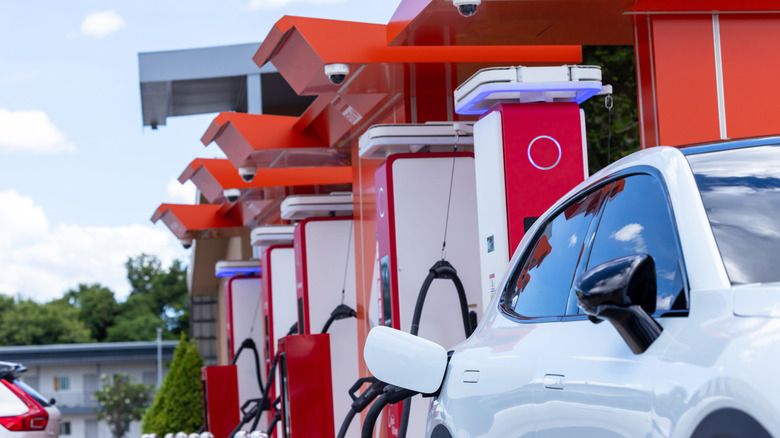
Level 3 chargers represent the fastest way to recharge your EV’s battery, but they are generally not found in residential areas. They require a more extensive electrical setup, making installation at home impractical without significant upgrades to your electrical service. You will typically encounter Level 3 chargers in commercial locations such as parking lots or highway rest areas.
These chargers can provide over a hundred miles of range in just one hour, making them particularly useful for road trips and quick recharges. it’s worth noting that the charging speed can vary significantly between different Level 3 chargers, so one may be much faster than another.
While the benefits of Level 3 chargers are clear, there are considerations regarding cost and potential impacts on battery longevity. The long-term effects of rapid charging on battery health are still being studied, while opting for Level 2 charging can help mitigate these concerns. The convenience of public Level 3 chargers closely resembles the quick refueling experience of traditional gas vehicles.
When using public chargers, paying attention to the type of connector is essential. North America is transitioning from older J1772 and CCS connectors to the NACS connector, which has been historically used by Tesla vehicles. This NACS connector is becoming the standard for EV charging across North America and will be included with most new electric vehicles in the near future.
If your vehicle requires a NACS connector and a public charging station only has a CCS connector, you won’t be able to connect without an additional adapter. Some charging stations do offer multiple types of connectors, but this is not guaranteed.
While the CCS/NACS issue will likely resolve itself over time, I recommend utilizing apps like PlugShare or ChargePoint to check connector availability at specific locations. These apps also indicate whether a station supports Level 2 or Level 3 charging, helping you find the fastest options when you’re in a hurry.


 Daniel Mercer
 Ethan Carter