David Bridges

After announcing its return in September during the “Made on YouTube” event, YouTube is now expanding access to its innovative auto-dubbing feature. This tool enables content creators to effortlessly share their videos in multiple languages by activating audio translations of their original content.
As illustrated in this example, YouTube’s auto-dubbing feature allows creators to easily activate automatic translations into various languages just by checking a box during the upload process. This functionality simplifies the localization of content, making it accessible and engaging for a broader audience.
While these translations might not always capture the nuances of the original language accurately, YouTube has confidence in its automatic translation capabilities. This initiative aims to significantly enhance the reach of content, making it accessible to a larger number of creators and viewers worldwide.
According to statements made by YouTube:
“We have just made auto dubbing available to hundreds of thousands of channels that are part of the YouTube Partner Program, particularly those focused on educational and informational content. We will soon extend this feature to encompass other types of content as well.”
The auto-dubbing process begins by identifying the original language of your video, followed by generating auto-dubbed versions in various target languages. This streamlined process allows creators to reach diverse audiences in their preferred languages.
Currently, Google offers auto-dubbing from English to several languages including French, German, Hindi, Indonesian, Italian, Japanese, Portuguese, and Spanish. Additionally, English translations are available for each of these languages, further enhancing accessibility.
While there is a slight risk of inaccuracies in translations, YouTube has implemented warnings on auto-dubbed videos, indicating that the translations are generated automatically. This transparency helps set viewer expectations regarding the content’s accuracy.
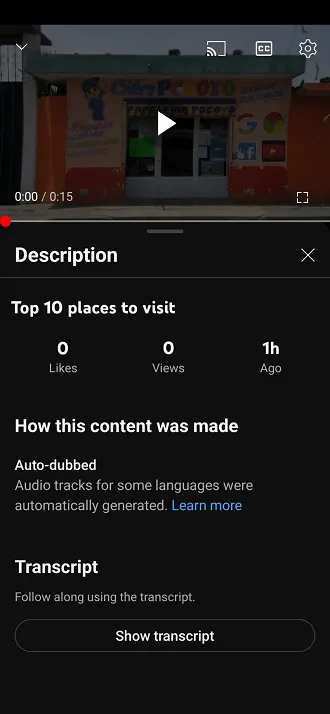
Thus, if the automated process inadvertently alters your words into something inappropriate in another language, the warning should mitigate any potential backlash. However, it’s still essential for creators to be aware of these risks.
Providing variable translations can yield significant advantages, as evidenced by the recent YouTube hit “Amazing Digital Circus,” which emerged as one of the platform’s biggest trends this year.
As noted by YouTube, part of the cartoon’s remarkable success can be attributed to its availability in 20 different languages, which has broadened its fan base and overall reach across various demographics.
This concept could also apply to your videos. While you may not reach the extensive audience of “Amazing Digital Circus,” utilizing this feature might allow you to connect with more viewers in different regions, ultimately enhancing your overall audience engagement and viewership.
YouTube is actively working on rolling out the auto-dubbing feature to an increasing number of creators, and it will gradually become available to everyone over time.
If you’re curious to see if you have access to this feature yet, you can check under “Advanced Settings” in YouTube Studio.



 Mason Thompson
 Clara Hastings